Departments of Electronics and Communication Engineering

- Course Duration:
- Doctorates:
- Intake:
- Ph.D Pursuing:
- No. of Faculty:
- Technical Staff:
COURSE OVERVIEW
The Department of Electronics and Communication Engineering (ECE) at BMS Institute of Technology & Management, Bengaluru was established in the academic year 2002-03. The Department of ECE has grown into a center of academic excellence, research, and innovation with a strong emphasis on Outcome-Based Education (OBE), industry relevance, and research-driven learning. The department prepares students to meet global technological and societal challenges. The department offers an undergraduate programme (B.E. in ECE) with an intake of 180 students and a postgraduate programme (M. Tech in VLSI System Design) with an intake of 24 students. The department has been granted autonomous status since AY 2021–22, is a VTU-recognized Research Centre, and is NBA accredited (Cycle I and Cycle II).
Key academic domains include VLSI, Embedded Systems, Communication and Signal Processing Systems.
Highlights of the Department
- Permanent affiliation by VTU.
- Active research centre since 2016.
- The department's newsletter “WAVES” (The student’s literary and technical activities are periodically published)
- The department fest (ELECSIM) is held to facilitate the exhibition of student’s technical skills.
VISION
Be a pioneer in providing quality education in electronics, communication and allied engineering fields to serve as a valuable resource for industry and society.
MISSION
To nurture students with a strong foundation in theoretical and practical concepts through innovative pedagogy and industry interface. To foster interdisciplinary research, entrepreneurship skills and instill professional ethics by providing experiential learning opportunities.
- 2002–03: Inception of UG programme with intake of 60
- 2009–10: Intake increased to 90
- 2017–18: Intake increased to 180 and VTU Research Centre approved
- 2018–21: NBA Accreditation – Cycle I
- 2021–22: Autonomous status granted
- 2022–25: NBA Accreditation – Cycle II
- 2024–25: ETE merged with ECE; intake stabilized at 180
- 2025–26: Inception of PG programme with intake of 24
- Establish successful careers in electronics, communication, and allied engineering domains.
- Pursue advanced studies and conduct research to devise innovative solutions, propelling technological advancements.
- Demonstrate leadership, effective communication, and teamwork while upholding ethical practices through sustainable engineering solutions.
- Design and analyze digital and analog circuits using industry-standard Electronic Design Automation (EDA) tools, applying electronic fundamental principles for VLSI system implementation.
- Design and develop communication and signal processing systems using fundamental principles of analog and digital communication, effectively utilizing analytical tools and techniques.
- Integrate, debug, and deploy embedded hardware and software solutions for various real-time applications, demonstrating proficiency in programming, interfacing, and system-level design.
| Sl. No | Title of the Project | Project YouTube Link |
|---|---|---|
| 1 | Digital Voting system | View |
| 2 | Smart Packaging System | View |
| 3 | Smart Cradle System | View |
| 4 | Air Purifier | View |
| 5 | AI Mouse | View |
| 6 | Animatronic Hand | View |
| 7 | Power Supplier system | View |
| 8 | Temperature Monitoring System | View |
| 9 | Covid Healthcare Monitoring System | View |
| 10 | UV Radiations Tracking System | View |
| 11 | Noma for 5G | View |
| 12 | Prevention of Child Abuse using Geo-fencing | View |
| 13 | Smart Village through Information Technology | View |
| 14 | Automatic Waste segregation machine using Arduino | View |
| 15 | Microstrip Patch Antenna | View |
| 16 | Windows Cursor Control Using a Brain Computer Interface | View |
Faculty List
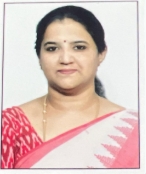
Dr. Shobharani A
Professor & HOD
Electronics and Communication Engineering
- shobharani@bmsit.in
- 9986309001
- Employee ID : 7206


M.Tech , Ph.D
Wireless networks, Signal Processing, Communication
BMESI, ISTE
- A. Shobha Rani, K C Chethan, T G Basavaraju, "Adaptive informant factor-based optimised channel allocation in large-scale mesh networks", International Journal of Wireless and Mobile ComputingVol. 19, No. 2, September 28, 2020, Inderscience Publisher
- G R Vishalakshi, A Shobha Rani, M C Hanumantharaju, "A novel approach to low-light image and video enhancement using adaptive dual super-resolution generative adversarial networks and top-hat filtering", Computers and Electrical Engineering ,Volume 123, Part A, April 2025, 11005
- "G R Vishalakshi, A Shobha Rani, M C Hanumantharaju, ""Wavelet energy-based adaptive retinex algorithm for low light mobile video enhancement""The imaging Science journal, Volume 72 Issue 8, Pages 1212-1242 "
- "Raghunandan G. H, A. Shobha Rani, ""Gateway Based Hybrid Hierarchical Routing Scheme with Time Synchronization in WSN"", Bioscience Biotechnology Research Communications Vol.13 No. 13, 2020, 209-213"
- "Raghunandan G. H, A. Shobha Rani,"" Design and Implementation of Efficient Routing Algorithm for Wireless Sensor Networks"", International Journal of Advanced Science and Technology, Vol. 29, No. 3, (2020), pp. 11717– 11723, ISSN:2005-4238 IJAST"
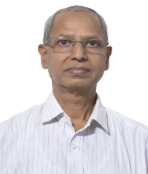
Dr. Jayadeva G S
Professor
Electronics and Communication Engineering
- jayadevags@bmsit.in
- 09538303888
- Employee ID : 7047
PhD
Device Modelling, Low Power VLSI
IEEE, IETE, ISTE
- Analytical Approximation for the Surface Potential in n-Channel MOSFETs Considering Quantum–Mechanical Effects,” IEEE Trans. Electron Devices, Vol. 57, No. 8, pp. 1820-1828, 2010.
- Compact model of short-channel MOSFETs considering quantum mechanical effects,” Solid-State Electronics, Vol. 53, pp. 649-657, 2009
- Quantum Mechanical effects in bulk MOSFETs from a compact modeling perspective: A review,” IETE Technical review, Vol.29, Issue 1, pp.03-28, Jan-Feb 2012
- Jyothiprakash and G . S Jayadeva Presented in an IEEE international conference on "Smart Systems for applications in electrical sciences" on the paper titled "Gate C-V characteristics of n-channel MOSFET considering Quantum Mechanical effects" at SIT - Tumkur during 7th - 8th July 2023. INSPEC Accession No: 23547850, http://dx.doi.org/10.1109/ICSSES58299.2023.10200091
- G.S.Jayadeva & Amitava Das Gupta, “Incorporation of quantum mechanical effects in compact models of bulk MOSFETs,” MOS-AK/GSA India-2012, International Workshop during March 16th to 18th 2012, at Jaypee Institute of Information Technology, Noida. www.mos-ak.org/india/

Dr. M C Hanumantharaju
Professor
Electronics and Communication Engineering
- mchanumantharaju@bmsit.in
- 9742290764
- Employee ID : 6034
B.E. (Electronics and Communication Engineering), M.Tech (Digital Communication and Network Engineering), Ph.D (VLSI Signal and Image Processing)
(1) Senior Educator and Scholar Award, 2015, conferred by the National Foundation for Entrepreneurship Development,
(2) Developed 30 original YouTube lectures in English, translated from Taiwanese (National Yang Ming Chiao Tung University), for a Microelectronics course to support Graduate-level students,
(3) Authored two books, VLSI Design and Digital System Design Using VHDL, for Graduate students.
ASIC/FPGA based Image Processing, RTL Design using Verilog, Digital Image Processing and Computer Vision, Synthesis and Optimization of Digital Integrated Circuits
Computer Society of India - Life Member, ISTE - Life Member
- Hanumantharaju, Vishalakshi, and Shobha Rani, "A Novel Approach to Low-light Image and Video Enhancement using Adaptive Dual Super-resolution Generative Adversarial Networks and Top-hat Filtering," Computers and Electrical Engineering, Vol. 123, Issue 1, pp. 110052, ISSN: 0045-7906, DoI: https://doi.org/10.1016/j.compeleceng.2024.110052, Q1 Journal, Impact Factor:4.0, 2025.
- M. C. Hanumantharaju, D. N. Nagesh Kumar, and G. R. Vishalakshi, "Adaptive Fusion of Dual SRGANs and Top-Hat Gradient Domain Filtering for Enhancing Low-Light Videos on Mobile Devices," International Journal of Machine Learning and Cybernetics, Vol. 16, pp. 10771–10798, doi: 10.1007/s13042-025-02799-3., Q2 Journal, Impact Factor: 3.1, 2025.
- M. C. Hanumantharaju, G. R. Vishalakshi, and A. Shobharani, "Wavelet Energy-based Adaptive Retinex Algorithm for Low Light Mobile Video Enhancement," The Imaging Science Journal, Taylor & Francis, Vol. 72, Issue 8, pp. 1212-1242, DoI: https://doi.org/10.1080/13682199.2023.2260663, Q2 Journal, Impact Factor:1.3, 2023.
- M. C. Hanumantharaju and H. S. Laxmisagar, "FPGA Implementation of Breast Cancer Detection using SVM Linear Classifier," Multimedia Tools and Applications, Vol. 82, Issue 26, pp. 41105-41128, DoI: https://doi.org/10.1007/s11042-023-15121-6, Q1 Journal, Impact Factor: 3.0, 2023.
- M. C. Hanumantharaju and Seema S. Bhat, "A Super-resolution-based Approach for the Detection of Covid19 Infection From Chest X-ray Images", Resonance, Vol. 28, Issue 1, pp. 127-148, DoI: https://doi.org/10.1007/s12045-023-1530-7, Q4 Journal, Impact Factor: 0.4, 2023.
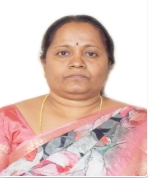
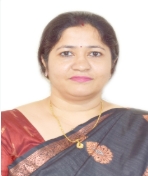
Dr. Ambika R
Professor
Electronics and Communication Engineering
- ambikar@bmsit.in
- 9449527539
- Employee ID : 550
M.E., PhD
Best Teacher Award by Cognizant Technology Services, 2016
Network Security, Wireless sensor networks
IMAPS, ISTE, CSI
- "Ambika R, Seema Sreekumar, Multi-constraints Reinforcement Learning Driven Self-Configurable Router-Link-Buffer Optimization Model for Three-Dimensional Network-on-Chip Design, International Journal of Intelligent Engineering and Systems, Volume 18, Year 2025, Pages 184-208 DOI:10.22266/ijies2025.0930.13"
- "Ambika R, Seema S, Energy Optimized Cluster Head Selection Based on Multi-Objective Sand Cat Swarm Optimization in Under Water Wireless Sensor Networks, nternational Journal of Intelligent Engineering and Systems, Volume 17, Year 2024, Pages 383-392 DOI:10.22266/ijies2024.0229.34 "
- " Ambika R, Seema S, Multi Objective Energy Based Improved Jellyfish Swarm Optimization for Effective Cluster Head Discovery in UWSN, International Journal of Intelligent Engineering and Systems, Volume 16, Year 2023, Pages 509-518 DOI:10.22266/ijies2023.0630.40 "
- Ambika R.;Thejaswini S., IoT based website for identification of acute lymphoblastic leukemia using DL, AI and Iot Based Intelligent Health Care Sanitation, Year 2023, Pages 1-15, DOI:10.2174/9789815136531123010003
- "Ambika R, Durgadevi, S K Pushpa, A survey of use of block chain for storing medical health records, AIP Conference Proceedings, Volume 2752, Year 2023 DOI:10.1063/5.0137493"
Dr. Seema Singh
Professor
Electronics and Communication Engineering
- seemasingh@bmsit.in
- 9740374780
- Employee ID : 3182
B.Tech. (Electronics and Communication Engineering), M.Tech (Electronics), Ph.D (Electronics-Flight control system & neural networks)
Machine learning, Fault detection


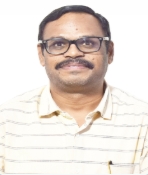
Dr. Anil Kumar D
Professor
Electronics and Communication Engineering
- anilkumard81@bmsit.in
- 9886216203
- Employee ID : 936
M.Tech, Ph.D
Embedded system Design
IETE. ISTE
- Advanced Machine Learning Techniques for Prognostic Analysis in Breast Cancer (All Life, (2021), 14, 1, (375-391), 10.1080/26895293.2021.1925356)
- "Efects of Nano‑Dome and Nano‑Cone Anti‑refective Coating Arrays in Enhancement of Light Extraction on Organic Light‑Emitting Diode Dr.Anil kumar D article journal of meterials electronics, Volume 6, Year 2024, Pages 20-27"
- "Integrating 5G and IoT technologies in developing smart city communication networks Molakatala N.;Anil Kumar D.;Patil U.;Mhatre P.J.;Sambathkumar M.;Boopathi S. Book Chapter Blockchain Based Solutions for Accessibility in Smart Cities, Volume , Year 2024, Pages 147-170 "
- "Design and FPGA Implementation of High Throughput and Low Latency Machine Learning based Approximate Multiplier for Image Processing Applications Anil K.D. Article Wseas Transactions on Systems and Control, Volume 17, Year 2022, Pages 287-299"
- "FinFET based design and Performance Analysis of Nano-Processor for low area, low power and minimum delay using 32nm Anil Kumar D. Article International Journal of Circuits Systems and Signal Processing, Volume 15, Year 2021, Pages 690-699"
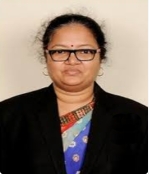
Dr. Mallikarjuna Gowda C P
Associate Professor
Electronics and Communication Engineering
- cpmallikarjunagowda@bmsit.in
- 9986738339
- Employee ID : 537
Ph.D
"Best Paper Award Gold category Received a certificate of honor, Best Paper Award Gold category for the paper titled “Performance of PSO for Spectrum Allocation in CRN”, International Conference on Multidisciplinary Technologies & Challenges in industry-4.0 (ICMTCI-4.0) on Digital Platform, organized by East Point College of Engineering and Technology, Bengaluru, held on 18th -19th September 2020., Certificate of Appreciation for outstanding contribution towards academics in the year 2021-2022 BMS Institute of Technology and Management, Best Paper presenter Best Paper presenter for the paper titled “Blocking Probabilities, Resource allocation Problems and Optimal Solutions in Cognitive Radio Networks: A Survey”, 3rd IEEE International Conference on electrical, Electronics, Communication, Computers and Optimization Techniques (ICEECCOT-2018), GSSS Institute of Engineering & Technology for Women, Mysore, 14th -15th December 2018."
Wireless communication
LMISTE, LSESI
- "Pothole Detection: Machine Learning and Computer Vision Approach Bellishree B.M.; Sai D.K.; Mallikarjuna Gowda C.P.; Hajare R."
- "Design and Implementation of Guard Band Aware Channel Assignment Method in Cognitive Radio System Mallikarjuna Gowda C.P.;Bellad K.V."
- "Design and Implementation of Multiple-User Variable Rate Channel Assignment Method in Cognitive Radio System Mallikarjuna G.C.P.;Bellad K.V.;Prajwal P.;Hima V.;Suresh N."
- "Waste Classification and Segregation: Machine Learning and IOT Approach Mallikarjuna M.G.;Yadav S.;Shanmugam A.;Hima V.;Suresh N."
- "Design and development of cognitive iot assistance system for visually impaired Mallikarjuna Gowda C.P.;Hajare R.;Pavan P.S.S."
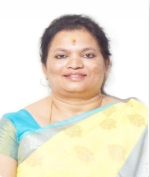
Dr. Surekha R Gondkar
Associate Professor
Electronics and Communication Engineering
- surekha.r.gondkar@bmsit.in
- 9663599656
- Employee ID : 2674
Ph.D.
Image Processing
Published 3 patents
2015: Institution of Electronics and Telecommunication2015: Engineers(IETE) Life Member F-237366, Indian Society for Technical Education(ISTE) Life Member LM 101994
- “Compression of a 2D image using 3D-DCT”, Surekha R Gondkar, Dr.Girish V Attimarad, Dr.B Chandrasekhar, The paper is published 10 May 2016 by Springer Singapore, in the Conference Proceedings ERCICA 2015Volume 3 with Print-ISBN 978-981-10-0286-1 and Online ISBN :978-981-10-0287-8.pp 137-150.
- "Effect of Block Size on the Performance of a new Algorithm to Compress an Image using 3D DCT",Mrs.Surekha.R.Gondkar.,Dr.Girish.V.Attimarad., published in Scopus indexed journal - International Journal of Pure and Applied Mathematics(IJPAM), Vol 119, No14,,2018, pp 29-34.Special Issue. ISSN: 1311-8080(Printed Version), ISSN: 1314-3395(Online Version).
- "“Web Accessibility test approach on already developed websites”, Abhay Palaskar, Dr. Raju R. Gondkar, Dr. Surekha R. Gondkar, International Journal of Computer Trends and Technology, Volume 69 Issue 11, 1-5, Nov, 2021, ISSN: 2231 – 2803, doi:10.14445/22312803/IJCTT-V69I11P10. https://papers.ssrn.com/sol3/papers.cfm?abstract_id=3835104 "
- "R.V. Siva Balan, M.S. Gouri, T Senthilnathan, Surekha Raju Gondkar, Raju R. Gondar, J. Loveline Zeema, R. Jothikumar “Development of smart energy monitoring using NB-IOT and cloud” Open access Journal Measurement:Sensors Published by Elsevier Ltd. Vol 29, October 2023. in 16th August 2023 ISSN:26659174 H Index 18 Q3 SCOpus https://doi.org/10.1016/j.measen.2023.100884"
- Raju Ramakrishna Gondkar, Sureka R. Gondkar, Kavitha S, Siva Balan R V ”Hybrid Deep Learning Based GRU Model for Classifying the Lung Cancer from CT Scan Images” Third IEEE International Conference on Distributed Computing and Electrical Circuits and Electronics (ICDCECE),organized by IEEE SB Ballari Institute of Technology and Management, ballari 26-27 April 2024. DOI: 10.1109/ICDCECE60827.2024

Dr. Saneesh Cleatus T
Associate Professor
Electronics and Communication Engineering
- saneesh@bmsit.in
- 9731382840
- Employee ID : 1306

Ph.D, M Tech
"1. Chair, IEEE Signal Processing Society, Bangalore Chapter
2. Member, Board of Studies, ECE, Visvesvaraya Technological University
3. TPC Member/Chair (2025 IEEE International Conference on Acoustics, Speech, and Signal Processing (ICASSP 2025), IEEE SPMB 2025, BHTC 2025 ... )"
Signal Processing and Computational Neuroscience
IEEE Senior Member, Member IE(I), CE, CSI, ISTE
- S. Thundiyil and J. Picone, “Time Series Analysis from Classical Methods to Transformer-Based Approaches: A Review” Signal Processing in Medicine and Biology; Applications of Deep Learning to the Health Sciences, A. Ahmed , J. Picone, Springer, 2025, 51-104. https://doi.org/10.1007/978-3-031-88024-7
- Cleatus, T.S., Thungamani, M. Epileptic Seizure Detection using Spectral Transformation and Convolutional Neural Networks. J. Inst. Eng. India Ser. B 103, 1115–1125 (2022). https://doi.org/10.1007/s40031-021-00693-4
- S. Thejaswini and S. Thundiyil, "CNN Based EEG Signal Analysis for Decoding Motor Activities," 2025 IEEE Signal Processing in Medicine and Biology Symposium (SPMB), Philadelphia, PA, USA, 2025, pp. 1-8, doi: 10.1109/SPMB67169.2025.11345377.
- S. Reddy, S. B. Seshadri, G. Sankesh Bothra, T. G. Suhas and S. C. Thundiyil, "Detection of Arrhythmia in Real-time using ECG Signal Analysis and Convolutional Neural Networks," 2020 IEEE 21st International Conference on Computational Problems of Electrical Engineering (CPEE), 2020, pp. 1-4, doi: 10.1109/CPEE50798.2020.9238743.
- Saneesh Cleatus T, Asha H V, S. Paul and Kavana H D, "Fetal electrocardiogram extraction using Robust Independent Component Analysis," 2014 International Conference on Communication and Signal Processing, 2014, pp. 557-561, doi: 10.1109/ICCSP.2014.6949903.
Dr. Vijayalakshmi G V
Associate Professor
Electronics and Communication Engineering
- vijayalakshmi@bmsit.in
- 9449378246
- Employee ID : 10008
M.Tech, PhD
"1. Received appreciation from Wiley Publishers for the publication "" An integrated feature frame work for automated segmentation of COVID-19 infection from lung CT images"" as one of the most downloaded paper during its first 12 months of publication in International Journal of Imaging Systems and Technology.
2. Received appreciation from PLOS ONE for the publication ""An RDAU-NET model for lesion segmentation in breast ultrasound images"" as one of the top 10% most cited papers published in 2019.
3. Published four edited books “Innovative Machine Learning Applications for Cryptography”, “Machine Learning and Cryptographic Solutions for Data Protection and Network Security” , "" Deep Learning-Based Image Analysis Under Constrained and Unconstrained Environments"", and "" Aiding Forensic Investigation Through Deep Learning and Machine Learning Frameworks""."
Pattern Recognition, Machine Learning, Signal Processing, Affective Computing
ISTE, IEI, BMESi
- Zhuang, Zhemin, Nan Li, Alex Noel Joseph Raj, Vijayalakshmi GV Mahesh, and Shunmin Qiu. "An RDAU-NET model for lesion segmentation in breast ultrasound images." PloS one 14, no. 8 (2019).
- Jain, Udit, Karan Nathani, Nersisson Ruban, Alex Noel Joseph Raj, Zhemin Zhuang, and Vijayalakshmi GV Mahesh. "Cubic SVM classifier based feature extraction and emotion detection from speech signals." In 2018 international conference on sensor networks and signal processing (SNSP), pp. 386-391. IEEE, 2018.
- Raj, Alex Noel Joseph, Haipeng Zhu, Asiya Khan, Zhemin Zhuang, Zengbiao Yang, Vijayalakshmi GV Mahesh, and Ganesan Karthik. "ADID-UNET—a segmentation model for COVID-19 infection from lung CT scans." PeerJ Computer Science 7 (2021): e349.
- Joseph Raj, Alex Noel, Rahul Sundaram, Vijayalakshmi GV Mahesh, Zhemin Zhuang, and Alessandro Simeone. "A multi-sensor system for silkworm cocoon gender classification via image processing and support vector machine." Sensors 19, no. 12 (2019): 2656.
- Mahesh, Vijayalakshmi GV, Chengji Chen, Vijayarajan Rajangam, Alex Noel Joseph Raj, and Palani Thanaraj Krishnan. "Shape and texture aware facial expression recognition using spatial pyramid Zernike moments and law’s textures feature set." IEEE Access 9 (2021): 52509-52522.
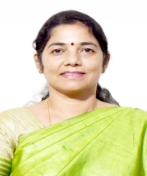
Dr. Anitha V R
Associate Professor
Electronics and Communication Engineering
- anithavr@bmsit.in
- 9949400700
- Employee ID : 12179
M.Tech., Ph.D
"Invited as a delegate to attend the IEEE MTT-S Chapter Chair Meeting at the IEEE MTT-S International Microwave Symposium (IMS), held in San Francisco, California, from June 15–20, 2025 with full financial support. Major Government Grant for Cancer Detection Research - This idea was approved by the DST Biomedical Committee and secured a ₹40-lakh government grant — a big validation of my research impact and societal relevance. Contribution to Operational Antenna Systems for ISRO (NARL) - played a key role in designing a 256-element (16×16) L-band microstrip planar antenna array using the Method of Moments for Wind Profiling Radars at ISRO–NARL, Gadanki. Importantly, this system is operational and used for real-time weather forecasting."
Antennas, Microwaves and RFMEMS
" Institute of Electrical and Electronics Engineers (IEEE) (Senior Member - 80604638)
Institution of Electronics and Telecommunication Engineers (IETE) (LM - 121120)
Institute for Smart Structures and Systems (ISSS) (LM - 12540853)
Indian Society of Systems for Science and Engineering (ISSE) (LM – LM01482)
International Association of Engineers (IAENG) (LM – 256483)
Indian Science Congress Association (ISCA) (AM – A4016)
Institute of Electronics, Information and Communication Engineers (IEICE) (AM - 1582127)"
- "Dr. Anitha V R. Parametric Analysis of Compact UWB-MIMO Antenna with Improved Isolation Using Parasitic Reflectors and Protruded Ground Strips, International Journal of Wireless Personal Communications, Vol No. 123, April 2022, pp.2209–2225; 10.1007/s11277-02109235-z."
- Dr.Anitha V R, Dr, et.al, “Design and Analysis of SRR Based Metamaterial Loaded Circular Patch Multiband Antenna for Satellite Applications” Journal of ICT Express, Vol.10, Issue:4, pp.836-844, Aug 2024. (SCI IF: 4.1)
- Dr.Anitha V R, et.al, “High Gain Broadband ENZ Metasurface based RF Lens with Gradient Refractive Index for Microwave and Millimeter-Wave Applications”, International Journal of Communication Systems, Vol No. 35, Issue 17, August 2022,pp.1-13. (SCI IF:1.319)
- "Dr.Anitha V R, et.al, “Experimental Investigations of Dual Functional Substrate Integrated Waveguide Antenna With Enhanced Directivity for 5G Mobile Communications”, Heliyon, Vol.10, e36929, Aug 2024. (SCIE IF:0.67) "
- "V.R.Anitha, M.Cho, J.Shim, ""Design of Two by Three Element Fractal Tree Antenna Array for WLAN and WiFi Applications,"" Journal of Communications Technology and Electronics, Vol. 62, No.1, pp. 61-65, 2017. "
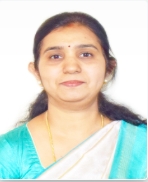
Dr. Deepa N Reddy
Associate Professor
Electronics and Communication Engineering
- deepanreddy@bmsit.in
- 7406999550
- Employee ID : 6455
M.Tech, PhD
Signal Processing, Communication
IETE,BMESI
- Deepa Narayana Reddy, Aishwarya Nagaraju, Deepti Hosakere Prabhakara, Deekshitha Beeraganahalli Srinivas, Gandlaparthi Navyatha,Performance evaluation of multicarrier quadrature phase shift Keying-based system under noisy channel conditions, International Journal of Advances in Applied Sciences (IJAAS), Vol. 14, No. 3, September2025, pp. 693~701
- Deepa N. Reddy , Yerram Ravinder,” A Statistical Approach to Spectrum Sensing Using Bayes Factor and p-Values”, Volume 9,Issue 4, August 2019, p.No 2910-2917, International Journal of Electrical and Computer Engineering (IJECE).
- Bagali SM, Sanjana S, Priyanka R, Sadiya S, Reddy DN. Prediction and Classification of Alzheimer's Disease Using Machine Learning Models. InDisruptive Developments in Biomedical Applications 2022 Dec 22 (pp. 67-74). CRC Press.
- Reddy DN, Priyanka R, Sanjana S, Santrupti MB, Sadiya S. Machine learning algorithms for detection: A survey and classification. Turkish Journal of Computer and Mathematics Education. 2021;12(10):3468-74.
- Deepa Reddy, Y.Ravinder, "Novel receiver diversity combining methods for spectrum sensing using meta-analytic approach based on p-Values" volume 13, Issue 9, September 2018, p.No 2883-2897, Journal of Engineering Science and Technology(JESTEC),

Dr. Thejaswini S
Associate Professor
Electronics and Communication Engineering
- thejaswini.s@bmsit.in
- 9008637144
- Employee ID : 1818
B E , M.Tech, Ph. D
1] Received Best Paper Awards for 2 Research papers during May 2019 & January 2018 . 2] Project titled “Bone Conduction Helmet” was shortlisted for KPIT Sparkle 2020 and was one among 30 finalists out of 3000 groups to exhibit project in Pune. 3] TI tools worth of 200$ was funded for two projects “Smart Helmet” and “Robotics Arm” from IICDC (India Innovation Challenge Design Contest) organized by DST-Texas during 2018 and 2019.
Signal Processing, Brain Computer Interface Systems,ML & Deep Learning for Time-Series & Physiological Signals.
IEEE, IETE, ISTE
- Thejaswini Shankar, Rashmi Narasimhamurthy, Mamatha Kariyapa Rajanna, and Ramesh Babu Narayandas. "Diabetic Retinopathy Detection Using Dynamic Deformable Convolutional Neural Network with Scaled Exponential Linear Unit." International Journal of Intelligent Engineering & Systems 18, no. 6 (2025
- S. Thejaswini , R. Banuprakash , Siddiq Iqbal , N. Ramesh Babu, “Brain Controlled Robotic Arm Using Motor Movements Using EEG Signals”, SSRG International Journal of Electronics and Communication Engineering Volume 11 Issue 11, 54-61, November 2024 ISSN: 2348-8549/ https://doi.org/10.14445/23488549/IJECE-V11I11P106 © 2024 Seventh Sense Research Group®
- "Thejaswini S , Ravi Kumar K.M., Rupali S., Abijith V, “ EEG Based Emotion Recognition Using Wavelets and Neural Networks Classifier”, In: Cognitive Science and Artificial Intelligence. Springer Briefs in Applied Sciences and Technology. Springer, Singapore, 23 December 2017 .PP 101 -112. https://link.springer.com/chapter/10.1007/978-981-10-6698-6_10 , DOI: https://doi.org/10.1007/978-981-10-6698-6_10 "
- Thejaswini S , Dr. K M Ravi Kumar “ Detection of human emotions using features based on discrete wavelet transforms of EEG signals" , International Journal of Engineering & Technology, Vol 7(1.9) (2018) , PP : 119-122, ISSN: 2227-524X, 2018-03-01
- Thejaswini S, K M Ravikumar, Jhenkar L, Aditya Natraj, Abhay K K, “ Analysis of EEG Based Emotion Detection of DEAP and SEED-IV Databases using SVM” , International Journal of Recent Technology and Engineering (IJRTE) ISSN: 2277-3878, Volume-8, Issue-1C, May 2019, June 28, 2019

Dr. Banuprakash R
Associate Professor
Electronics and Communication Engineering
- r.bhanuprakash@bmsit.in
- 9972929020
- Employee ID : 1872
BE(E&C), M.Tech.(VLSI), Ph.D(Antennas)
3 Patents Published, Consultancy works completed in Antenna design, Served as the coordinator for obtaining EDA tool access via the C2S ChipIn Program (MeiTy).
VLSI, RF Communication, Antennas
IEEE Member(92819615), IEEE CAS society Member, CSI Life Member
- R. Banuprakash, Siddiq Iqbal, S. Thejaswini, "A Miniaturized Octagonal Antenna with CPW Feed for WLAN, Satellite and C Band Applications," SSRG International Journal of Electronics and Communication Engineering, vol. 12, no. 2, pp. 65-72, 2025. https://doi.org/10.14445/23488549/IJECE-V12I2P106
- Banuprakash, R., Yadav, V., Dwarakanath, G. V., & Hariprasad, S. A. (2024). A Reconfigurable Antenna for C Band Applications. Digital Convergence in Antenna Designs(Wiley): Applications for Real‐Time Solutions, 133-152.
- Banuprakash, R., P. Ganesh, and B. K. Subhash. "A compact frequency reconfigurable antenna for wireless applications using PIN diodes." In American Institute of Physics Conference Series, vol. 2461, no. 1, p. 080001. 2022.
- Banuprakash, R., and S. A. Hariprasad. "A Metamaterial Inspired Slotted Multiband Patch Antenna with Reconfigurability." International Journal of Recent Technology and Engineering (IJRTE) 8, no. 2S7 (2019).
- Banuprakash, R., and S. A. Hariprasad. "A Compact Multi-band Rectangular Slot Microstrip Antenna for Wi-MAX WLAN and X-band Applications." Internstional Journal of Engineering &Technology (IJET) (2018).

Dr. Sowmyashree M S
Associate Professor
Electronics and Communication Engineering
- sowmyashree.m.s@bmsit.in
- 9620901561
- Employee ID : 2290
Mtech, PhD
Seed money Funding.
Wireless sensors and communication, VLSI and Embedded systems, BCI
ISTE,IET
- "TRUST-ENHANCED SECURE CLUSTER ROUTING IN WIRELESS SENSOR NETWORKS USING A MODIFIED MOTH FLAME OPTIMIZATION ALGORITHM"
- "Secure Cluster Based Routing Using Trust-based Modified Moth Flame Optimization Algorithm for WSN"
- "Security and Energy Aware Adaptive Routing using Cost Centric Cuckoo Search Algorithm"
- "Development of a novel protocol for improvement of Qos inwireless sensor networks: P-Rpeh"
- "Secure Adaptive Cluster-Based Routing Using Modified Cuckoo Search Algorithm for Health Monitoring Systems in Smart Cities"
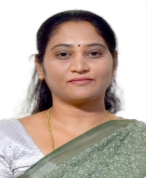
Dr. Rashmi N
Associate Professor
Electronics and Communication Engineering
- rashmiswamy@bmsit.in
- 99868774907
- Employee ID : 1451
PhD
Electronics and IT Division council member for BIS, Received Teaching and research excellence under the category og Pride of India awards -2022,Received awards for Research Excellence from RC cell, BMSITM
Wireless communication
"IEEE, Advanced Computing and Communications Society, INDIAN SOCIETY FOR TECHNICAL EDUCATION"
- "Diabetic Retinopathy Detection Using Dynamic Deformable Convolutional Neural Network with Scaled Exponential Linear Unit "
- Inner Selection Learning Strategy with Chameleon Swarm Optimization Algorithm Based PAPR Reduction in MIMO-OFDM
- Optimal design of improved H-infinity controller for MMC
- Integration of PIN Diodes for Beam Steering in Compact Microstrip Antenna Arrays
- Hybrid optimization model for design and optimization of microstrip patch antenna
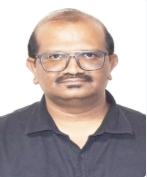
Dr. Jagannatha K B
Associate Professor
Electronics and Communication Engineering
- jagan@bmsit.in
- 9591399663
- Employee ID : 2724
PhD
VLSI design, Phase Change Memory Materials, Solar Cells
MRSI
- Jagannatha K. B, Chandasree Das, "Switching, Optical, Raman, and morphological investigations on Sn doped SiTe glasses and thin films," Journal of thin solid films. 2022; 759; 139472. https://doi.org/10.1016/j.tsf.2022.139472.
- Jagannatha K. B, Tanujit B, Diptoshi Roy, S. Asokan, Chandasree Das, "A composition-dependent thermal behaviour of Si20Te80-xSnx glasses: Observation of Boolchand intermediate phase". Journal of Non-Crystalline Solids, 2021; 96, 121311. doi:10.1016/j.jnoncrysol.2021.121311.
- Jagannatha K.B., Diptoshi Roy, Chandasree Das, " Electrical switching and crystalline peak studies on Si20Te80-xSnx (1 = x = 7) chalcogenide bulk glasses", ELSEVIER -Journal of Non-Crystalline Solids, 2020; 544; 1201966. https://doi.org/10.1016/j.jnoncrysol.2020.120196
- D Roy, B Tanujit, KB Jagannatha, S Asokan, C Das, "Influence of Cu Doping in Si-Te-Based Chalcogenide Glasses and Thin Films: Electrical Switching, Morphological and Raman Studies", IEEE Transactions on Electron Devices, 2021; 3; 1196-1201. DOI: 10.1109/TED.2021.3051925 .
- Diptoshi Roy, Jagannatha K.B., Chandasree Das,,“Electrical switching and morphological studies on Si15Te84Cu1 thin film”, Science direct- materials today proceeding, 2018; 5; 3052-3055. https://doi.org/10.1016/j.matpr.2018.01.106.

Dr. Sumathi M S
Associate Professor
Electronics and Communication Engineering
- sumathi.m@bmsit.in
- 9036274256
- Employee ID : 3156
Ph.D
"Project ”Smart Plate For Detection Of Food Quality” received RUSI AWARD . "
17
ISTE life membership, ISSS life membership
- Sumathi, M.S., Anitha, G.S. Link Aware Routing Protocol for Landslide Monitoring Using Efficient Data Gathering and Handling System. Wireless Pers Commun 112, 2663–2684 (2020). https://doi.org/10.1007/s11277-020-07169-6
- M.S. Sumathi, and G.S. Anitha, “WSN to detect real time terrain slides using Wi-GIM instrument”, Materials Today: Proceedings, Vol. 80, No. 3, pp. 2888-2894, 2023.
- “Spiral Elite Learning with Gazelle Optimization Algorithm Based Secure Clustering and Routing in Wireless Sensor Network,” International Journal of Intelligent Engineering and Systems, vol. 18, no. 1, pp. 596–607, 2025, doi: 10.22266/ijies2025.0229.42.
- Graphene-Based Nanomaterials for Supercapacitor Applications: A Critical Review. In: Malik, J.A., Sadiq Mohamed, M.J. (eds) Modern Nanotechnology. Springer, Cham. https://doi.org/10.1007/978-3-031-31104-8_13
- Quadratic Opposition Learning with Water Strider Algorithm Based Energy Efficient Clustering and Routing for Wireless Sensor Network ,International Journal of Intelligent Engineering and Systems
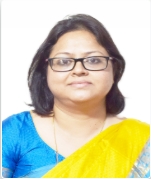
Dr. Sabina Rahaman
Associate Professor
Electronics and Communication Engineering
- sabina@bmsit.in
- 7204468362
- Employee ID : 3716
PhD
Received funded project from SERB, BOS member of VTU-PG program
VLSI Design, thin film solar cell
- Rahaman, Sabina, M. Anantha Sunil, Monoj Kumar Singha, and Kaustab Ghosh. "Optimization and fabrication of low cost Cu2SnS3/ZnS thin film heterojunction solar cell using ultrasonic spray pyrolysis." Optical Materials 123 (2022): 111838.
- Rahaman, Sabina, and Kaustab Ghosh. "Probing the bandstructure dependent figures of merit in InAs/GaAs quantum dot photodetectors." Micro and Nanostructures 168 (2022): 207328.
- Rahaman, Sabina, and Monoj Kumar Singha. "Nanoarchitectonics earth-abundant chalcogenide Cu2SnS3 thin film using ultrasonic spray pyrolysis for visible light-driven photocatalysis." Applied Physics A 128, no. 1 (2022): 36.
- Rahaman, Sabina, Monoj Kumar Singha, Paramita Sarkar, M. Anantha Sunil, and Kaustab Ghosh. "Optimization of CTS thin film solar cell: A numerical investigation based on USP deposited thin films." Physica B: Condensed Matter 698 (2025): 416751.
- Deepa, Deepa, Anantha Sunil Maligi, Sabina Rahamna, K. B. Jagannatha, and K. Naveen Kumar. "Chalcogenide P-Type Absorber Layer Studies of Spray Pyrolyzed Cuzns Thin Films for Heterojunction Solar Cell Applications."
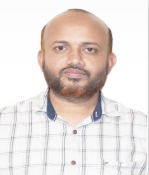
Dr. Siddiq Iqbal
Assistant Professor
Electronics and Communication Engineering
- siddiq@bmsit.in
- 9901317345
- Employee ID : 1870
Ph.D
Communication, Image Processing, Security
Indian Science Congress Association-L28996, IEEE Member-92819712
- Iqbal, S., Sujatha, B.R. Secure authentication and key management based on hierarchical enhanced identity based digital signature in heterogeneous wireless sensor network. Wireless Netw 31, 127–147 (2025). https://doi.org/10.1007/s11276-024-03745-x
- S. Iqbal and B. R. Sujatha, "Secure Key Management Scheme With Good Resiliency For Hierarchical Network Using Combinatorial Theory," 2021 2nd International Conference for Emerging Technology (INCET), Belagavi, India, 2021, pp. 1-7, doi: 10.1109/INCET51464.2021.9456276.
- S. Iqbal and B. R. Sujatha, "An Efficient and Secure Key Management Scheme Using Fuzzy Logic in WSN," 2023 IEEE 3rd International Conference on Technology, Engineering, Management for Societal impact using Marketing, Entrepreneurship and Talent (TEMSMET), Mysuru, India, 2023, pp. 1-6, doi: 10.1109/TEMSMET56707.2023.10150121.
- Banuprakash, Siddiq Iqbal, S. Thejaswini, "A Miniaturized Octagonal Antenna with CPW Feed for WLAN, Satellite and C Band Applications," SSRG International Journal of Electronics and Communication Engineering, vol. 12, no. 2, pp. 65-72, 2025. Crossref, https://doi.org/10.14445/23488549/IJECE-V12I2P106
- S. Thejaswini, R. Banuprakash, Siddiq Iqbal, N. Ramesh Babu, "Brain Controlled Robotic Arm Using Motor Movements Using EEG Signals," SSRG International Journal of Electronics and Communication Engineering, vol. 11, no. 11, pp. 54-61, 2024. Crossref, https://doi.org/10.14445/23488549/IJECE-V11I11P106
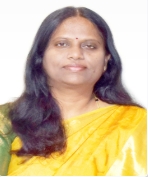
Dr. Mamatha K R
Assistant Professor
Electronics and Communication Engineering
- mamathakr@bmsit.in
- 9972042574
- Employee ID : 1853
BE(ECE), MTECH(Digital Communication and Networking), Ph.D
"1.A patent Automatic waste seggregation system using ANN granted on 27/09/2024
2. Best project of the year by KSCST-2020"
Signal Processing, Computer networks & Image processing
IETE(Life member)
- Mamatha K R, Seema Singh, Hariprasad S A, “Detection and analysis of plant leaf diseases using Convolutional neural Network “, Journal of Computational and Theoretical Nanoscience, American Scientific publishers: Vol 17, Sept/Oct 2020. PP 1-5, ISSN: 1546-1955 (Print)[Scopus] https://doi.org/10.1166/jctn.2020.8983
- Thejaswini S, Rashmi N, Mamatha K R, Ramesh Babu N” Diabetic Retinopathy Detection Using Dynamic Deformable Convolutional Neural Network with Scaled Exponential Linear Unit”, International Journal of Intelligent Engineering and Systems, Vol.18, No.6, 2025 DOI: 10.22266/ijies2025.0731.46
- Rashmi N, Mamatha K R, Thejaswini S, “Inner Selection Learning Strategy with Chameleon Swarm Optimization Algorithm Based PAPR Reduction in MIMO-OFDM”, International Journal of Intelligent Engineering and Systems, Vol.18, No.1, 2025 DOI: 10.22266/ijies2025.0229.38
- Mamatha K R, Thejaswini S, Rashmi N, & Dr. Girish H. (2024). Laser Fencing Surveillance System with Email Alert. Educational Administration: Theory and Practice, 30(2), 1539–1544. https://doi.org/10.53555/kuey.v30i2.7919
- Mamatha K R, Rashmi N, Thejaswini S, Ramesh Babu N, & Dr. Girish H. (2024). Automated Disease Detection and Control for Smart Aquaponics Systems. Educational Administration: Theory and Practice, 30(1), 4628–4633. https://doi.org/10.53555/kuey.v30i1.8293
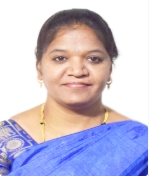

Prof. Chandra Prabha R
Assistant Professor
Electronics and Communication Engineering
- chandra@bmsit.in
- 8867618157
- Employee ID : 3632
Mtech(PhD)
"1.Received funds of ₹8,000 from BMSITM under a faculty-driven project for the project titled “Solar Powered Floating Waste Cleaner for Small Water Bodies.”
2.Received funds of ₹25,000 from BMSITM under a faculty-driven project for the project titled “Smart footwear for visually impaired community.”
3.Funds amounting to ₹1,99,474/- have been received from BMSITM under the Seed Money Grant / Research Funding Scheme for the proposal titled “Design of Climate-Controlled Cabin for Silkworm Moth Egg Laying at Grainage Centres.”"
Maxchine Learning,Deep Learning
IETE,BMESI_LM1561
- Chandraprabha, R., Singh, S. (2023). Analysis of Deep Learning Architecture-Based Classifier for the Cervical Cancer Classification. In: Shetty, N.R., Patnaik, L.M., Prasad, N.H. (eds) Emerging Research in Computing, Information, Communication and Applications. Lecture Notes in Electrical Engineering, vol 928. Springer, Singapore. https://doi.org/10.1007/978-981-19-5482-5_23
- "C. P. R, A. S. E, A. M P, S. Kulkarni and Devaraj, ""Radiological Analysis with CNN for Respiratory Diseases,"" 2024 Fourth International Conference on Multimedia Processing, Communication & Information Technology (MPCIT), Shivamogga, India, 2024, pp. 321-326, doi: Radiological Analysis with CNN for Respiratory Diseases,"" 2024 Fourth International Conference on Multimedia Processing, Communication & Information Technology (MPCIT) keywords: {COVID-19;Deep learning;Pneumonia;Accuracy;Pressing;Data models;Reliability;X-ray imaging;Research and development;Residual neural networks;Deep Learning;Convolutional Neural Network (CNN);COVID-19;InceptionV3;MobileNet;Pneumonia;ReLU;ResNet50;Softmax}, "
- Ramakrishnappa, C. P., & Singh, S. (2024). A Smart Agronomy: Deep Learning Process for Recognition and Classification Plant Leaf Diseases. In Advanced Computational Methods for Agri-Business Sustainability (pp. 18-35). IGI Global.
- Ramakrishnappa, C. P., & Singh, S. (2024). Prediction of Cervical Cancer With Application of Machine Learning Models. In AI Healthcare Applications and Security, Ethical, and Legal Considerations (pp. 211-221). IGI Global.
- Mahesh, V. G., Raj, A. N. J., & Chandraprabha, R. (2023). Implementation of a Deep Neural Network-Based Framework for Actigraphy Analysis and Prediction of Schizophrenia. In Diagnosis of Neurological Disorders Based on Deep Learning Techniques (pp. 153-167). CRC Press.
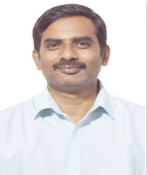
Dr. Lakshmisagar H S
Assistant Professor
Electronics and Communication Engineering
- sagar8.hs@bmsit.in
- 8123008252
- Employee ID : 3711
M.Tech(VLSI), P.hd (VLSI)
VLSI, Computer Architecture and Signal Processing
VLSI SOCIETY OF INDIA
- H. S. Laxmisagar and M. C. Hanumantharaju, “FPGA implementation of breast cancer detection using SVM linear classifier,” Multimed. Tools Appl., pp. 1–24, 2023. DOI: 10.1007/s11042-023-15121-6
- H. S. Laxmisagar and M. C. Hanumantharaju, “Detection of Breast Cancer with Lightweight Deep Neural Networks for Histology Image Classification,” Crit. Rev. Biomed. Eng., vol. 50, Issue 2, pp. 1-19, 2022. DOI: 10.1615/CritRevBiomedEng.2022043417
- Laxmisagar H.S, Shivarudraiah B, Suryakanth B, "Design of a Digitally Controlled Low-Power Buck-Boost Converter for Efficient Power Management," SSRG International Journal of Electrical and Electronics Engineering, vol. 13, no. 1, pp. 123-131, 2026. Crossref, https://doi.org/10.14445/23488379/IJEEE-V13I1P112
- H. S. Laxmisagar, M. C. Hanumantharaju, "Evaluating the Statistical Stability of POSIT Arithmetic and IEEE 754 Float to Accelerate Data for Detection of Breast Cancer," SSRG International Journal of Electrical and Electronics Engineering, vol. 9, no. 9, pp. 47-53, 2022. DOI:10.14445/23488379/IJEEE-V9I9P106
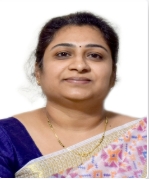
Dr. Asha G Hagargund
Assistant Professor
Electronics and Communication Engineering
- ashagh@bmsit.in
- 9731770770
- Employee ID : 3712
Ph.D , NITK, Surathkal
Time Sensitive Networking
IEEE EMBS, IEEE Photonics and IEEE WiE
- 1. Enhancing Time-Sensitive Networking resilience through SDN-based automated failover process
- 2. DTPF Algorithm Based Open-Source Time-Sensitive Network Leveraging SDN Architecture
- 3. Performance analysis of cost effective multi-hop Time Sensitive Network for IEEE 802.1Qbv and IEEE 802.1Qbu standards
- 4. Implementation and performance comparison of queuing disciplines for Best-Effort and Time-Sensitive Network
- 5. Smart and Automatic Health Monitoring of Patient Using Wireless Sensor Network

Dr. Suryakanth B
Assistant Professor
Electronics and Communication Engineering
- suryakanthbm@bmsit.in
- 9620456820
- Employee ID : 4931
Ph.D
Certified AWS Solutions Architect
Embedded System ,Deep learning
IETE
- "3D CNN-Residual Neural Network-Based Multimodal Medical Image Classification "
- A Deep Learning Approach using 3D Convolutional Neural Networks for detection of Alzheimer’s Disease
- Analysis of impact of data size for classification of Alzheimer's disease using CNN
- Design of a Digitally Controlled Low-Power Buck-Boost Converter for Efficient Power Management
- Remotely sensed multispectral image processing

Dr. Shivarudraiah B
Assistant Professor
Electronics and Communication Engineering
- shivab@bmsit.in
- 9740812787
- Employee ID : 4932
PhD
Embedded system, Ionosphere modeling, VLSI design
ISTE
- Mixed Decomposed Convolution Network for Ionospheric Scintillation and Dispersion Mitigation in Space Borne SAR Imaging
- Prediction of global ionospheric TEC using attention based bidirectional long short-term memory and gated recurrent unit
- Design of a Digitally Controlled Low-Power Buck-Boost Converter for Efficient Power Management
- Clothing Color and Pattern Recognition for Visually Impaired People
- Implementation of Orthogonal Frequency Division Multiplexing using MATLAB® simulation for DSL (Broadband) applications
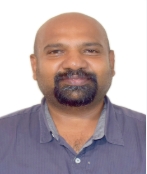
Dr. Thyagraj T
Assistant Professor
Electronics and Communication Engineering
- thyagaraj_tanjavur@bmsit.in
- 9845133392
- Employee ID : 5400
M.Tech, MBA, Ph.D
10 impactful research publications in international journals and conferences, recepient of award from Akshaya institute of tecnology for training srudents on embedded systems, Award pof 3 master degrees (M.Tech- VTU, MBA- BU, MBL- NLS )
Quantum computing, AI, Antenna Design
IEEE, CSI, IETE
- Wearable button antenna array for v band application - DOI:10.1109/APCAP.2016.7843206
- Robotic imitation of human hand using rgb color gradient mapping - DOI:10.1007/978-81-322-2656-7_52
- A conformal UHF antenna for cargo helicopter belly - DOI:10.1109/APCAP.2016.7843207
- Microstrip dual band millimeter-wave antenna array for UAV applications - DOI:10.1109/MIKON.2016.7492039
- VHF right angled planar dipole antenna array for microsat application - DOI:10.1109/MIKON.2016.7492000

Dr. Prathiba N
Assistant Professor
Electronics and Communication Engineering
- pratibha.yashas@bmsit.in
- 900264612
- Employee ID : 5407
PhD
Electronics and Communication,Embedded Systems,Machine Learning
ISTE,ISCA
- A NOVEL APPROACH TO IMPROVE ROUTING PERFORMANCE IN UNDERWATER CHANNEL MODELLING AND CLUSTER HEAD SELECTION(SCOPUS INDEXED Journal)
- OPPORTUNISTIC ROUTING USING RELAY NODE SELECTION IN ACOUSTIC WIRELESS SENSOR NETWORKS FOR EFFICIENT AND RELIABLE NETWORK PERFORMANCE(SCOPUS INDEXED Journal)
- QLAR- Q LEARNING BASED ACOUSTIC ROUTING FOR UNDERWATER SENSOR NETWORKS(SCOPUS INDEXED Journal)
- A Compact Reconfigurable UWB Antenna For Short-Range Wireless Applications(IEEE Conference)
- In progress
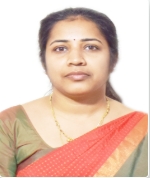
Prof. Shilpa Hiremath
Assistant Professor
Electronics and Communication Engineering
- shilpasharankh@bmsit.in
- 8884611668
- Employee ID : 5614
BE, MTech,(PhD)
Image processing, Artificial Neural Network, Deep Learning
IEEE, AMSI, IFERP
- Shilpa, H., Anagha, B. A., Divyani, J., & Rachita, K. A. (2023). Brain-Heart Connection for Psychological Health. Applied Medical Informatics, 45(2), 28-35.
- V.R. ANITHA, SHILPA HIREMATH, G. SHYNI, J.S. BINOJ, SHUKUR ABU HASSAN, R.A. ILYAS, ”Design and Development of Light Weight Fractal Tree Antenna Structure” International Conference On Composite Science and Technology (COMSAT 2022) during 22nd & 23rd August 2022, Johor, Malaysia.
- Hiremath, S., & Rani, A. S. (2024). Enhancing an Image Using Point Processing: A Perceptual Approach. In Applications of Parallel Data Processing for Biomedical Imaging (pp. 223-243). IGI Global Scientific Publishing.
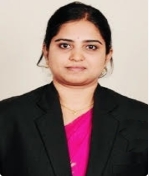
Prof. Vinutha B
Assistant Professor
Electronics and Communication Engineering
- vinuthabacademia@bmsit.in
- 9916326484
- Employee ID : 5659
M.Tech.

Dr. Dankan Gowda V
Assistant Professor
Electronics and Communication Engineering
- dankan.v@bmsit.in
- 9844554940
- Employee ID : 10042
M.Tech., Ph.D
Global Ranking: In 2024 and 2025, he was recognized among the top 2% of scientists worldwide by Stanford University and Elsevier.
Signal Processing, IoT, Machine Learning, Control Engineering, ABS
IEEE, INSC
- Modelling and performance evaluation of anti-lock braking system
- Vector space modelling-based intelligent binary image encryption for secure communication
- Development of object identification model with deep reinforcement learning algorithm
- Mathematical models for noise reduction in IoT image processing applications
- Synthesis and modeling of antilock braking system using sliding mode controller
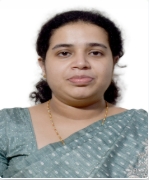
Dr. Anna Merine George
Assistant Professor
Electronics and Communication Engineering
- annamerine@bmsit.in
- 9902548065
- Employee ID : 14359
Ph.D, Mtech
Signal Processing, Low Power VLSI
Member- IEEE, Life Member- Indian Society for Technical Education (ISTE), Member- Indian Society of Systems for Science and Engineering (ISSE)
- A. M. George, V. I. George and M. A. George, "IOT based Smart Traffic Light Control System," 2018 International Conference on Control, Power, Communication and Computing Technologies (ICCPCCT), Kannur, India, 2018, pp. 148-151, doi: 10.1109/ICCPCCT.2018.8574285.
- A. M. George and S. Y Kulkarni, "Performance of Power Converters for Ultra Low Power Systems: A Review," 2018 Second International Conference on Advances in Electronics, Computers and Communications (ICAECC), Bangalore, India, 2018, pp. 1-5, doi: 10.1109/ICAECC.2018.8479512.
- A. M. George, S. Y. Kulkarni and C. P. Kurian, "Gaussian Regression Models for Evaluation of Network Lifetime and Cluster-Head Selection in Wireless Sensor Devices," in IEEE Access, vol. 10, pp. 20875-20888, 2022, doi: 10.1109/ACCESS.2022.3152804.
- George, A. M., & Kulkarni, S. Y. (2019). Cluster based routing protocols for IoT application. International Journal of Computer Network and Information Security, 11(5), 43-49.
- Mathew, V., George, A. M., Varghese, S. G., Kurian, C. P., Augustine, N., & George, V. I. (2025). REVIEW ON HUMAN-CENTRIC LIGHTING FOCUSING ON SMART SOLID-STATE LIGHTING AND SWITCHABLE GLAZING. Journal of Green Building, 20(2), 199-226.
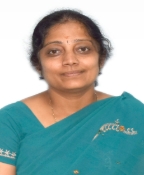
Dr. Asha K
Assistant Professor
Electronics and Communication Engineering
- ashak@bmsit.in
- 7259126108
- Employee ID : 14367
PhD
Vice Chair Photonics Society-Bangalore Section (AY2024-2025), VTU Rank Holder (AY 2025-2027), IEEE WiE Execom Member.
Photonics and Integrated Optics, Data science and Quantum Computing
Senior Member-IEEE, Biomedical Engineering Society of India Life Member, IEEE AESS and WiE Member.
- sha, K., Suryanarayana, N.K., Koushik Guha, Jacopo Iannacci & Narayan Krishnaswamy Modeling of photonic crystals anti resonant reflecting optical waveguide for sensing applications. Microsystem Technology (2021). https://doi.org/10.1007/s00542-020-05181-1
- Suryanarayana, N. K., Venkatesha, M., Asha, K., Krishnaswamy, N., & Guha, K. (2024). Modeling and analysis of nanosphere structure for bio-sensing application. Microsystem Technologies, 1-9. https://link.springer.com/article/10.1007/s00542-024-05680-5.
- K. Asha et al., "Analysis of Automotive Security Risk using Cyber Security," 2023 International Conference on Network, Multimedia and Information Technology (NMITCON), Bengaluru, India, 2023, pp. 01-07, doi: 10.1109/NMITCON58196.2023.10275969.
- Asha, K., Krishnaswamy, N. & Suryanarayana, N.K. Analysis of ARROW Waveguide Based Microcantilever for Sensing Application. Wireless Pers Commun (2022). https://doi.org/10.1007/s11277-022-09872-y
- Asha, K., N. K. Suryanarayana, Narayan. K, and P. K. Pattnaik. "Design and Modeling of Microfluidic Channel in a Dielectric Planar Waveguide Using Cosmol Multiphysics." In Emerging Research in Computing, Information, Communication and Applications, pp. 79-87. Springer, New Delhi, 2016. https://doi.org/10.1007/978-81-322-2553-9_8. ISBN: 978-81-322-2552-2.
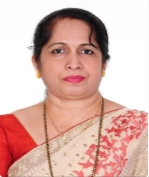
Dr. Anitha M
Assistant Professor
Electronics and Communication Engineering
- anitham@bmsit.in
- 9686691583
- Employee ID : 15605
B.E,M.E, Ph.D
Best paper Award, Student project developments
Array signal processing , ANN ,ML Computer vision
"1. IEEE Signal processing society – from 2011
2. The Institute Engineers( IEI)-2014
3. The institute of Electronics and Telecommunication Engineers( IETE)-2013
4. Indian Society for Technical Education( ISTE)2012
5. ACM MEMBERSHIP 2019 "
- "17. Anitha. M and Dr. N. G. Kurahatti “Adaptive Beamforming Using Improved Decision Tree Model for BPSK Communication System.”, IEEE International symposium on Underwater Technology2015(UT-15),(IEEE Oceanic Engineering Society) at National Institute Of Ocean Technology( NIOT),Chennai, Tamilnadu, India 23-25, February,2015. (Available in IEEE-Xplore). DOI: 10.1109/UT.2015.7108267"
- "15. Anitha. M and Dr. N. G. Kurahatti, “Adaptive Beamforming Using Neural Network and Fuzzy logic Model for Measurement Data Fusion.” IEEE International Conference on Communication and Signal Processing-ICCSP'15, Melmaruvathur, Tamilnadu, India 02- 04 April ,2015 (Available in IEEE-Xplore). Pages:0209-0214, DOI: 10.1109/ICCSP.2015.7322870"
- Dr.Anitha.M, Sayidov Ibrohim, Dr Ambika R “Digital Twins for intelligent buildings” Journal Of Technology, ISSN No:1012-3407 , Vol 14 Issue 2,P.No.52-55 , 2024 DOI:10.61350/v14-105478
- T. Patil, T. Sri Srujan Hari and Dr Anitha M, "Real-Time Smart Aquarium Monitoring System Driven by IoT," IEEE XPLORE,2025 International Conference on Sustainable Energy Technologies and Computational Intelligence (SETCOM), Gandhinagar, India, 2025, pp. 1-5, doi: 10.1109/SETCOM64758.2025.10932603
- Dr Anitha M, Swaroop , Vinayak Benal , Tarun D N, Swapnil Nayak Convolutional Neural Network Competence in Image Analytics for Tree Enumeration | International Research Journal on Advanced Engineering and Management (IRJAEM), Vol. 3 No. 05 (2025): IRJAEM Vol.03 Issue 05- [MAY 2025]

Dr. Soumya S Vastrad
Assistant Professor
Electronics and Communication Engineering
- soumya_vastrad@bmsit.in
- 9845619193
- Employee ID : 17618
PhD
WSN, IoT
IEEE
- S. Vastrad and K. R. Shobha, "Power-Efficient Trickle Algorithm With Dynamic Adjustment of Idle Interval for Internet-of-Things Application," in IEEE Sensors Journal, vol. 24, no. 3, pp. 3853-3862, 1 Feb.1, 2024, doi: 10.1109/JSEN.2023.3341426.
- S. Vastrad and S. K. R., "CRETA: Cross-layer RPL with Efficient Trickle and Adaptive Radio Duty Cycle Designed for Mobile IoT Application," in Journal of Communications Software and Systems, vol. 21, no. 4, pp. 372-382, September 2025, doi: https://doi.org/10.24138/jcomss-2024-0094
- S. Vastrad and S. K. R., "Impact of Mobility on Performance of RDC Protocols in IoT Environment," 2025 6th International Conference on Control, Communication and Computing (ICCC), Thiruvanathapuram, India, 2025, pp. 1-4, doi: 10.1109/ICCC64910.2025.11077303.
- Manvi, S., Shobha, K.R., Vastrad, S. (2023). Performance Analysis of Routing Protocol for Low Power and Lossy Networks (RPL) for IoT Environment. In: Molla, A.R., Sharma, G., Kumar, P., Rawat, S. (eds) Distributed Computing and Intelligent Technology. ICDCIT 2023. Lecture Notes in Computer Science, vol 13776. Springer, Cham. https://doi.org/10.1007/978-3-031-24848-1_25
- Mallapur, J.D., Abidhusain, S., Vastrad, S.S., Katageri, A.C. (2010). Fuzzy Based Bandwidth Management for Wireless Multimedia Networks. In: Das, V.V., et al. Information Processing and Management. BAIP 2010. Communications in Computer and Information Science, vol 70. Springer, Berlin, Heidelberg. https://doi.org/10.1007/978-3-642-12214-9_15

Dr. Biswaranjan Barik
Assistant Professor
Electronics and Communication Engineering
- drbiswaranjan@bmsit.in
- 9036992522
- Employee ID : 18347
B.Tech, M.Tech(IIT, Kharagpur),Ph.D(AMET,Chennai),(Ph.D(Andhra University, Visakhapatnam))
"1) 13th Rank in Andhra Pradesh Research Common Entrance Test (APRCET)in year 2022,
2) 8th Rank in Entrance Test Conducted BY IIT,Kharagpur
3) Odisha State Tech-Lead for Anuvadini Funded Project of AICTE and Ministry of Education, Government of India.
4)Published one Patent ,Five books and Organized AICTE-ATAL FDP as Co-Coordinator with fund of 3.5 lakhs"
Microwave & Antennas, Electromagnetic theory and Transmission lines, Sensors and Instrumentations, Computer Networks
- Biswaranjan Barik, Metta Venkata Satya Sairam, Nulu Naresh, S Preethi,Channel Estimation for Massive MIMO-OFDM Systems Using Heterogeneous Edge-Enhanced Graph Hamiltonian Quantum Generative Adversarial Networks with Imperfect Channel State,Transactions on Electrical and Electronic Materials (Springer) DOI: https://doi.org/10.1007/s42341-025-00649-1
- Biswaranjan Barik, Lal, Bechoo, Deepa Rani Gopagoni, Mohammad Ahmar Khan, R. Dinesh Kumar, and TR Vijaya Lakshmi. "An Efficient QRS Detection and Pre-processing by Wavelet Transform Technique for Classifying Cardiac Arrhythmia." International Journal of Intelligent Systems and Applications in Engineering 11, no. 8s (2023): 490-498.
- Barik, Biswa Ranjan, and A. Kalirasu. "Design of a UHF pyramidal horn antenna using CST." Journal of Pure and Applied Mathematics 114 (2017): 447-457.
- Barik, Biswaranjan, Adhimulam Kalirasu, and AV Prathap Kumar. "Design and Performance Analysis of 2.4 GHz Microstrip Patch Antenna." In 2021 2nd International Conference for Emerging Technology (INCET), pp. 1-6. IEEE, 2021.
- Barik, Biswaranjan, and A. Kalirasu. "Design and Performance Analysis of Through Hole Via." In 2021 2nd International Conference for Emerging Technology (INCET), pp. 1-5. IEEE, 2021.

Dr. Pallavi Singh
Assistant Professor
Electronics and Communication Engineering
- pallavisingh@bmsit.in
- 9939268121
- Employee ID : 18352
Ph.D., M.E, B.Tech
Digital Image Processing, Pattern Recognition, Computer Vision
IEEE Member
- Pallavi Singh, and Ashish Kumar Bhandari. "A Review on Computational Low-Light Image Enhancement Models: Challenges, Benchmarks, and Perspectives." Archives of Computational Methods in Engineering (2025): 1-33.
- Pallavi Singh, and Ashish Kumar Bhandari, and Reman Kumar. "Low light image enhancement using reflection model and wavelet fusion." Multimedia Tools and Applications 84, no. 21 (2025): 24289-24317.
- Pallavi Singh, and Ashish Kumar Bhandari. "Globally and locally tuned filtering structure for high contrast intensity degradation." Multimedia Tools and Applications 83, no. 35 (2024): 82471-82494.
- Pallavi Singh, and Ashish Kumar Bhandari. "Laplacian and gaussian pyramid based multiscale fusion for nighttime image enhancement." Multimedia Tools and Applications 84, no. 15 (2025): 15527-15551.
- Pallavi Singh, and Ashish Kumar Bhandari, and Reman Kumar. "Naturalness balance contrast enhancement using adaptive gamma with cumulative histogram and median filtering." Optik 251 (2022): 168251.
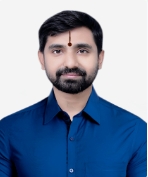
Prof. Pavan G Malghan
Assistant Professor
Electronics and Communication Engineering
- pavan.m@bmsit.in
- 7022311011
- Employee ID : 18468
B.E.(ECE), M.E.(Signal Processing), (Ph.D.)
Awarded as “International Best Researcher” in Biomedical signal processing by ISSN (IISTAC-2022), Completed the “Breakthrough Innovation Program” and got certification from the University of California, Berkeley, Got certifications in MATLAB and C languages.
Biomedical Signal Processing, Optimization Techniques, Deep Learning
BMESI (Lifetime Membership)
- "Malghan, Pavan G., and Malaya Kumar Hota. ""Grasshopper optimization algorithm based improved variational mode decomposition technique for muscle artifact removal in ECG using dynamic time warping."" Biomedical Signal Processing and Control 73 (2022): 103437. (Publisher-ELSEVIER) (IF: 4.9) (SCI and SCOPUS indexed) https://doi.org/10.1016/j.bspc.2021.103437 "
- "Malghan, Pavan G., and Malaya Kumar Hota. ""An Improved VME technique via Heap based Optimization Algorithm and AWIT method for PLI and MA noise elimination in ECG."" IEEE Access (2023). (Publisher-IEEE) (IF: 3.4) (SCI and SCOPUS indexed) https://doi.org/10.1109/access.2023.3280564 "
- "Malghan, Pavan G., and Malaya Kumar Hota. ""An enhanced deep learning framework for muscle artifact removal from ECG signal integrating resnet, GCAB, and BI-LSTM."" Physical and Engineering Sciences in Medicine (2025): 1-18. (Publisher-Springer Nature) (IF: 2.0) (SCI and SCOPUS indexed) https://doi.org/10.1007/s13246-025-01584-4 "
- "Malghan, Pavan G., and Malaya Kumar Hota. ""A review on ECG filtering techniques for rhythm analysis."" Research on Biomedical Engineering 36.2 (2020): 171-186. (Publisher- Springer) (SCOPUS indexed) https://doi.org/10.1007/s42600-020-00057-9 "
- "Malghan, Pavan G., and Malaya Kumar Hota.""50Hz Power Line Interference removal from an Electrocardiogram Signal using a Novel VME-DWT-based Frequency Extraction and Filtering approach.” IJIGSP journal (2024). (Publisher-MECS Press) (SCOPUS indexed) https://doi.org/10.5815/ijigsp.2024.04.05 "

Prof. Vivekanand Upadhye
Assistant Professor
Electronics and Communication Engineering
- vivekanand@bmsit.in
- 9823189019
- Employee ID : 18579
M.Tech (res) , Ph.D (colloquium completed)
GCET rank 28 , GATE ECE 2019 AIR:397
Analog systems design
Sweet-tooth : Resonators on Sugar , IEEE J-FLEX
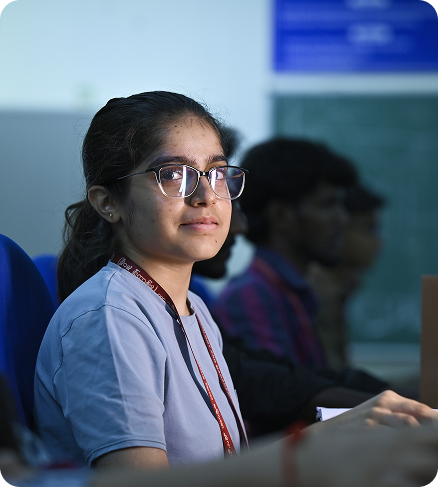
Research
Driving Innovation Through Research and Real-World Impact.
The Department of Electronics and Communication Engineering (ECE) at BMS Institute of Technology & Management has a strong and evolving research ecosystem that promotes innovation, interdisciplinary collaboration, and industry relevance. The department is recognized as a VTU Research Centre and actively involves faculty members, Ph.D. scholars, postgraduate and undergraduate students in research activities. Research work is carried out in emerging and core areas such as signal processing, communication systems, VLSI and embedded systems, biomedical engineering, computational neuroscience, thin-film devices, optoelectronics, and artificial intelligence. Dedicated research laboratories, including the Thin Film and Optoelectronic Device Laboratory and the Computational Neuroscience and Engineering Research Lab, provide advanced facilities for experimental and simulation-based research.
Faculty members consistently publish research findings in high-impact international journals, file patents, and present papers at reputed national and international conferences. The department actively encourages sponsored research and consultancy, with proposals submitted to funding agencies such as AICTE and IEEE, and has received external research grants to support cutting-edge projects. Undergraduate and postgraduate students are motivated to undertake research-oriented and SDG-aligned projects, leading to publications, funded prototypes, and participation in national-level competitions. Through continuous research engagement, industry collaboration, and a culture of innovation, the ECE department significantly contributes to technological advancement and societal development.
Key points:
- SDG-aligned interdisciplinary projects
- Multi-phase project evaluation (Ideation → Implementation → Validation)
- Institutional seed money, KSCST funding, and external grants
- Student publications in international journals
- Participation and awards in national and international competitions