
Department of Computer Science & Engineering

- Course Duration:
- Doctorates:
- Intake:
- Ph.D Pursuing:
- No. of Faculty:
- Technical Staff:
COURSE OVERVIEW
Computer Science & Engineering deals with the theoretical foundations of information and computation along with practical techniques for implementation and application. Computer Science engineers can contribute as Software Developers, Hardware Engineers, Database Analysts (SQL), System analysts or System Engineers, Security analysts, Business System Database Developer, Data Modeller, Software Quality Assurance (QA) apart from multi-disciplinary research.
Highlights of the Department
- UG programme (B.E - CSE) - NBA accredited till June 2025.
- Industry-supported student projects in collaboration with Industry Experts and Institutions.
- Two IEEE International Conferences: Forensics, Analytics, Big Data, and Security (FABS-2021) on 21-22 December 2021 & International Conference on Computing for Sustainability and Intelligent Future (Comp-SIF 2025) on 21-22 March 2025.
- NVidia Center of Excellence
- IEEE-CS Chapter Award (Special Mention Award 2021) for contributions and activities towards Young Engineers.
- Faculty Members are in LITE (Leaders in Teaching Excellence Scheme) by AICTE
- Faculty Members on NBA/NAAC Expert Team
- Placements with Highest Salary
- 20 Lakhs + Consultancy & Funding
- Research center started in the year 2014, 14 scholars awarded.
- Faculty as Trainers for Wipro, Mindtree, CDAC
- Having Professor of Practice
- Total Student strength - 2352
Take a look at some of the project videos (UG & PG)
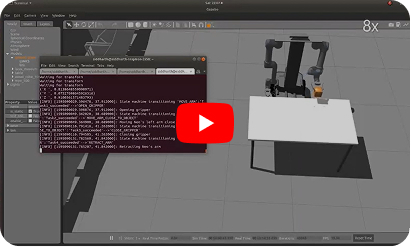
UG Projects
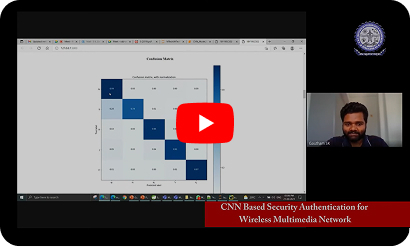
PG Projects
VISION
To be a centre of excellence in Computer Science and Engineering education and research, nurturing technically competent, ethically responsible, and socially conscious professionals to meet global challenges and drive sustainable innovation.
MISSION
- M1. To impart quality education in Computer Science and Engineering by integrating fundamental knowledge with emerging technologies and industry practices.
- M2. To foster innovation, problem-solving, and research aptitude through a curriculum enriched with project-based learning, professional activities, and collaborative initiatives.
- M3. To develop graduates with strong ethical values, leadership qualities, and a commitment to lifelong learning through co-curricular and extra curricular activities.
- Professional Excellence: Pursue successful careers in industry, academia, and entrepreneurship by applying the foundational knowledge of Computer Science and Engineering with professional competence.
- Higher Education and Lifelong Learning: Engage in higher studies, research, or professional development programs, demonstrating a commitment to lifelong learning in a rapidly evolving technological landscape.
- Ethics and Social Responsibility: Exhibit ethical behaviour, effective communication, teamwork, and leadership qualities, with a strong sense of responsibility toward society and the environment.
Program Outcomes (POs)
- PO1 Engineering Knowledge: Apply knowledge of mathematics, natural science, computing, engineering fundamentals and an engineering specialization as specified in WK1 to WK4 respectively to develop to the solution of complex engineering problems.
- PO2 Problem Analysis: Identify, formulate, review research literature and analyze complex engineering problems reaching substantiated conclusions with consideration for sustainable development. (WK1 to WK4)
- PO3 Design/Development of Solutions: Design creative solutions for complex engineering problems and design/develop systems/components/processes to meet identified needs with consideration for the public health and safety, whole-life cost, net zero carbon, culture, society and environment as required. (WK5)
- PO4 Conduct Investigations of Complex Problems: Conduct investigations of complex engineering problems using research-based knowledge including design of experiments, modelling, analysis & interpretation of data to provide valid conclusions. (WK8).
- PO5 Engineering Tool Usage: Create, select and apply appropriate techniques, resources and modern engineering & IT tools, including prediction and modelling recognizing their limitations to solve complex engineering problems. (WK2 and WK6)
- PO6 The Engineer and The World: Analyze and evaluate societal and environmental aspects while solving complex engineering problems for its impact on sustainability with reference to economy, health, safety, legal framework, culture and environment. (WK1, WK5, and WK7)
- PO7 Ethics: Apply ethical principles and commit to professional ethics, human values, diversity and inclusion; adhere to national & international laws. (WK9)
- PO8 Individual and Collaborative Team work: Function effectively as an individual, and as a member or leader in diverse/multi-disciplinary teams.
- PO9 Communication: Communicate effectively and inclusively within the engineering community and society at large, such as being able to comprehend and write effective reports and design documentation, make effective presentations considering cultural, language, and learning differences
- PO10 Project Management and Finance: Apply knowledge and understanding of engineering management principles and economic decision-making and apply these to one’s own work, as a member and leader in a team, and to manage projects and in multidisciplinary environments.
- PO11 Life-Long Learning: Recognize the need for, and have the preparation and ability for i) independent and life-long learning ii) adaptability to new and emerging technologies and iii) critical thinking in the broadest context of technological change. (WK8)
Knowledge and Attitude Profile (WK)
- WK1 A systematic, theory-based understanding of the natural sciences applicable to the discipline and awareness of relevant social sciences.
- WK2 Conceptually-based mathematics, numerical analysis, data analysis, statistics and formal aspects of computer and information science to support detailed analysis and modelling applicable to the discipline.
- WK3 A systematic, theory-based formulation of engineering fundamentals required in the engineering discipline.
- WK4 Engineering specialist knowledge that provides theoretical frameworks and bodies of knowledge for the accepted practice areas in the engineering discipline; much is at the forefront of the discipline.
- WK5 Knowledge, including efficient resource use, environmental impacts, whole-life cost,reuse of resources, net zero carbon, and similar concepts, that supports engineering design and operations in a practice area.
- WK6 Knowledge of engineering practice (technology) in the practice areas in theengineering discipline.
- WK7 Knowledge of the role of engineering insociety and identified issues in engineering practice in the discipline, such as the professional responsibility of an engineer topublic safety and sustainable development.
- WK8 Engagement with selected knowledge in the current research literature of the discipline, awareness of the power of critical thinking and creative approaches to evaluate emerging issues.
- WK9 Ethics, inclusive behavior and conduct. Knowledge of professional ethics, responsibilities, and norms of engineering practice. Awareness of the need for diversity by reason of ethnicity, gender, age, physical ability etc. with mutual understanding andrespect, and of inclusive attitudes.
- Apply theoretical foundations, Algorithmic principles and software engineering practices to develop efficient and scalable IT solutions.
- Design effective systems by leveraging principles of computing and communication technologies.
Faculty List
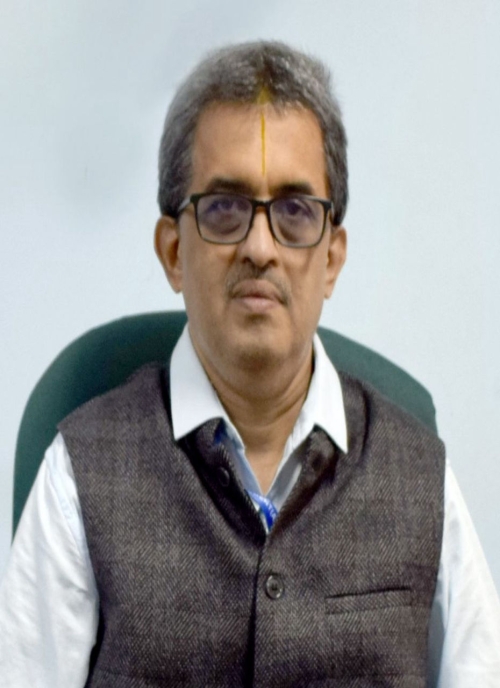
Dr. Anil G N
Vice Principal
Computer Science & Engineering
- anilgn@bmsit.in
- 9449976253
- Employee ID : 205
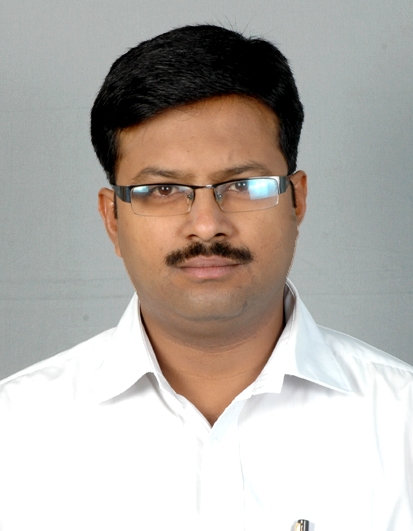
Dr. Satish Kumar T
Professor & HOD
Computer Science & Engineering
- hod_cse@bmsit.in
- 9980500700
- Employee ID : 7170



PhD
Compilers
" 1) Kavitha, S., T. Satish Kumar, E. Naresh, Vijay H. Kalmani, Kalyan Devappa Bamane, and Piyush Kumar Pareek. ""Medicinal plant identification in real-time using deep learning model."" SN Computer Science 5, no. 1 (2023): 73.
2) HS, Madhusudhan, Satish Kumar T, Punit Gupta, and Gavin McArdle. ""A Harris Hawk Optimisation system for energy and resource efficient virtual machine placement in cloud data centers."" Plos one 18, no. 8 (2023): e0289156.
3) Kumar, T. Satish, S. Jothilakshmi, Batholomew C. James, M. Prakash, N. Arulkumar, and C. Rekha. ""HHO-based vector quantization technique for biomedical image compression in cloud computing."" International Journal of Image and Graphics 23, no. 03 (2023): 2240008.
4) Chandrasekar, V., Abul Bashar, T. Satish Kumar, B. A. Vani, and R. Santhosh. ""Hybrid deep learning approach for improved network connectivity in wireless sensor networks."" Wireless Personal Communications 128, no. 4 (2023): 2473-2488.
5) Kumar T, Satish, Madhusudhan HS, SMFD Syed Mustapha, Punit Gupta, and Rajan Prasad Tripathi. ""Intelligent Fault‐Tolerant Mechanism for Data Centers of Cloud Infrastructure."" Mathematical Problems in Engineering 2022, no. 1 (2022): 2379643."
Dr. Surekha K B
Professor & HOD
Computer Science & Engineering
- surekhakb@bmsit.in
- 9035757671
- Employee ID : 12154
Dr. Mahesh G
Professor & Associate Head
Computer Science & Engineering
- maheshg@bmsit.in
- 9008533455
- Employee ID : 6476
B.E, M.Tech, PhD
Best Faculty Award (From Cognizant), 2nd Rank in M. Tech (VTU)
Computer Science & Engineering
MISTE, MIAENG
- “A Comparative Study of Network Slicing Techniques for Effective Utilization of Channel for 5G and Beyond 5G Networks”, IEEE Access, Volume 13, February, 2025.
- “Intelligent Feature Subset Selection with Machine Learning Based Detection and Mitigation of DDoS Attacks in 5G Environment”, Journal of Interconnection Networks, World Scientific Publishers, Volume 22, March 2022.
- “Identifying DDoS attacks in 4G networks using artificial neural networks and principal component analysis”, International Journal of Networking and Virtual Organizations, Inderscience Publishers, Volume-25, September 2021.
- “Machine Learning Approach to Task Scheduling in Cloud Computing”, Journal of Computational and Theoretical Nanoscience, Volume-17, December 2020.
- "CACTOR - Call Admission Control Tool fOr Researchers", 14th ACM International Conference on Mobile and Ubiquitous Systems: Computing, Networking and Services (Mobiquitous 2017), Melbourne, Australia, November 2017.
Dr. N. Rakesh
Professor & Associate Head
Computer Science & Engineering
- n_rakesh@bmsit.in
- 8277623664
- Employee ID : 12177
B.E.M.Tech,M.BA,M.Sc,P.hD
"Best research award first class grade at AVV, Bengaluru Campus, Received Bronze award for Infosys Campus Connect, Received Best Student CSI chapter bangalore zone, Revewer is Q1 Journal IEEE Transactions on Consumer Electronics. "
VoIP, Security protocols, IoT, WSN, ML & DL, Propagation channel modeling
ACM, MCSI, ISTE
- """Enhanced Temporal Attention-Based LSTM Model for Air Quality Forecasting Mohamed Shakir;Kumaran U;N. Rakesh, International Journal of Information Technology Pages 1-9, Publisher Springer Nature Singapore DOI : https://doi.org/10.1007/s4187 0-025-02668-w. Q2 Quartile"""
- """Location-Based Access Control for Privacy in Mobile Internet Systems Dr. Priya Vij B.Santhakumar,Muntather M.Hassan ,Dr.N. Rakesh, K. Venkatesh Guru, Dr.S.Jambulingam, Journal of Internet Services and Information Security, Vol. 15, Issue 2, July 2025,pp. 552–562.https://doi.org/10.58346/JI SIS.2025.I2.038 5.25 Q2 quartile"""
- """Interfacing IoT Sensors with Library Energy Management Systems Arasuraja Ganesan Vijayakanthan Selvaraj, N.Rakesh Indian Journal of Information Sources and Services Volume 15, Issue 3, Pages 113-121, 2025 Publisher © The Research Publication, www.trp.org.in. https://doi.org/10.51983/iji ss-2025.IJISS.15.3.13. Q2 quartile"""
- N. Rakesh,BA Mohan, U Kumaran, GL Prakash, Mohamed Shakir, Rajakumar Arul on “ Machine learning approaches for early diagnosis of neurodegenerative conditions” in AIP Conference Proceedings 3345, 020149 (2026), https://doi.org/10.1063/5.0302567. The is indexed in scopus.
- """Machine Learning-Driven Strategies For Customer Retention And Financial Improvement. N. Rakesh, B.A. Mohan ,U. Kumaran ,G.L. Prakash ,Rajakumar Arul,Kalaipriya n Thirugnanasambandam, Archives for Technical Sciences, Vol. 13,Issue 2,February 2025,pp.269-283. https://doi.org/10.70102/afts.2024.1631.269"""
Dr. Radhika K R
Associate Professor & Associate Head
Computer Science & Engineering
- radhika@bmsit.in
- 9980326660
- Employee ID : 4922
Ph.D.
Data Science
MIE
- A Computer Vision Based Approach for Subspace Clustering and Lagrange Multiplier Optimization in High-Dimensional Data
- Framework for novel subspace clustering using search optimization methodology
- RMSC: Robust Modeling of Subspace Clustering for high dimensional data
- EDSC: Efficient document subspace clustering technique for high-dimensional data
- FSEFST:Feature Selection and Extraction using Feature Subset Technique in High Dimensional Data
Dr. Narasimha Murthy M S
Associate Professor & Associate Head
Computer Science & Engineering
- narasimhamurthyms@bmsit.in
- 9480013001
- Employee ID : 12162
Ph.D
CSE
ISTE
- 02
- 03
- 03
- 02
- 02

Dr. Shoba M
Associate Professor & Associate Head
Computer Science & Engineering
- dr.smc@bmsit.in
- 9632596534
- Employee ID : 10379
B.E (ISE), M.Tech (CSE), Ph.D.
Mentor for IEEE IAYPC 2025, Completed 2 Consultancy Projects from Kuwait, National Award for Faculty in Higher Education for Karnataka South Region
WSN, Deep Learning, Gen-AI
IEEE, AIME, ISTE, IEI, InSc, Internet Society
- Genetic Algorithm-based Machine Learning Approach for Epileptic Seizure Identification and Classification
- Bio-Inspired Optimization to Enhance the Performance in 6G Networks of Reconfigurable Intelligent Surfaces
- Epileptic Seizure Classification and Feature Optimization Technique Using Grey Wolf Algorithm on Dynamic Datasets
Dr. Pushpa S K
Professor
Computer Science & Engineering
- pushpask@bmsit.in
- 9449226987
- Employee ID : 551
B.E., M. E., Ph. D
Wireless Sensor Networks,Machine Learning, Data Science
"The Institution of Engineers (India) (Life Member), Life Member of Indian Science Congress (Life Member) , Indian Society for Technical Education (Life Member) "
- "SK Pushpa, TN Manjunath, TV Mrunal, A Singh, C Suhas Class result prediction using machine learning IEEE International conference on smart technologies for smart nation "
- "MS Swetha, SK Pushpa, MS Muneshwara, TN Manjunath Blockchain enabled secure healthcare Systems IEEE International Conference on Machine Learning and Applied Network"
- "Prithvi Ram Vinayababu, Pushpa S Krishna Raju, Revolutionizing recommendations a survey: a comprehensive exploration of modern recommender systems, IAES International Journal of Artificial Intelligence "
- "Pushpa S Krishna Raju, A Mari Kirthima Software defined network-based controller system in intelligent transportation system IAES International Journal of Artificial Intelligence "
- "TN Manjunath, A Hiremath, M Niranjanamurthy, SL Peng, MR Shrihari, A survey on machine learning techniques using quantum computing Fourth International Conference on Emerging Research in Electronics "
Dr. Arunakumari B N
Associate Professor
Computer Science & Engineering
- arunakumaribn@bmsit.in
- 7619256698
- Employee ID : 6717
B.E, M. Tech, PhD
(1) Gold Medal in M. Tech. CSE (2) AICTE LITE Program Coordinator (3) 4th Rank in PGCET Karnataka.
Multimodal AI, NLP, Algorithms
CSI
- Arunakumari B. N, R. Shashidhar, A. S. Manjunath, N. J. et al, “Computer vision and the IoT-based intelligent road lane detection system,” Mathematical Problems in Engineering , vol. 2022, Article ID 4755113, Sep. 2022, doi: 10.1155/2022/4755113
- Arunakumari B N, Darshith T N, “Strategies for improving query efficiency and data retrieval speed in NoSQL databases,” High Technology Letters, vol. 30, no. 10, Jan. 2024, doi: 10.13140/RG.2.2.29857.21606.
- Arunakumari B. N., Shashidhar R and M. Roopa, “Indian sign language recognition using 2-D convolution neural network and graphical user interface,” International Journal of Image, Graphics and Signal Processing, vol. 14, no. 2, pp. 61, Apr. 2022. DOI: 10.5815/ijigsp.2022.02.06
- """Arunakumari B. N. et al. “TrOCR's Revolution in Document Digitization with Hugging Face Transformers” published in Journal of Computer Science 2024. Vol. 22, Isuue:3, Page Numbers:1-11. doi:10.48550/arXiv.2109.10282"""
- """Arunakumari B. N., Vishnu Sastry H K., Sheetal Neeraj, Shashidhar R., ‘An Automated Prediction Model For College Admission System’, Published in Journal of Elementary Education (2021); vol. 20 Issue 6, pp. 1172-1180, DOI: 10.17051/ilkonline.2021.06.124."""
Dr. Bhuvaneshwari C M
Professor
Computer Science & Engineering
- bcm@bmsit.in
- 9449811522
- Employee ID : 12178
BE, M.Tech, Ph.D
1.Excellent Paper Award Singapore International Conference on Futrure Information Technology 2011. "A Robust Morphological Analyzer for Kannada",
2.Received Kittur Rani Cennamma award with Cash Prize Rs 50,000 On International Women Day 2016 From Chief Minister Shri Sidramaiha Women and Child development Affairs Govt. Of Karnataka Bangalore.,
3.Received Best Research Award TEchNext Event IIT Bombay 2018 February
NLP. AI. Text Processing
MIEI:- M-1558840, M-ISTE- LM 124459 MIFREP:- PMIN370862219
- Design and development of political rider competitive swarm optimiser enabled deep learning model for air quality detection, https://doi.org/10.1504/IJISTA.2024.136526, Volume 22,Issue 1, 2024. ISSN: 1740-8865,eISSN: 1740-8873. InderScience publisher
- · RiCSO-based RiDeep LSTM: rider competitive swarm optimiser enabled rider deep LSTM for air quality prediction, pp 51-75 https://doi.org/10.1504/IJIDS.2025.144261, Volume 17.Issue 1., 2025. ISSN: 1756-7017 eISSN: 1756-7025. . InderScience publisher
- 1. Named Entity Recognition using Conditional Random Field for Kannada Language, International Journal of Innovative Technology and Exploring Engineering (IJITEE) ,ISSN: 2278-3075, Volume-8, Issue-11S2, pp. 413-415. September 2019. Impact factor 5.5, Scopus.
- Air Pollution Monitoring System Using Wireless Sensor Network”, ISBN 978-81-935355-1-6. PP-391-400.springer Nature Singapore Pte Ltd. 2019 V. E. Balas et al. (eds.), Data Management, Analytics and Innovation, Advances in Intelligent Systems and Computing 808, https://doi.org/10.1007/978-981-13-1402-5_30.
- 1. Bhuvaneshwari C Melinamath et al. (2010). “A Morphological generator for Kannada Based on Finite State Transducers,” 3rd IEEE, (ICECT). International Conference on Electronics Computer Technology, Kanyakumari, India 8 – 10 April. 2011 . Vol.1, PP. 312-
Dr. Usha B A
Professor
Computer Science & Engineering
- ushaba@bmsit.in
- 9880788509
- Employee ID : 8902
BE(CSE),M.Tech(CSE), Ph.D(CSE)
"1. Identified as Top Mentor for the month of Jan 2020 from Atal Innovation Mission, NITI Aayog, MHRD. 2. Received 50 Fabulous EduTech Leaders award from 8th World Education Congress in the theme “Reorienting Education for a Sustainable Future”. 3. Recognized as Expert Course Advisor from CISO Training program a National initiative under the aegis of MeitY, GoI which is implemented as part of ISEA Program by CDAC – Hyderabad. 4.Recognized as ATAL Mentor of Change from ATAL Innovation Mission, MHRD, NITI Aayog for mentoring ATL Tinkerpreneur 2022. 5. Recognized as Mentor of Change for ATAL Tinkering Lab an initiation of ATAL Innovation Mission (AIM) in association with NITI Aayog. 6. Letter of Appreciation from Armed Police Training School(APTS), Yelahanka, Govt. of Karnataka for conducting Training Session for Police Officials on Cyber Security. 7.Letter of Appreciation from Police Training School, Thanisandra, Govt. of Karnataka for conducting Training Session for Police Officials on Cyber Crime. 8. Recognition from 3 Karnataka Battalion NCC, Bengaluru from Govt of India for conducting a Talk on Cyber Security for 500+ NCC cadets."
Information Security, Cyber Security, Software Engineering, AI in Cyber Security, Compiler Design
"1. Professional Member for Institute of Scholars from July 2023
2. Member for The Society of Digital Information and Wireless Communications (SDIWC). Membership ID - 5846 "
- 1. Usha B A published the paper on “Learning methodologies towards leveraging security resiliency in internet-of-things environment” in IAES International Journal of Artificial Intelligence (IJ-AI) Vol. 13, No. 3, ISSN: 2252-8938, DOI: 10.11591/ijai.v13.i3.pp 2490-2497 September 2024
- Usha B A published the paper on “Geometric Cryptosystem Based Elliptic Curve Cryptography and Advanced Encryption Standard with Galois Counter Mode for Secure Cloud Storage” in International Journal of Computer Networks and Applications (IJCNA), ISSN 2395-0455 Volume 12, Issue 3, DOI: 10.22247/ijcna/2025/21 May – June 2025
- Usha B A published the paper on “Artificial Intelligence based stock market price prediction, a review” in Mathematical Models in Engineering, ISSN Print: 2351-5279, ISSN Online:2424-4627 DOI: 10.21595/mme.2025.24861 Nov 2025
- Usha B A published the Paper on "SCADE: a deep learning ensemble for semantic flow analysis in smart contract vulnerability detection" in Indonasian Journal of Electrical Engineering and Computer Science(IJEECS), Vol 30, No 3, ISSN: 2502-4752, DOI: 10.11591/ijeecs.v40.i3.pp1417-1429, Dec 2025
- Usha B A published the paper on “Development of Novel Blockchain Technology for Certificate Management System using Cognitive Image Steganography Techniques” in Journal of Algebraic Statistics, Vol 13, No 2, ISSN NO : 1309- 3452, pp 3032 - 3041, May 2022
Dr. Veena N
Professor
Computer Science & Engineering
- veena@bmsit.in
- 7406699661
- Employee ID : 6591
BE, M.Tech, Ph.D
Secured Second Rank in M.Tech
Machine Learning, IoT, Cyber Security
LISTE
- https://www.sciencedirect.com/science/article/abs/pii/S1875952124002301?via%3Dihub
- https://www.sciencedirect.com/science/article/abs/pii/S1875952124000326?via%3Dihub
- https://www.mdpi.com/2076-3417/13/2/1180
- https://www.sciencedirect.com/science/article/pii/S2665917422001891?via%3Dihub
- https://www.inderscienceonline.com/doi/abs/10.1504/IJBET.2020.111471
Dr. Sheela Kathavate
Professor of Practice
Computer Science & Engineering
- sheela@bmsit.in
- 9880303975
- Employee ID : 11067
PhD
Secured 4.0/4.0 in M.S. (USA)
Parallel computing
ISTE
- Polyhouse Agriculture with AI: Strategies for Climate Control, Energy Efficiency and Yield Improvement
- PR-LRU: Partial random LRU technique for performance improvement of last level cache
- Automated signal pre-emption system for emergency vehicles using internet of things
- Cache Friendly and Capacity Conscious Scheduling in Multi-core Systems Machine
- Learning-Driven Optimization of Plant Growth Through Dynamic Climate Regulation
Dr. Nagabhushan S V
Associate Professor
Computer Science & Engineering
- nagabhushansv@bmsit.in
- 9945388248
- Employee ID : 1379
Ph.D
Best paper award at IISc , international conference
Decision Science
ORSI, ISTE,IAENG
- Improving Face recognition for smart home security
- Developoment of Fuzzy Decision Model uisng BSC
- Abstraction based text summarization
- Design and development foeprocuremnt model using reverse auction
- Comparative analysis and implemtation of ML techniques for crop prediction
Dr. Bharathi R
Associate Professor
Computer Science & Engineering
- bharavi_kumar@bmsit.in
- 9980876453
- Employee ID : 2861
BE.,M.Tech.,Ph.D.
"15+ publications, one patent (2022), and Co-PI of a ₹5,00,000 funded AI-IoT hydroponics research project. Mentor to national award-winning student teams in Smart India Hackathon, Srishti Innovation Challenge, and Seedbrains and given Invited talks in various organisations. Founder of the AR-VR Club and AR-VR Lab at BMSIT&M,served as entrepreneurship Head (BICEP) to promote innovation and entrepreneurship."
IoT, AI/ML, AR/VR Development, Cryptography y in IoT
IEEE, IETE
- "Bharathi R, Smitha E. Peter. Secured Authentication of RFID System using PRESENT Block Cipher. IJECE, Vol. 13, No. 5, 2023; pp. 5462–5471. DOI: 10.11591/ijece.v13i5.pp5462-5471. "
- "Bharathi R, Parvatham N. Light-Weight Present Block Cipher Model for IoT Security on FPGA. Intelligent Automation & Soft Computing, 2022; 33(1):35–49. DOI: 10.32604/iasc.2022.020681. "
- "Bharathi R, Satish Kumar T, Mahesh G, Bhagya R. Development of Diameter Call Simulations Using IPSL Tool for IMS-LTE. LNDECT, 2022; 68:647–661. DOI: 10.1007/978-981-16-1866-6_46."
- " Sumathi M S, Bharathi R, Vidya R Pai. Quadratic Opposition Learning with Water Strider Algorithm Based Energy Efficient Clustering and Routing for WSN. Int. J. Intelligent Engineering & Systems, Vol. 17, No. 6, 2024. DOI: 10.22266/ijies2024.1231.66."
- " Air Quality Forecasting and Alerting System using IoT-Enabled Temporal Fusion Transformer for Urban Environments. Accepted at ICGPC 2025, Lecture Notes in Electrical Engineering (Springer). "
Dr. Vidya R Pai
Associate Professor
Computer Science & Engineering
- rvidyapai@bmsit.in
- 9480615395
- Employee ID : 4311
Ph.D
Best Teacher Award
Computer Networks and Network Security
CSI
- Quadratic Opposition Learning with Water Strider Algorithm Based Energy Efficient Clustering and Routing for Wireless Sensor Network
- A Novel Schema for Secure Data Communication over Content-Centric Network in Future Internet Architecture-Advances in Intelligent Systems and Computing Scopus - Elsevier
- Qualitative study of security resiliency towards threats in future internet architecture- -Advances in Intelligent Systems and Computing Scopus - Elsevier
- Reviewing effectivity in security approaches towards strengthening internet architecture-International Journal of Electrical and Computer Engineering- Scopus - Elsevier
- Deep Learning with IoT-Based Solar Energy System for Future Smart Agriculture System - International Journal of Advanced Computer Science and Applications
Dr. Shanthi D L
Associate Professor
Computer Science & Engineering
- gopalaiahshanthi@bmsit.in
- 9449176450
- Employee ID : 4328
BE (CSE), M.Tech (CSE), Ph.D (CSE)
TPC and Reviewer for Conferences and Journals, NPTEL Discipline STAR, NPTEL Domain Scholar in DATA SCIENCE
Wireless Networks
IEEE, ISTE
- "init Kumar, D.L. Shanthi, Tummala Ranga Babu, Narendra Kumar, Rakesh Kumar Godi, Dr Arun G, Advanced skin lesion segmentation and classification using adaptive contextual GLCM and deep learning hybrid models, Egyptian Informatics Journal, Volume 30, 2025, 100706, ISSN 1110-8665, https://doi.org/10.1016/j.eij.2025.100706."
- Shanthi, D.L., Chethan, N. Genetic Algorithm Based Hyper-Parameter Tuning to Improve the Performance of Machine Learning Models. SN COMPUT. SCI. 4, 119 (2023). https://doi.org/10.1007/s42979-022-01537-8
- "D.L. Shanthi, K. Arumugam, V.M.M. Swamy, A. Farithkhan, R. Manikandan, D. Saravanan, Optimized artificial neural network assisted trade-off between transmission and delay in LTE networks, Materials Today: Proceedings, Volume 56, Part 4, 2022, Pages 1790-1794, ISSN 2214-7853, https://doi.org/10.1016/j.matpr.2021.10.471."
- D. L. Shanthi, G. B, N. A. An Empirical Study on Indian Economy Over COVID-19 Pandemic. Journal of Health Management. 2024;0(0). doi:10.1177/09720634241278820
- "Shanthi D L, Vinutha K, Ashwini N, Saurav Vashistha, Tomato Leaf Disease Detection Using CNN, Procedia Computer Science, Volume 235, 2024, Pages 2975-2984, ISSN 1877-0509, https://doi.org/10.1016/j.procs.2024.04.281."
Dr. K T Chandrashekara
Associate Professor
Computer Science & Engineering
- chandru@bmsit.in
- 9741320283
- Employee ID : 4843
B E, M Tech, P hd
Completed My P hd in 2023
Machine Learning and Cloud Computing
ISTE
- Enhanced Breast Cancer detection Via GAMR and LSTM A Deep Learning Based Method
- Analysis of software defined radio for optical networking
- Climate Impact prediction using XGBoost Techniques
- Efficient hybrid signal detection for Optical NOMA with 512 QAM in visible light communication
- Recommendation Engine for Retail domain using Machine Learning Techniques
Dr. Ashwini N
Associate Professor
Computer Science & Engineering
- ashwinilaxman@bmsit.in
- 9900525858
- Employee ID : 4330
Ph.D.
Indian Patent Granted(2025), Wipro Certified Faculty, KSCST -Best Project Award for the Year 2016-17
Data Analytics
The Indian Science Congress Association-L28557
- DOI:10.1038/s41598-025-31164-1
- DOI:10.32604/iasc.2022.022231
- DOI:10.1201/9781003433293-8
- DOI:10.1201/9781003479062-12
- DOI:10.1007/978-981-10-7566-7_38
Dr. Gireesh Babu C N
Associate Professor
Computer Science & Engineering
- gireeshbabu@bmsit.in
- 9902577161
- Employee ID : 5413
B.E, M.Tech, Ph.D
"Corporate Trainer & Invited speaker for Technical Talks and IEEE conference Session chair, Mentor award for Smart India Hackathon-2020 held at Tamilnadu zone, Certificate of appreciation for holding 100% results in different subjects, School Topper in 10th (SSLC) Board & Received Jindal Merit Scholarship during Bachelor of Engineering. "
Artificial Intelligence, Distributed Networks and IOT & Security
LCSI, IEEE
- Revolutionizing UAV: Experimental Evaluation of IoT-Enabled Unmanned Aerial Vehicle-Based Agricultural Field Monitoring Using Remote Sensing Strategy
- Real Time Hand Gesture Recognition for Differently-Abled Using Deep Learning
- Deep Learning-Based Automated Classification of Skin Lesions Using CNN and Computer Vision
- Conditional Generative Adversarial Networks for Image Transformation
- Real time alert system to prevent Car Accident
Dr. Swetha M S
Associate Professor
Computer Science & Engineering
- swethams_ise2014@bmsit.in
- 9844690637
- Employee ID : 5656
Ph.D
- "1) Design Patent Granted (Design Number 476205-001)-2025-26
- 2) 1-E-buniess (Top 1% Performer)
- 3) 100% Result in TLP"
Cyber Secuirty, Block Chain, cloud computing IOT
SEMCEI,IEEE
- "“Design and development of anonymous location-based routing for mobile ad-hoc network” in International Journal of Electrical and Computer Engineering (IJECE) Vol. 12, No. 3, , pp. 2743~2755 ISSN: 2088-8708, June 2022, DOI:10.11591/ijece.v12i3.pp2743-2755"""
- "“Develop a Mathematical Model to Secure Anonymous Communication in Manet Through Cluster Framework in International Journal of Communications on Applied Nonlinear Analysis”. July-2024, Vol. 31, No. 8s (2024) PP . 505 – 513, ISSN: 1074-133X Impact Factor:0.13,"
- "“Strong Secure Anonymous Location Based Routing (S2ALBR) method for MANET” in Turkish Journal of Computer and Mathematics Education vol. 41, no. 5, pp. 5595-5606, 2021"
- "“Hybrid Techniques for Object Detection using Deep Learning”, in International Journal of Recent Technology and Engineering (IJRTE) ISSN: 2277-3878, Volume-8 Issue-6, March 2020. DOI: doi.org/10.35940/IJRTE.F8165.038620"
- "“A Novel Approach to Secure Mysterious Location Based Routing For Manet” in International Journal of Innovative Technology and Exploring Engineering (IJITEE) ISSN: 2278-3075, Volume-8 Issue-7 pg-2587-2791"
Dr. Arunkumar B R
Professor
Computer Science & Engineering
- arunkumarbr@bmsit.in
- 9886008210
- Employee ID : 5055
MCA, M.Tech, Ph.D, PGDIPR(NLSIU)
"Smart India Hackathon 2022 Winner (₹1,00,000) as Faculty Mentor, Best Researcher Award 2022, Best Academician Award 2023, 26+ Years Teaching & 15+ Years Research Experience, Ph.D. Research Supervisor (VTU), Chairman BoS VTU MCA & Head ITS BMSIT&M, 100+ Scopus/WoS/ indexed Publications including 2 Books & 15+ Book Chapters, NPTEL Discipline Star (IIT Madras), NPTEL Elite + Gold (Top 2%), ISC2 Certified in Cybersecurity (CC), 15+ NPTEL Certifications from IITs."
Cyber Security, Cyber Laws, and Blockchain
"Cryptography Research Society of India (CRSI-L/181) since 2004, Indian Society for Technical Education (LM 45448) since 2005, Computer Society of India (MCSI-00135953 ) since 2005, ISC2 member ID 2826471 "
- "Komala R, Arun Kumar B R, “A Novel Method of Secured Data Distribution Using Sharding Zkp and Zero Trust Architecture in Blockchain Multi Cloud Environment “Cryptography volume 8 issue 3 2024, 8(3), 39; https://doi.org/10.3390/cryptography8030039, https://doi.org/10.3390/cryptography 1010000 (Q1 journal), 2 September 2024,https://www.mdpi.com/2410-387X/8/3/39. "
- "Komala R, Arun Kumar B R, ""Multi-Factor Authentication and Secure Multi-Party Computation for PrivacyPreserving Federated Learning"" , International Journal of Intelligent Engineering and Systems, Vol.18, No.4, 2025, pp-647-657, DOI: 10.22266/ijies2025.0531.42, https://oaji.net/articles/2023/3603-1744363045.pdf, https://oaji.net/articles/2023/3603-1744363045.pdf, Scopus indexed Q2 Journal "
- "Reshma C. R. Arun Kumar B R, Reshma C R, Arun kumar B R, ""Dynamic Sensitivity Differential Privacy: A Versatile Framework for Enhancing Privacy Across Diverse Data Scenarios"", Journal of Computer Networks and Communications, Q2 Journal, Article ID 2972993,https://onlinelibrary.wiley.com/doi/10.1155/jcnc/2972993. "
- Arun Kumar B R, Komala R, NLP Assisted Blockchain Framework for Data Residency and Transfer Regulation in Multi-Cloud Environment, Journal of Electrical and Computer Engineering, Article ID 2119261, Q2 Journal
- "Komala R, Arun Kumar B R, Secure and Efficient Container Scheduling in Multi-Cloud Using an Elliptic Curve-Based Digital Signature Algorithm, Engineering, Technology & Applied Science Research Vol. 16, No. 1, 2026, 31108-31116 31108, Q2 Journal "
Dr. Lakshmi B N
Associate Professor
Computer Science & Engineering
- lakshmibn@bmsit.in
- 8310211556
- Employee ID : 10786
BE, M.Tech, Ph.D (CSE)
Best Student Award for Dedication and Commitmen(M.Tech), Best Paper Award(IEEE International Conference)
Machine Learning, Deep Learning, Medical Informatics, IoT & its application.
IEI
- Lakshmi, B.N., Dhanalakshmi, B.K. & Reddy, K.T. A Contemporary Framework for Detection of Phishing Website for Cyber Societal Safety. SN COMPUT. SCI. 6, 392 (2025). https://doi.org/10.1007/s42979-025-03942-1
- Nanda, T., Dhanalakshmi, B.K. & Lakshmi, B.N. An Explorative Cross Sectional Comprehensive Survey on Quantum Computing. SN COMPUT. SCI. 5, 1130 (2024). https://doi.org/10.1007/s42979-024-03505-w
- A. Kumar B R, L. B N, M. Prasad, D. B. Sangolli, A. Gowda and L. Y V, "Secure Smart Contracts: Enhancing Vulnerability Detection With Graph and Tokenization Analysis," 2025 International Conference on Computing for Sustainability and Intelligent Future (COMP-SIF), Bangalore, India, 2025, pp. 1-8, doi: 10.1109/COMP-SIF65618.2025.10969955
- K. Sathish, G. B. Renuka, M. Balachandra and B. Naga Lakshmi, "Gesture-Controlled virtual mouse using Media Pipe," 2023 1st International Conference on Optimization Techniques for Learning (ICOTL), Bengaluru, India, 2023, pp. 1-6, doi: 10.1109/ICOTL59758.2023.10435188.
- Archana, R.A., Lakshmi, B.N., Thanushree, U., Hosamani, S., Shetty, S.P., Poojitha, Y.M. (2025). A D-Tect System for Robust Human Target Detection and Acquisition to Enhance Safety. In: Patnaik, L.M., Raju, G.T., Prasad, N.H. (eds) Advances in Data Science and Artificial Intelligence. ERCICA 2024. Lecture Notes in Electrical Engineering, vol 1399. Springer, Singapore. https://doi.org/10.1007/978-981-96-4430-8_18
Dr. Dhanalakshmi B K
Associate Professor
Computer Science & Engineering
- dhanalakshmi@bmsit.in
- 9632744662
- Employee ID : 12175
Ph.D
Cloud computing, Machine Learning and Artificial Intelligence
- Carry Forward and Access Control for Unused Resources in Multi Sharing System of Hybrid Cloud
- Perceptual Pigeon Galvanized Optimization of Multi-objective CNN on the Identification and Classification of Mango Leaves Disease
- An Explorative Cross Sectional Comprehensive Survey on Quantum Computing
- A Contemporary Framework for Detection of Phishing Website for Cyber Societal Safety
- An efficient and resilience linear prefix approach for mining maximal frequent itemset using clustering
Dr. Geeta Amol Patil
Associate Professor
Computer Science & Engineering
- geetapatil@bmsit.in
- 6366305959
- Employee ID : 20741
MTech (Network and internet Engg)
"1. Heading an Award winning Non-profit called Little-WISE, working on UNSDGs and effect of plastics and chemicals on Children's health.
2. My non-profit was part of Impact Orbit Incubation at IIMB's NSRCEL for 'Tech Driven Social Impact'
3. Have won best performer awards in all previous companies"
Software, Business and Management
Dr. Mohan B.A
Associate Professor
Computer Science & Engineering
- ba.mohan@bmsit.in
- 9632912432
- Employee ID : 11703
Ph.D
Active academic researcher and Innovative Teaching, Published multiple Scopus-indexed research papers, Actively Involved in administrative work at the Institute level
Cloud computing and Cyber Security
ISTE, AIENG
- “The AgroCart Android Application to Manage Agriculture System,” in Lecture Notes in Electrical Engineering, vol. 928. Singapore: Springer, 2023, pp. 701–718, doi: 10.1007/978-981-19-5482-5_61.
- “Machine Learning Based Framework to Predict the Network Usage in Smart Parking Applications,” in Proc. 4th Int. Conf. Circuits, Control, Communication and Computing (I4C), Bengaluru, India, Dec. 2022, pp. 1–6, doi: 10.1109/I4C57141.2022.10057657.
- “Arbitrage: Stock Market Comparative Analysis,” in Proc. 4th Int. Conf. Circuits, Control, Communication and Computing (I4C), Bengaluru, India, Dec. 2022, pp. 1–6, doi: 10.1109/I4C57141.2022.10057786.
- “LoRa Based Water Quality Monitoring System,” NeuroQuantology, vol. 20, no. 15, pp. 5796–5800, Nov. 2022, doi: 10.14704/NQ.2022.20.15.NQ88583.
- “Intelligent IoT-Based Product Dispenser and Billing System,” in Proc. Int. Conf. Emerging Trends in Engineering (ICETE), 2020.
Dr. Prakash GL
Associate Professor
Computer Science & Engineering
- glprakash@bmsit.in
- 8979108446
- Employee ID : 11686
BE,ME,Ph.D
Cloud data security, Algorithms
MISTE
- "D Veena, Prakash G L, Savitha S, Roselin Mary S, D Kishore, Prasanthi Valluri, Integrating Technical, Temporal, and Sentiment Cues: A Hybrid Deep Learning Approach Optimized by WWO for Stock Market Risk Prediction , International Journal of Intelligent Engineering and Systems, Vol.18, No.10, 2025, DOI: 10.22266/ijies2025.1130.57."
- "N. Rakesh , B.A. Mohan , U. Kumaran, G.L. Prakash, Rajakumar Arul, Kalaipriyan Thirugnanasambandam, MACHINE LEARNING-DRIVEN STRATEGIES FOR CUSTOMER RETENTION AND FINANCIAL IMPROVEMENT, Archives for Technical Sciences 2024, 31(2), 269-28"
- "S Christalin Nelson, Tapan Kumar Mandal, and Prakash GL, “A Novel Optimized LSTM Networks for Traffic Prediction in VANET,” Journal of System and Management Sciences, vol. 12, no. 1, pp. 461–479, Feb. 2022, doi: 10.33168/JSMS.2022.0130."
- "S Christalin Nelson, Ram Karan Singh, and Prakash GL, “Hybrid deep learning model based on Intelligent Microbat Routing (IMR) and Popularity Content Caching (PCC) for an effective caching and routing in vehicular edge networks,” Computers and Electrical Engineering, vol. 103, Oct. 2022, doi: 10.1016/j.compeleceng.2022.108353."
- "S Christalin Nelson, Ram Karan Singh, and Prakash GL, “A Design of Highly-Secured Map Chaotic Encryption Scheme for VANET Communication,” in Atlantis Highlights in Computer Sciences Series – Proceedings of the International Conference on Advances in Computer Engineering and Communication Systems, vol. 18, Atlantis Press (Part of Springer Nature), Dec. 2023, pp. 188–197. doi: 10.2991/978-94-6463-314-6_19"
Dr. Basavaraj G N
Associate Professor
Computer Science & Engineering
- drbasavarajgn@bmsit.in
- 9481687666
- Employee ID : 13129
Ph.D
SCI paper publication, Best paper award
WSN and IoT
ISTE,IEEE,IAENG
- Neural network-assisted carbon nanotube electrochemical sensors for automated environmental risk assessment
- Machine Learning-enhanced Direction-of-Arrival Estimation for Coherent and NonCoherent Sources
- Wireless sensor networks based efficient drip irrigation monitoring systems
- Optimizing Wireless Sensor Networks with Machine Learning-Based Predictive Maintenance
- Stage Identification of Malignant Liver Tumors Using Multiclass Classifiers
Dr. Harish Kumar N
Associate Professor
Computer Science & Engineering
- harishkumar@bmsit.in
- 9738732680
- Employee ID : 14372
BE, M.Tech, Ph.D
IoT Security, Networking
IAENG
- “Optimizing and Securing Electric Vehicle Charging Infrastructure for Resilient Energy Systems Using AI and Quantum Key Empowered in Smart Grids.” International Journal of Systems Assurance Engineering and Management, Vol.16, Issue.10 October (2025). https://doi.org/10.1007/s13198-025-02994-z. Q2 Scopus and WoS Indexed Journal.
- “Efficient Task Offloading Processing in Edge Computing Using Grey Wolf Optimization and Graylag Goose Optimization Algorithms”, International Journal of Intelligent Engineering and Systems, Vol.18, No.3, Page NO; 866-877, 2025. [SCOPUS Q3].
- “Adaptive Inertia Weight with Transient Search Optimization Based Feature Selection for Intrusion Detection in Internet of Things ” , International Journal of Intelligent Engineering & Systems, Vol -17, Page No: 804-813, 2024. [SCOPUS Q2].
- “ Elliptic Curve Cryptography and Password Based Key Derivation Function with Advanced Encryption Standard Method for Cloud Data Security ”, International Journal of Intelligent Engineering & Systems, Vol -17, Page No: 814-823, 2024. [SCOPUS Q2].
- “ Access management based on deep reinforcement learning for effective cloud storage security”, International Journal of System Assurance Engineering and Management, Vol-17 Page NO:1-20, 2024. [SCOPUS Q2].
Dr. Ravi Hosur
Associate Professor
Computer Science & Engineering
- hosuravi@bmsit.in
- 9880694338
- Employee ID : 16172
Ph.D.
Digital Image Processing, Digital Forensics, IoT,HCI
LMISTE, CSI
- "AI-based recommendation model for effective decision to maximise ROI," Soft Computing, vol. 27, no. 18, pp. 12975–12992, Sept. 2023.
- "A relative 3D scan and construction for face using depth information," Multimedia Tools and Applications, vol. 77, no. 19, pp. 25253–25273, Oct. 2018.
- "Triangular mesh and neural network for object search based cluster centre descriptor," SN Computer Science, vol. 5, no. 8, Art. no. 1171, Dec. 2024.
- "3D emotion recognition using SVM and HoG features," International Journal of Image and Graphics, vol. 20, no. 3, Art. no. 2050019, July 2020.
- “A Novel to Identify Multiple faces by tracking 2D Face Images over 3D Plane”, (2019), JOIV: International Journal on Informatics Visualization, Vol. 03 no. 02, pp: 136-142
Dr. Sagargouda Patil
Associate Professor
Computer Science & Engineering
- sagargoudapatil@bmsit.in
- 8762465301
- Employee ID : 18355
B.E , M.Tech ,Ph.D
Certified Cyber crime internvention officer by ISAC New Delhi , Worked for MCMC and Social Media cell Govt of Karnataka Elections.
Cyber security and Digital forensics
ISTE , Internet Society
Dr. Raguru Jaya Krishna
Associate Professor
Computer Science & Engineering
- jayakrishna@bmsit.in
- 9166622569
- Employee ID : 20715
PhD
Machine Learning, Social Networks
ACM
- Raguru, Jaya Krishna, and Devi Prasad Sharma. "Heterogeneous influence maximization through community detection in social networks." International Journal of Ambient Computing and Intelligence (IJACI) 12.4 (2021): 118-131.
- Krishna, Raguru Jaya, et al. "Security and privacy concerns in social networks mathematically modified metaheuristic-based approach." Journal of Discrete Mathematical Sciences and Cryptography 27.2-A (2024): 371-382.
- Pradeep Kumar, B.P., Naresh, E., Raguru Jaya Krishna. et al. Comprehensive brain tumour concealment utilizing peak valley filtering and deeplab segmentation. Sci Rep 15, 34780 (2025). https://doi.org/10.1038/s41598-025-18574-x
- Shah, H., Joshy, N., Krishna, R. J. (2025). Enhancing quora content: Bidirectional encoder representations from transformers based similarity analysis in question pairs. In Data Science & Exploration in Artificial Intelligence (pp. 288-293). AA Balkema.
- Rath, S., Nagayach, O., Boddu, A., & Krishna, R. J. (2024, October). Multilingual Sentiment Analysis over Real-Time. In Cyber Warfare, Security and Space Computing: Second International Conference on Cyber Warfare, Security and Space Computing, SpacSec 2024, Jaipur, India, February 22–23, 2024, Proceedings (Vol. 2195, p. 238). Springer Nature.
Prof. Vishakha Yadav
vishakhay@bmsit.in
Computer Science & Engineering
- Assistant Professor
- 9480525365
- Employee ID : 931
B.E,M.B.A,M.Tech, (P.h.D)
Member of Second Prize Winning Team Jeevadhara in the first edition of Reboot Hackathon 2025,Received Seed Money Grant under Research Funding Scheme by BMSIT&M.
Computer Vision, Software Engineering
ISTE,CSI
- Grading of Tuberculosis Bacilli Using Computer Vision Assisted Detection Method for ZN-Stained Images of Bright Field Microscopy
- Efficacy of Computer Vision Technique to Identify and Extrapolate the Tuberculosis Bacilli
Dr. Muneshwara M S
Assistant Professor
Computer Science & Engineering
- muneshwarams@bmsit.in
- 9743795366
- Employee ID : 1755
PhD
Blockchain, IoT, Cloud/Quantum Computing, Network Security
"The Indian Society for Technical Education, IEAE(INSTITUTE FOR EXPLORING ADVANCES IN ENGINEERING),Institute of Scholars (InSc) "
- Dr. Muneshwara M S "AURA-Net: A Deep Learning Framework for Robust Authorship Verification in Print-and-Capture Resistant Image Watermarking" Published in: IEEE Access Journal( Volume: 14) , Page(s): 15506 - 15533 , Date of Publication: 28 January 2026 , Electronic ISSN: 2169-3536 , DOI: 10.1109/ACCESS.2026.3658360 , Publisher: IEEE Journal, Q-1
- "Dr. Muneshwara M S "" Hydrodynamic Force Expression with Couple Stress Drag Over Sphere at Small Reynolds Numbers"" Communications on Applied Nonlinear Analysis , https://internationalpubls.com/index.php/cana/article/view/1581 DOI: https://doi.org/10.52783/cana.v31.1581, Paper Link -https://internationalpubls.com/index.php/cana/article/view/1581/1035 DEC -2024 ,Vol. 31 , No. 8s (2024),PP : 715 - 723,ISSN: 1074-133X Impact Factor:0.13, Q4 "
- "Dr. Muneshwara M S "" Develop a Mathematical Model to Secure Anonymous Communication in MANET Through Cluster Framework "" , Communications on Applied Nonlinear Analysis , https://internationalpubls.com/index.php/cana/article/view/1544 DOI: https://doi.org/10.52783/cana.v31.1544 , Paper Link-https://internationalpubls.com/index.php/cana/article/view/1544/1019 , DEC-2024 Vol. 31 , No. 8s (2024) ,PP : 505 - 513 ,ISSN: 1074-133X ,Impact Factor:0.13,Q4 "
- "Dr. Muneshwara M S "" A Novel Consensus Algorithm for Blockchain IoT Prototype in Health Care System "" , International Journal of Intelligent Systems and Applications in Engineering, DOI : https://ijisae.org/index.php/IJISAE/article/view/4248/2895 , April 2024, ISSN:2147-6799 ,Q3 quartile Indexed Journal with Scopus, with Vol. No 12 Issue No 2 Page No. 236 - 249 Impact Factor 0.23 and Year of Publication 25th December 2023 published by Elsevier Digital Commons., Q3 "
- "Dr. Muneshwara M S "" Health Link: A Healthcare System Leveraging IoT, Blockchain and IPFS for Enhanced Data Security."" , Lecture Notes in Electrical Engineering (LNEE, volume 1399), Advances in Data Science and Artificial Intelligence Proceedings of ERCICA 2024, Volume 1, Conference proceedings © 2025. International Conference on Emerging Research in Computing ,Information, Communication and Application https://link.springer.com/chapter/10.1007/978-981-96-4430-8_34 , DOI : https://doi.org/10.1007/978-981-96-4430-8_34 First Online: 23 July 2025 , pp 465–478 , Karnataka, Bengaluru, 16.07.2024, BGSCET Publisher Name Springer, Singapore Print ISBN, 978-981-96-4429-2 , Online ISBN 978-981-96-4430-8 "

Dr. Anand R
Assistant Professor
Computer Science & Engineering
- anandor@bmsit.in
- 9060687975
- Employee ID : 1788
PhD
Second Best Paper Prizes at International Conference-ICCCE 2012,Dr.MGR UNIVERSITY,Chennai-95
Artificial Intelligence
MISTE
- Twitter Data Collection Using Tools for Classification of fake Data: A Survey
- Classification of Fake News on Twitter by Using Naïve Bayes Classifier
- Advanced wireless techniques to avoid accidents on roads through wearing smart helmet
- Forensic Technical Process by E-Mail
- Smart Eye: A Handheld Device Based Application for Text Detection and Speech Conversion
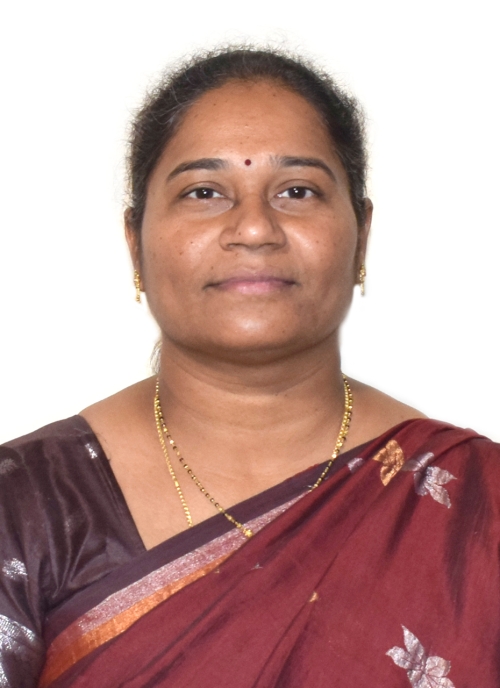
Prof. Durgadevi G Y
Assistant Professor
Computer Science & Engineering
- durgadevigy@bmsit.in
- 9480613001
- Employee ID : 2281
M.Tech, (P.h.D)
Network Security
CSI- Life Member
- DOI:10.1063/5.0137493
- https://ieeexplore.ieee.org/document/8769309
- https://iaeme.com/MasterAdmin/Journal_uploads/IJARET/VOLUME_11_ISSUE_7/IJARET_11_07_022.pdf
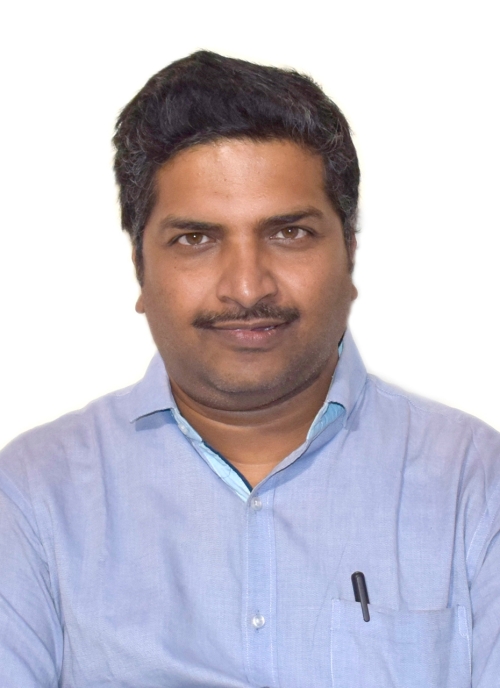
Prof. Jagadish P
Assistant Professor
Computer Science & Engineering
- jaga1982@bmsit.in
- 9113511643
- Employee ID : 3128
M.tech (Ph.d)
"SECURED TOP 28TH PLACE IN APTITUDE TEST By Aptech"
AI,Machine Learning
SEMCE (Life-time Member)
- "Social Media Ads Analysis 2021 International Conference on Forensics, Analytics, Big Data, Security, FABS 2021 "
- "AI-Based Learning Assistant Using Natural Language Processing-COMPSIF 2025"
- "Nitrogen Deficiency Detection in Paddy for Urea Fertilizer Management"
- Improving The Learning Capability Of Students In Classroom Using Augmented Reality-IJCSN 2018
- Resume Screening and Ranking with spaCy -2021
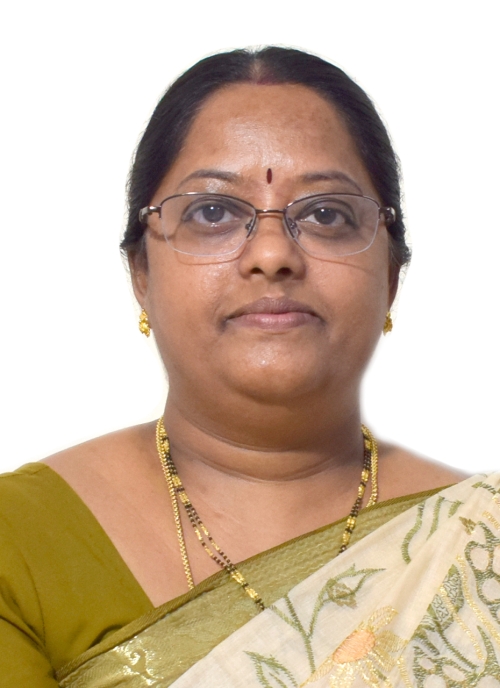
Dr. Durga Bhavani A
Assistant Professor
Computer Science & Engineering
- Durga842004@bmsit.in
- 8951440755
- Employee ID : 3630
PhD
Iot, AIML and Network Security
ISTE,IAENG
- BayesIDS: a Bayesian-optimized learning-based intrusion detection system,DOI:10.1140/epjp/s13360-025-07001-9
- A Novel Approach of Intrusion Detection System for IoT Against Modern Attacks Using Deep Learning,DOI:10.1007/978-3-031-53549-9_18
- Conflict-driven learning scheme for multi-agent based intrusion detection in internet of things,DOI:10.11591/ijece.v14i5.pp5543-5553
- A Novel Network Intrusion Detection System Based on Semi-Supervised Approach for IoT,DOI:10.14569/IJACSA.2023.0140424
- Pressure Ulcer Detection and Prevention Using Neural Networks,DOI:10.1007/978-981-99-1745-7_44
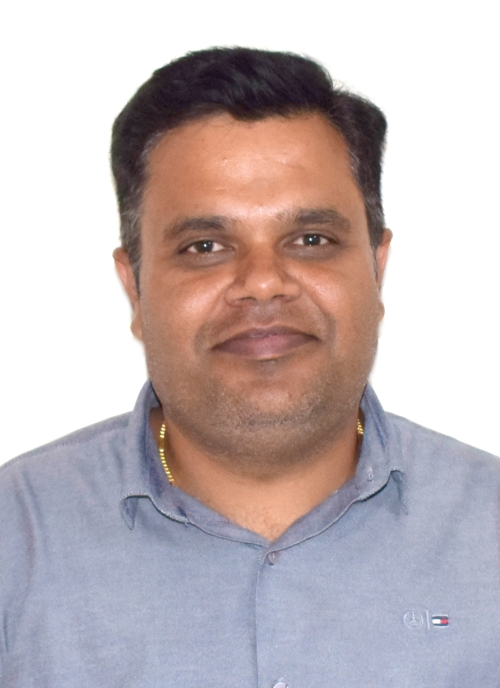
Prof. Rajesh N V
Assistant Professor
Computer Science & Engineering
- rajesh@bmsit.in
- 9916851364
- Employee ID : 3696
Dr. Chethana C
Assistant Professor
Computer Science & Engineering
- chethana_cse@bmsit.in
- 7975312504
- Employee ID : 4310
Ph.D
CSE
ISTE,IUPRAI
- Forecasting the Future: The Role of Digital Transformation in the Evolution of Industry 5.0 in Developing Economies
- Survey of graph neural network for learning complex problems
- Analysis of Credit Card Fraud Data Using Various Machine Learning Methods
- Neural Network Approach to Human Brain by Reverse Engineering
- Deep Learning Technique Based Intrusion Detection in Cyber-Security Networks
Dr. Ambika G N
Assistant Professor
Computer Science & Engineering
- ambikagn@bmsit.in
- 9902323632
- Employee ID : 4312
Ph.D
Artificial Intelligence
CSI
- Mathematics for 2D face recognition from real time image data set using deep learning techniques
- An Efficient Deep Learning with Optimization Algorithm for Emotion Recognition in Social Networks
- Optimal Deep Convolutional Neural Network Based Face Detection and Emotion Recognition Model
- A Survey on Image Emotion Analysis for Online Reviews
- Air quality index prediction using linear regression
Prof. S Mahalakshmi
Assistant Professor
Computer Science & Engineering
- maha.shanmugam@bmsit.in
- 9060393410
- Employee ID : 4329
BE, ME, (P.h.D)
Rank Holder in PG, High impact teaching skills from Dale Carnegie Inc Received Jetson Kit from NVIDIA Professor university partnership program
Neural Networks, IoT, Computer Vision
MCSI, MIEI
- Smart question answering system using vectorization approach and statistical scoring method, Material Today Proceedings, Elseiver, https://doi.org/10.1016/j.matpr.2021.07.369
- Adaptive Ambulance Monitoring System using IoT, Measurement: Sensors , https://doi.org/10.1016/j.measen.2022.100555
- Deep Learning-Based Assessment of Stress Levels Using EEG Signals, Proceedings of the International Conference on Intelligent Systems and Networks. ICISN 2024. Lecture Notes in Networks and Systems, vol 1077. Springer, Singapore
- Smart Digital Fuel Indication System with Distance Calculation using IoT, AIP conference Proceedings , https://doi.org/10.1063/5.0217073
- LLM-Driven Peer Competitor and Stock Analysis, International Conference on Computing for Sustainability and Intelligent , 10.1109/COMP-SIF65618.2025.10969856
Prof. Mari Krithima A
Assistant Professor
Computer Science & Engineering
- krithi.a@bmsit.in
- 9880043718
- Employee ID : 4327
M.E, (P.h.D)
VANET
- Software defined network-based controller system in intelligent transportation system in Iaes International Journal of Artificial Intelligence, Volume 13, Year 2024, Pages 2645-2655
- "Evolving Technological Advancements and Its Effectivity Study in Intelligent Traffic System Lecture Notes in Networks and Systems, Volume 232 LNNS, Year 2021, Pages 447-457"
- IOT BASED ACCIDENT DETECTION SYSTEM IN VANET International Journal of Advanced Research in Engineering and Technology
- Intelligent accident prevention in VANETs,International Journal of Recent Technology and Engineering
- Implementation of FAQ Pages using Chatbot,International Journal of Computer Science and Information Security
Prof. Ambika Subash
Assistant Professor
Computer Science & Engineering
- ambikasubash@bmsit.in
- 9008610899
- Employee ID : 5489
B.E, M.Tech. M.Sc (Dip), MBA (Exec), [Ph.D]
Machine Learning, Artificial Intelligence, Image Processing
"1 of 3 International Association of Engineers (IAENG) , International Association of Innovation Professionals (IAOIP), IEEE Associate Member"
- "Autism Spectrum Disorder Prediction Using TSM-BFC and a Combined CNN–GRU Model Based on the EEG Image Dataset, Engineering Technology and Applied Science Research DOI:10.48084/etasr.12757"
- "An Efficient Autism Spectrum Disorder Classification in Different Age Groups using Machine Learning Models, International Journal of Online and Biomedical Engineering DOI:10.3991/ijoe.v20i09.48831 "
- "Ensemble-based Machine Learning Classification for Early Detection of Autism Spectrum Disorder, 3rd International Conference on Intelligent Data Communication Technologies and Internet of Things Idciot 2025 DOI:10.1109/IDCIOT64235.2025.10914701"
- "Accuracy of classification algorithms for diabetes prediction, International Journal of Engineering and Advanced Technology. DOI:10.35940/ijeat.E1047.0585S19"
Prof. Guruprasad S
Assistant Professor
Computer Science & Engineering
- guruprasad@bmsit.in
- 9886760776
- Employee ID : 5664
Dr. Ravi Kumar B N
Assistant Professor
Computer Science & Engineering
- ravikumarbn@bmsit.in
- 9538118484
- Employee ID : 5663
B.E, M.Tech, Ph.D
"1. Founder, TechStep (January 2012 – July 2013 | 1 year 7 months): Established and led a project-based institute focused on mentoring students to convert innovative ideas into practical software projects, strengthening industry-oriented skills and entrepreneurial thinking.
2. Co-Founder, Rank Technologies (January 2011 – July 2013 | 2 years 7 months): Co-founded a product-based technology company specializing in Ruby on Rails, contributing to product design, development, and organizational growth during the early startup phase.
3. Guided the project ""Interactive Skills Enhancer (ISE): A Virtual Reality-Based Learning Tool for Children with ASD and ID,"" which secured Third Place in the Smart India Hackathon 2024.
4. Recognized as a Top Performer in the Faculty Hackathon at BMSIT for the project titled “Green Bytes.”
5. Secured First Place for the Smart Agriculture Project at the National-Level Project Competition organized by SVCE.
6. Recognized for Outstanding Teamwork with the Best Teamwork Award in the Placement Achievement category.
7. Honored with the Best Teamwork Award for excellent collaboration during the department-level techno-cultural fest ""Semaphore"" in the Achievement category."
Artificial Intelligence and Machine Learning
Life Time member of The Society of EMC Engineers (India) - SEMCE(I) Member ship ID: LM-1261
- "“An Efficient Breast Cancer Detection Using Machine Learning Classification Models” International Journal of Online and Biomedical Engineering-IJOE Scopus and ESCI Q2 "
- "“Leveraging machine learning for intelligent agriculture” Discover Internet of Things Scopus and Web of Science Q2 "
- "“Neural Network based Multi- class model for abnormal heartbeat audio signal Detection” SN Computer Science-SNCS Scopus and Web of Science Q2 "
- "“Effective ANN Model based on Neuro-Evolution Mechanism for Realistic Software Estimates in the Early Phase of Software Development” International Journal of Advanced Computer Science and Applications IJACSA Scopus and Web of Science Q3 "
- "“Software Development Effort Estimation Using Relational Database and Optimized Learning Mechanism” Journal of Computer Science - JCS Scopus Q4 "
Dr. Shankar R
Assistant Professor
Computer Science & Engineering
- shankar@bmsit.in
- 9611616136
- Employee ID : 6456
M.E, Ph.D
"Consultancy - 7 Lakhs generated on RPA and Microsoft Power Automate for the client Ecocash at Harare, Zimbabwe and for BoA at Addis Ababa, Ethiopia. 3rd Rank in M.E Best Teacher Award "
Machine Learning, RPA
LMIUPRAI
- Shankar R et al, "Enhancing Secured Data Sharing in Mobile Cloud Environments Using Self-Generative Schnorr Certificateless Signcryption", International Journal of Computer Networks and Applications (IJCNA), 11(6), PP: 896-914, 2024
- Shankar R et al, "Comparitive study of LSTM and Ensemble models for Hindi text sentiment analysis," 2024 15th International Conference on Computing Communication and Networking Technologies (ICCCNT), Kamand, India, November 2024, pp. 1-6
- Shankar et al, "Women Safety Alert System Using IoT with Fingerprint Authentication and Real-Time Alerts," 2025 International Conference on Computing for Sustainability and Intelligent Future (COMP-SIF), Bangalore, India, 2025, pp. 1-6
- Shankar R, Suma Swamy, “Exploring Sentiment Analysis in Kannada Language A Comprehensive Study on COVID-19 Data using Machine Learning and Ensemble Algorithms”, International Journal of Intelligent Systems and Applications in Engineering, 647-656, ISSN: 2147-6799, Volume-2021, Issue-8, January 2024.
- Shankar R et al, “An Internet of Things-Based Smart Asthma Inhaler Integrated with Mobile Application”, Springer Lecture Notes in Networks and Systems, ISSN: 978-981-99-3758-5, Volume 719, September 2023.
Prof. Shama H M
Assistant Professor
Computer Science & Engineering
- shama.handral.mallesh@bmsit.in
- 9743939846
- Employee ID : 9858
B. E, M.Sc Engg., (Ph. D)
Led the establishment of a Higher Education Facilitation Centre, Innovation Centre at BMSIT&M
Computer Vision, Deep Learning, Generative modelling
Dr. Savitha S
Assistant Professor
Computer Science & Engineering
- savitha.kumar@bmsit.in
- 9986545447
- Employee ID : 13063
B.E, M.E ,PhD
WSN, Network Security, Machine Learning
ISTE
- "Integrating Technical, Temporal, and Sentiment Cues: A Hybrid DeepLearning Approach Optimized by WWO for Stock Market Risk Prediction,International Journal of Intelligent Engineering and Systems, Vol.18,No.10, 2025 DOI: 10.22266/ijies2025.1130.57"
- "Adaptive Fuzzy Heuristic Algorithm for Dynamic Data Mining in IoT Integrated Big Data Environments Journal of Fuzzy Extension and Applications. J. Fuzzy. Ext. Appl. Vol. 6, No. 3 (2025) 615–636. https://doi.org/10.22105/jfea.2024. 484955.1676"
- "An Upgraded Blended Model for Human Protein Classification Using Fast Spec CNN with Multi-Head Attention and GAN Augmentation Salud, Ciencia y Tecnología - Serie de Conferencias , Vol. 3 (2024)DOI: https://doi.org/10.56294/sctconf2024804"
- Energy efficient clustering and routing optimization model for maximizing lifetime of wireless sensor network International Journal of Electrical and Computer Engineering (IJECE) Vol. 10, No.5, October 2020, , pp. 4798-4808, ISSN: 2088-8708 DOI: http://doi.org/10.11591/ijece.v10i5.pp4798-4808
- "Efficient Task Offloading Processing in Edge Computing Using Grey Wolf Optimization and Graylag Goose Optimization Algorithms International Journal of Intelligent Engineering and Systems, Vol.18, No.3, 2025 DOI:10.22266/ijies2025.0430.58"
Dr. Srinivas B V
Assistant Professor
Computer Science & Engineering
- srinivas.bv@bmsit.in
- 8884400020
- Employee ID : 14386
BE, M.Tech, Ph.D
Cleared UGC NET in Computer Science in December 2019
Cloud Computing, Artificial Intelligence & optimization Techniques
ISTE
- “Virtual Machine Migration-Based Intrusion Detection System in Cloud Environment Using Deep Recurrent Neural Network” has been published in Cybernetics and Systems: An International Journal, DOI 10.1080/01969722.2022.2122008, published by Taylor and Francis, 19th Sep 2022. SCIE Indexed
- “ChicWhale optimization algorithm for the VM migration in cloud computing platform” has been published in Evolutionary Intelligence journal, ISSN 1864-5909, Evol. Intel DOI 10.1007/s12065-020-00386-9, published by Springer Nature, 2nd April 2020. [Scopus]-Q2
- “Access management based on deep reinforcement learning for effective cloud storage security” has been published in International Journal of System Assurance and Engineering Management, https://doi.org/10.1007/s13198-024-02596-1, published by Springer Nature, 9th Dec 2024. [Scopus and Web of Science]-Q2
- “Optimizing and securing electric vehicle charging infrastructure for resilient energy systems using AI and quantum key empowered in smart grids” has been published in International Journal of System Assurance Engineering and Management, DOI: https://doi.org/10.1007/s13198-025-02994-z, published by Springer Nature, 21st OCT 2025. [Scopus and Web of Science]-Q2
- “Elliptic Curve Cryptography and Password Based Key Derivation Function with Advanced Encryption Standard Method for Cloud Data Security” has been published in International Journal of Intelligent Engineering and Systems, DOI: 10.22266/ijies2024.1231.62, published by INASS, 5th Dec 2024. [Scopus]-Q2
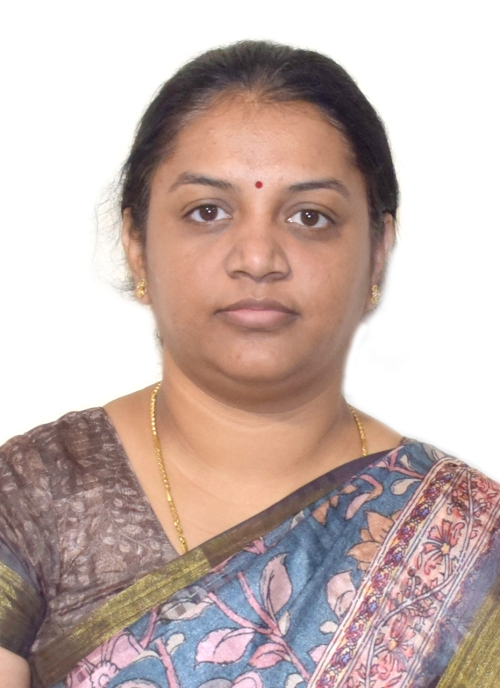
Prof. Bhavya G
Assistant Professor
Computer Science & Engineering
- bhavyasati@bmsit.in
- 9663926568
- Employee ID : 5466
BE.M.Tech. (Ph.D)
Topper 5% in NPTEL Exam for the course "The introduction to Machine Learning"
Machine Learning, Artificial Intelligence
ISTE
- A Smart Intelligent Internet of Things Framework for Predicting Mental Health. Advanced Theory and Simulations. 8. 10.1002/adts.202500048.
- Enhancing breast cancer detection: Integrating deep learning with evolutionary algorithms. Int J Syst Assur Eng Manag (2025). https://doi.org/10.1007/s13198-025-02981-4
- Smart Farming and Human Bioinformatics Systems Based on IoT and Sensor Devices. 10.1201/9781003479062-12.
- An Empirical Study on Indian Economy Over COVID-19 Pandemic. Journal of Health Management. 2024;0(0). doi:10.1177/09720634241278820
- "A Various CAD systems using mammogram for diagnosing breast cancer," 2023 International Conference on New Frontiers in Communication, Automation, Management and Security (ICCAMS), Bangalore, India, 2023, pp. 1-6, doi: 10.1109/ICCAMS60113.2023.10526133.
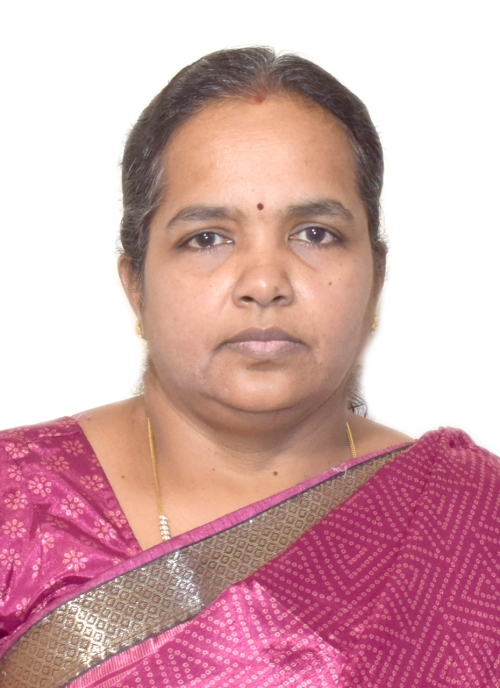
Dr. Y S Kalai Vani
Assistant Professor
Computer Science & Engineering
- kalaivaniys@bmsit.in
- 9611704189
- Employee ID : 14366
MCA,MPhil,PhD
Cyber Security
CSI
- An ODLNN Based Ids for the Detection of DDoS Attacks and the MCSA-ECC Based Secure encryption Scheme for IOT Network Data. In Journal of Advanced Research and Dynamical controlsystems., 12(02):971-991.
- Anomaly Detection in Distributed Denial of Service attack using Map Reduce Improvised counter based algorithm .International JournalofEngineeringandTechnology.,7(3):390-393.
- An Upgraded Blended Model for Human Protein Classification Using Fast Spec CNN with Multi-Head Attention and GAN Augmentation Vol. 3 (2024): Salud, Ciencia y Tecnología - Serie de Conferencias
- Anomaly detection of DDoS Attack using Hadoop. Emerging Research in Computing, Information, Communication and Applications Advanced Intelligent Computing system
- Anomaly detection in Distributed denial of service attack using Map Reduce Improvised counter based algorithm in Hadoop,International Journal of Engineering and Technology 7(436)
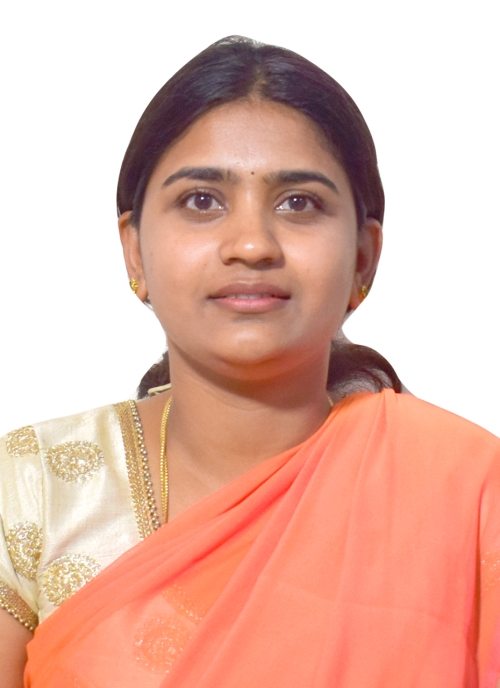
Prof. Shilpa M
Assistant Professor
Computer Science & Engineering
- shilpa.m@bmsit.in
- 9632260456
- Employee ID : 16000
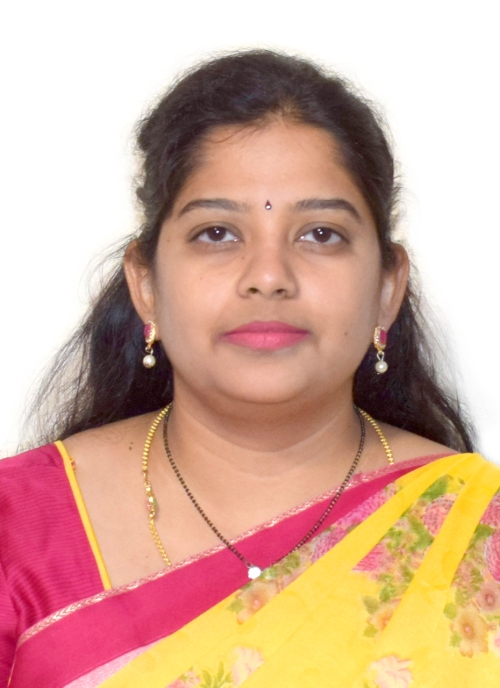
Prof. Annapareddy Haarika
Assistant Professor
Computer Science & Engineering
- haarika@bmsit.in
- 9916377391
- Employee ID : 16202
B.Tech,M.Tech in Computer Science and Engineering
Receive the Best Paper Award For the title "Deep Learning Model for Predicting Basket-Ball Player Injuries Using VGG16" in the international conference of compsif-2025
IOIT,Computer Networks
Deep Learning Model for Predicting Basket-Ball Player Injuries Using VGG16
Prof. Amulya P
Assistant Professor
Computer Science & Engineering
- amulyap@bmsit.in
- 7022861602
- Employee ID : 16205
Prof. Malini M
Assistant Professor
Computer Science & Engineering
- malinim@bmsit.in
- 9443547203
- Employee ID : 16203
ME, (PhD)
Image Processing, Computer Vision, Machine Learning, Pattern Recognition,
Prof. Brunda S
Assistant Professor
Computer Science & Engineering
- brunda@bmsit.in
- 8971403736
- Employee ID : 15999
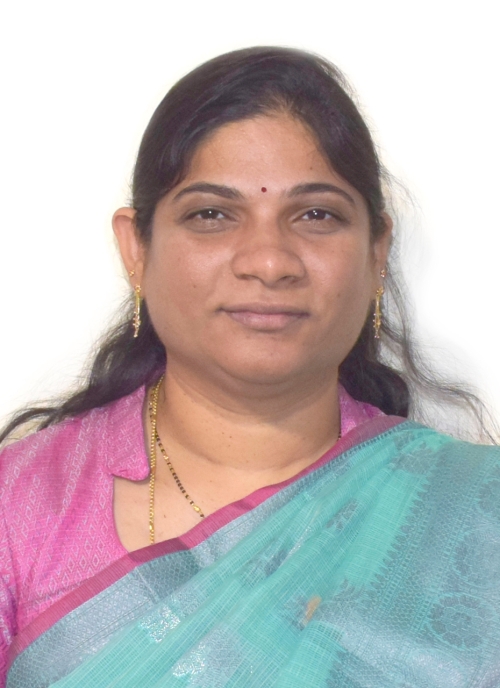
Prof. Goutami Chenumalla
Assistant Professor
Computer Science & Engineering
- goutamich@bmsit.in
- 9949596180
- Employee ID : 16011
M.Tech
5.8years
- SURVEY ON IMPLEMENTATION OF INTRUSION DETECTION SYSTEMS USING MACHINE LEARNING AND CYBERSECURITY TECHNIQUES
- FPGA-Based Image Compression for Wireless Communication Networks Using - CRAN Architecture

Dr. Jai Arul Jose G
Assistant Professor
Computer Science & Engineering
- aruljose@bmsit.in
- 9894350236
- Employee ID : 16045
MCA, M.Phil., Ph.D.
Cryptography, Information Security, Artificial Intelligence
Life Member, Indian Society for Technical Educations, Life Member, Indian Mathematical Society

Prof. Tanya Chandra
Assistant Professor
Computer Science & Engineering
- tanya@bmsit.in
- 9897281036
- Employee ID : 16003
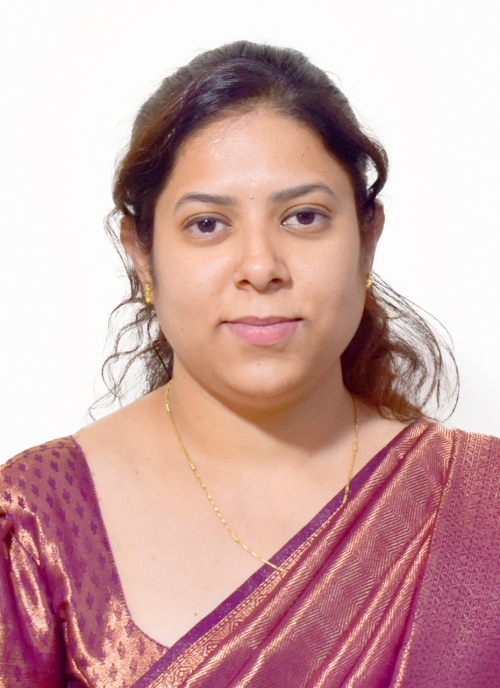
Prof. Chandini A
Assistant Professor
Computer Science & Engineering
- chandini@bmsit.in
- 7795828139
- Employee ID : 16212
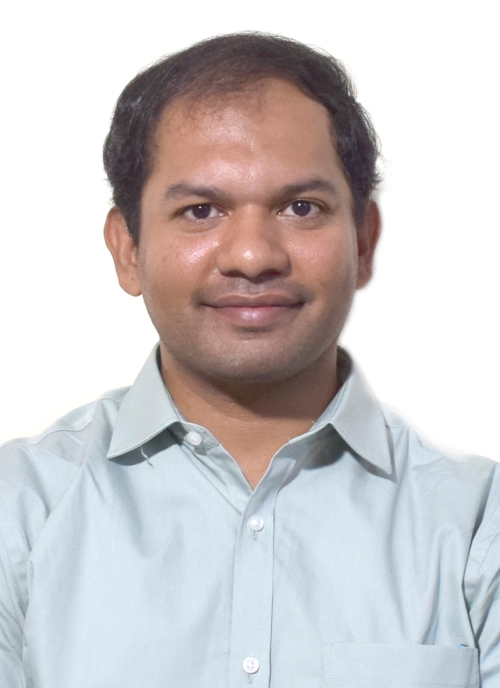
Prof. Pushpanathan G
Assistant Professor
Computer Science & Engineering
- pushpanathan@bmsit.in
- 9036068614
- Employee ID : 16798
M.Tech(Ph.D)
WIPRO CERTIFICATION IN JAVA FULL STACK
WSN, Cloud Security, IOT
- “A Lightweight Blockchain-Integrated Protocol for Dynamic , Fault-Tolerant and Low- Latency Communication in Scalable IoT Wireless Sensor Networks” in ICRDICCT-2025 ISBN :978-989-758-777-1
- A Couter factual Sensitivity-Based Learning Framework for Outcome Prediction in One-Day International Cricket in IJSREM56333 DOI:10.55041.
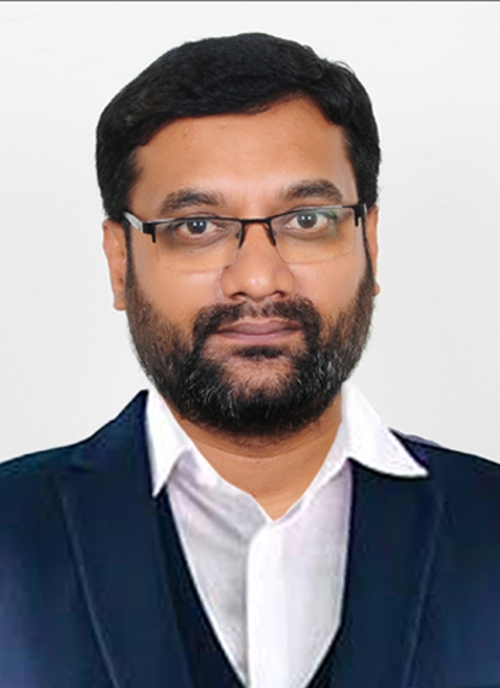
Prof. Vinay Kumar Y B
Assistant Professor
Computer Science & Engineering
- vinaykumaryb@bmsit.in
- 9740181123
- Employee ID : 16058
B E, M E
Artificial intelligence, Machine Learning, Deep Learning
- Y.B. Vinaykumar, H.S. Vimala, Shreyas. J, (2025). Modified Le-Net Model with Multiple Image Features for Skin Cancer Detection. Cancer Investigation, 1–30. https://doi.org/10.1080/07357907.2025.2518400.
- Vinay Kumar, Y.B., Vimala, H.S. Skin Cancer Classification Using PCNN-LinkNet Model Trained with Monotonic and Deep Feature Set. Biomedical Materials & Devices (2025). https://doi.org/10.1007/s44174-025-00467-2
- Yashaswini, Venkatesh, R., Y. B. Vinaykumar, P. Shankar, S. R. Manohara, N. Sivasankara Reddy, N. Hanumantharaju, and A. Jayasheelan. "Bi 3+ Co-Doped Multi-Metal Stack, LaAlO 3: Dy3+ Nano Perovskites: Performance and Efficiency Characteristics with Suitability for C-MOS Devices." Journal of Mines, Metals & Fuels 72, no. 8 (2024).
- Yashaswini, R. Venkatesh, Y.B. Vinaykumar, A.K. Maniyar, Kavitha.B.S, N. Sivasankara Reddy, R. Jagadeesh, P. Shankar, C.R. Ravikumar, A. Jayasheelan, Composite Nano Lanthanum Aluminate Synthesized by Phytocombustion Method: Energy Storage Devices, Sensing and Biological Applications, Nanotechnology perceptions, Vol. 20, S8 (2024).
- Y.B. Vinay Kumar, H.S. Vimala, J. Shreyas, An efficient approach to classify melanoma skin lesions using ensemble CNN model, Data Science & Exploration in Artificial Intelligence, CRC press, 2025, Pp.06.
Prof. S Packiya Lekshmi
Assistant Professor
Computer Science & Engineering
- lekshmiraman@bmsit.in
- 9066333206
- Employee ID : 16069

Dr. Mohammed Khurram J
Assistant Professor
Computer Science & Engineering
- khurram@bmsit.in
- 9538645190
- Employee ID : 16068
Ph.D
Cyber Security Panelist, External BoS Member, UI/UX Expert
Wireless Adhoc network, cyber security, AI ML
IEI
- "Secure Encryption Based Unicast Routing With Genetic Approach, e-ISSN: 2073-607X, p- ISSN: 2076-0930, International Journal of Communication Networks and Information Security (IJCNIS) (Q3 Journal)"
- "A Secure GA Approach in Tree Based Multicast Network, IIOBJ, ISSN: 0976-3104, Thomson Reuters /Emerging Sources Citation Index NLM ID: 101715792(Web of Science)"
- "A Secure GA Approach in Mesh Based Multicast Network, Imprint: KeAi, ISSN: 2666-7649, e- ISSN: 2666-7649, Science Direct (Elsevier)"
- "A Link Based Genetic Algorithm Approach In Optimizing Routing In Wireless Ad Hoc Network, Indian Journal Of Computer Science And Engineering, Scopus coverage years: from 2019 to Present, Publisher: Engg Journals Publications, e-ISSN : 0976-5166 p-ISSN : 2231-3850 DOI : 10.21817/indjcse/2020/v11i5/201105112 Vol. 11 No. 5 Sep-Oct 2020. DOI: 10.7763/IJCCE.2014.V3.331"
- "A paper titled “Design and Implementation of Surveillance Robot for Outdoor Security” was presented in “2017 IEEE International Conference on Recent Trends in Electronics, Information and Communication Technology [RTEICT-2017]” on 19-20th May 2017. ISBN:978-1-5090-3704-9"
Prof. Akshay Arya
Assistant Professor
Computer Science & Engineering
- akshay.arya@bmsit.in
- 9108784371
- Employee ID : 16136
Prof. Arpitha Shivanna
Assistant Professor
Computer Science & Engineering
- arpitha.shivanna@bmsit.in
- 9743331692
- Employee ID : 16433
MTECH
Qualified in KSET 2023 for Assistant Professor, Qualified in NET-JUNE 2025 for PHD
Computer Networking, Machine Learning, Cloud Computing
Prof. Soujanya S D
Assistant Professor
Computer Science & Engineering
- soujanya.sd@bmsit.in
- 8660907167
- Employee ID : 16559
Mtech
Artificial Intelligence and Machine Learning and Gen AI
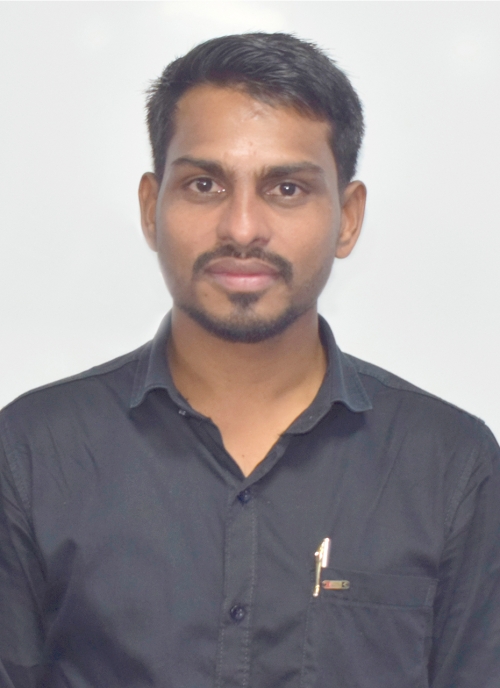
Prof. Beerappa Belasakarge
Assistant Professor
Computer Science & Engineering
- beerappa_mcs@bmsit.in
- 7028700361
- Employee ID : 14209
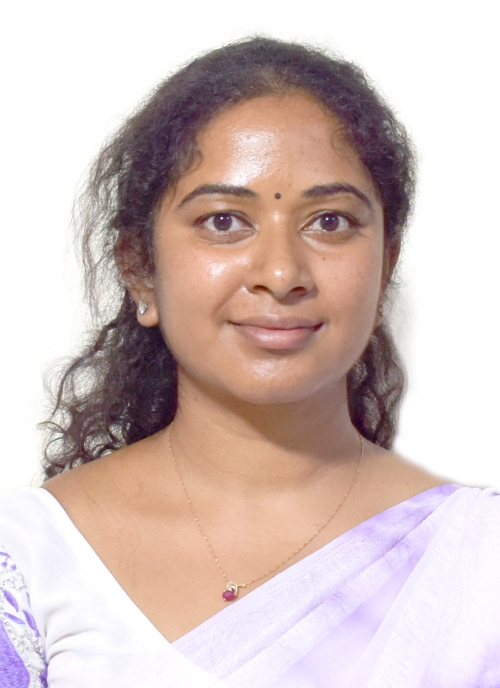
Dr. Neetha P U
Assistant Professor
Computer Science & Engineering
- neethapu@bmsit.in
- 8123453609
- Employee ID : 16021
PhD
AI, ML, DL
- Book: Multi-Class Classification of Alzheimer's/Dementia using Deep Learning Paperback – 13 March 2025 by Neetha P U (Author), Pushpa C N (Author)
- "Patent: Neetha P U, Simran S, Pushpa C N, and Thriveni J, “A Framework for Early Detection of Alzheimer’s Disease through Adaptive Multi-Class Balancing in Image Classification”, Indian Patent, No: 202441027236, Date of Publication: 12/04/2024."
- "Patent: Neetha P U, and Pushpa C N, “BORDERLINE-DEMNET ARCHITECTURE FOR CLASS-IMBALANCE AND DEMENTIA STAGE CLASSIFICATION FROM MRI IMAGES” , Indian Patent, No: 202441075689, Date of Publication: 07/10/2024"
- "Patent: Neetha P U, and Pushpa C N, “MANAGING CLASS IMBALANCE IN ALZHEIMER'S AND DEMENTIA MULTI-CLASS CLASSIFICATION” Indian Patent, No: 202541064880, Date of Filled: 08/07/2024"
- "Journal Neetha P U, Simran S, Pushpa C N, Thriveni J, Venugopal K R, ” ADEMNET archi- tecture: An innovative solution for adaptive multi-class balancing problem in image classification,” The Indonesian Journal of Electrical Engineering and Computer Sci- ence (IJEECS), vol. 33, no. 2, pp. 1252-1260, 2024. DOI: http://doi.org/10.11591/ijeecs.v33.i2.pp1252-1260"
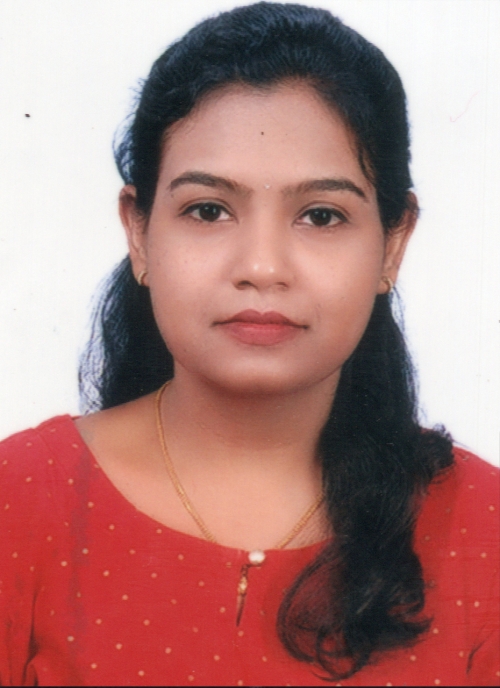
Prof. Chaitanya V
Assistant Professor
Computer Science & Engineering
- chaitanya.v@bmsit.in
- 8884240572
- Employee ID : 16578
BE, ME
Machine Learning, Artificial Intelligence, Cloud Computing
IAENG
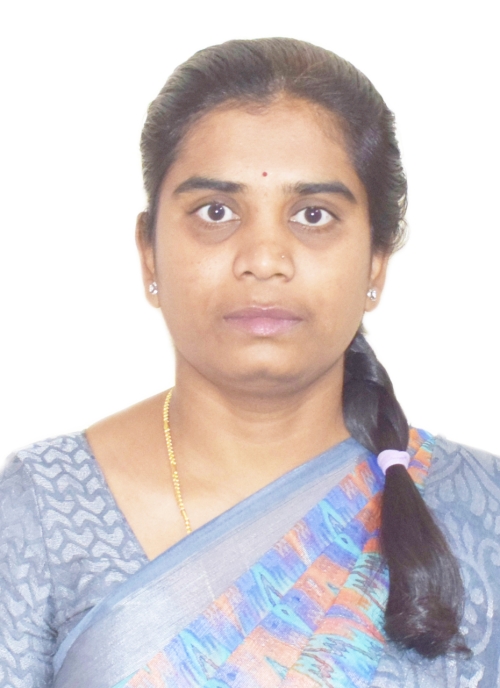
Prof. Sowmya K
Assistant Professor
Computer Science & Engineering
- sowmya.k@bmsit.in
- 7204766141
- Employee ID : 16623
M.tech
Kset Qualified, Wipro certified faculty in database expert solutions, scored top 5% in NPTEL(artificial intelligence : concepts and techniques)
AI and ML in cybersecurity
Prof. Spandana L
Assistant Professor
Computer Science & Engineering
- spandana@bmsit.in
- 9591798972
- Employee ID : 16181
M Tech ( PhD )
Machine Learning and Artificial Intelligence
Prof. Saritha A K
Assistant Professor
Computer Science & Engineering
- saritha.ak@bmsit.in
- 9567186779
- Employee ID : 16063
B.Tech,M.Tech.(Ph.D)
NIL
Machine Learning
NIL
- " Integrating Deep Reinforcement Learning and Feature Selection for Improved Crop Yield Prediction,Journal of Wireless Mobile Networks Ubiquitous Computing and Dependable Applications 2025 | Journal article DOI: 10.58346/JOWUA.2025.I4.028 EID: 2-s2.0-105025445470 Part of ISSN: 20935374 20935382 Contributors: Saritha, A.K.; Jeena Jacob, I.,https://www.scopus.com/inward/record.url?eid=2-s2.0-105025445470&partnerID=MN8TOARS"
- " Blood Sugar Prediction with an Improved Mechanism for Diabetic using Recurrent Neural Networks,Annals of the Romanian Society for Cell Biology, 2021-01-03 | Journal article Part of OTHER-ID: https://ejmcm.com/article_8108.html Contributors: Saritha A.K,https://www.annalsofrscb.ro/index.php/journal/article/view/1096"
- " Image segmentation based on kernel fuzzy C means clustering using edge detection method on noisy images, International Journal of Advanced Research in Computer Engineering & Technology (IJARCET) 2013-02-02 | Journal article"
Prof. Priyanka M R
Assistant Professor
Computer Science & Engineering
- priyanka.mr@bmsit.in
- 91 9513356222
- Employee ID : 16399
B.E , M.Tech
Successfully completed 6 NPTEL Certifications
Network Security and Block Chain Technology
IEEE
RIT-IEEE Conference Publications in December-2025

Prof. Shabeena Lylath D B
Assistant Professor
Computer Science & Engineering
- shabeena@bmsit.in
- 8971782420
- Employee ID : 18356
MTech(Ph.D)
IMPLEMENTATION OF DRONE IN THE AUTONOMOUS CAR USING IOT Project Selected for State Level Exhibition held at Alva’s Institute of Engineering and Technology, Moodubidire on 11 – 12 August 2023
Machine Learning
- Efficient Approach for Autism Detection using deep learning techniques: A Survey,2022 IEEE 3rd Global Conference for Advancement in Technology
- Autism spectrum disorder identification with multi-site functional magnetic resonance imaging, IAES International Journal of Artificial Intelligence, Volume 13, Year 2024, Pages 2141-2152
- Ensemble Based Machine Learning System for Early detection of Autism Spectrum Disorder, Patent No:202541062243 on 11-07-2025
- NETWORK SECURITY MANAGING DEVICE, Patent No. 6445428 on 24-05-2025

Prof. Shweta Prabha
Assistant Professor
Computer Science & Engineering
- shweta.vt@bmsit.in
- 9900632804
- Employee ID : 18363
M.Tech (Ph.D)
Machine Learning
IACSIT (80349190)
- Wavelet transform based on QRS detection using Diodic algorithm.
- Augmenting knowledge management with immersive technologies: Exploring transformative use cases for AR and VR.
- A Web-Based E-Commerce Recommender System Using Flask and Algorithms.
- Simulation of Urban Mobility.
- Pixel based image fusion using principal component analysis, Laplacian pyramid and dwt-style separation and Bloom’s taxonomy categorization.

Prof. Gururaj P
Assistant Professor
Computer Science & Engineering
- gururajp@bmsit.in
- 9886076898
- Employee ID : 18333
Prof. Srujana S N
Assistant Professor
Computer Science & Engineering
- srujana.sn@bmsit.in
- 9110410244
- Employee ID : 18335
B.E,vM.Tech (P.h.D)
DEEP LEARNING
- Connectivity Enhancing-Automated Lip Interpretation Using Deep Learninghttps://doi.org/10.1109/ICDECS59733.2023.10503235
- A Novel Approach for the Detection of Skin Cancer Using Gen AI https://doi.org/10.1109/CONECCT65861.2025.11306747
- Controlled Face Generation Using Conditional GANhttps://doi.org/10.1109/COMP-SIF65618.2025.10969922
- Autism Detection System using Behavioral Data https://doi.org/10.1109/ICISCN64258.2025.10934153
- Energy-Efficient Autism Spectrum Disorder Data Collection Mechanism using Wireless Sensor Networks and Internet-of-Thingshttps://doi.org/10.1109/ICAECT63952.2025.10958965
Prof. Manjula S D
Assistant Professor
Computer Science & Engineering
- manjulasd@bmsit.in
- 7022921367
- Employee ID : 18342
Prof. Syed Matheen Pasha
Assistant Professor
Computer Science & Engineering
- psyedmatheen@bmsit.in
- 7760640363
- Employee ID : 18359
Prof. Chetan D S
Assistant Professor
Computer Science & Engineering
- chetands@bmsit.in
- 9008783329
- Employee ID : 18360
MTech
NETWORKING
IEEE
Presented a paper in IEEE-WCCEST-25
Prof. Sanjana V Hunashikatti
Assistant Professor
Computer Science & Engineering
- sanjanavh@bmsit.in
- 7204324626
- Employee ID : 18330
BE(ISE), M.Tech(IT), PHD(CSE) pursuing
Machine Learning, Artifical Intelligence,Java,IOT
Institute of India
- Chimp Classification: An Deep Learning Approach to Monkey Identification
- Enhancing Personalized Learning And Operational Efficiency In Smart Education: An Iot based Framework And Empirical Evaluation
- AI-Powered System And Method For Intelligent Material Selection In Mechanical Design
- A Literature Review: The Role of IoT in Shaping Smart Education Environments
- Natural Language to Code: Improving Semantic Reasoning in Code Generation Models
Prof. Belji T
Assistant Professor
Computer Science & Engineering
- belji@bmsit.in
- 9880790308
- Employee ID : 18337
M.Tech, (Ph.D)
19th University Rank in B.Tech, Anna University
Internet of Things, Cloud Computing, Machine Learning
- R. L. Priya, T. Belji and V. Sadasivam, "Security of health imagery via reversible watermarking based on differential evolution," 2014 International Conference on Medical Imaging, m-Health and Emerging Communication Systems (MedCom), Greater Noida, India, 2014, pp. 30-34, doi: 10.1109/MedCom.2014.7005570.
Prof. Shilpa K A
Assistant Professor
Computer Science & Engineering
- shilpaka@bmsit.in
- 9902955771
- Employee ID : 18336
B.E, M.Tech, Ph. D(pursuing)
Cyber security and Machine Learning
ACM
Prof. Chaitra D B
Assistant Professor
Computer Science & Engineering
- chaitradb@bmsit.in
- 8088615536
- Employee ID : 18353

Prof. Manjunatha P V
Assistant Professor
Computer Science & Engineering
- manjunathapv@bmsit.in
- 8277781210
- Employee ID : 18354
M.Tech,( Ph.D)
Internet of Things, Network Security
Access Control Framework in the Cloud based on Multi-Blockchain with Light Privacy Protection
Prof. Tresa Maria Josylin
Assistant Professor
Computer Science & Engineering
- tresamjosylin@bmsit.in
- 8310481722
- Employee ID : 18733
Mtech in CSE
Received Gold medal- Mtech in CSE
Artificial Intelligence and Machine Learning
IFERP
- A multimodal framework for secure digital document fortification using Morse code and biometric watermarking
- Enhancing Genetic Algorithm Efficiency: A Comparative Study of Serial and Parallel Computation for TSP
- Behavioral Data-Driven Learning Analytics for Early Intervention in At-Risk Students
- Understanding the Fundamentals of Uncertainty in Neural Networks, Causes and Types

Prof. Anusha K L
Assistant Professor
Computer Science & Engineering
- anushakl@bmsit.in
- 8147581991
- Employee ID : 18334
M.Tech(Ph.D)
11
IAENG
"OSTEOPOROSIS DETECTION TECHNIQUES: A COMPARATIVE REVIEW WITH EMPHASIS ON THE FEMUR DOI: 10.58240/1829006X-2025.21.9-287"
Prof. Sneha Sureddy
Assistant Professor
Computer Science & Engineering
- sneha.sureddy@bmsit.in
- 9945632111
- Employee ID : 18338
M.Tech
Top1 and Top5% in NPTEL courses.
Computer Vision,Machine Learning
- Multi-features based multi-layer perceptron for facial expression recognition system
- Novel Ultrasonic Image Reconstruction and Deep Learning Model-Based Categorization for Accurate Liver Disease Diagnosis
- Curating Emotion-Based Music Playlists with CNN and Haar Cascade for Facial and Eye Detection
- A hybrid LSTM-auto encoder and random forest-based cybersecurity framework with blockchain and Kafka integration
- Mitigation of malicious nodes using T-AODV in MANET

Prof. Bhagyashree P Pujeri
Assistant Professor
Computer Science & Engineering
- bhagyashree@bmsit.in
- 9731069732
- Employee ID : 18724
M.tech
Cyber security, Machine Learning, Data Science
- Published Book Chapter titled “ The Impact of Behavioral Biases on Stock Investment Decisions: Evidence from Bangalore, India” in Studies in Systems Decision and Control, ISSN: 21984182 21984190, DOI: 10.1007/978-3-031-85898-7_17
- Rohit B, Channakeshava H C, Bhavya VM. “Driving Financial Inclusion in Bhata’s Amrit Kaal: The role of Digital Payment Platforms and Embedded Finance. ISBN 978-93-48859-98-3, DOI: https://doi.org/10.9734/bpi/mono/978-93-48859-98-3/CH26 Page No. 315 - 329
- MonicaM, Suhas patel, G. Ramanaiah, Channakeshava H C, and Bhavya VM, “Fostering Employee Relations through communication Practices: Creating a culture of Trust, sharing and transparency. ISBN 978-93-48859-98-3 https://doi.org/10.9734/bpi/mono/978-93-48859-98-3/CH21 Page No. 406 – 418.

Prof. Kusuma H P
Assistant Professor
Computer Science & Engineering
- kusumahp@bmsit.in
- 7204210895
- Employee ID : 18765
Prof. Mamatha M
Assistant Professor
Computer Science & Engineering
- mamatha.m@bmsit.in
- 7348977158
- Employee ID : 18885

Prof. Arnab Panda
Assistant Professor
Computer Science & Engineering
- arnabpanda@bmsit.in
- 8970926584
- Employee ID : 19052
M.TECH
Data-Sciences ,Machine Learning
- Paper IQ - An Explainable AI Approach for Research Paper Summarization and Categorization
- A Study on Malware Detection using Machine Learning Algorithms
Prof. Chandana D M
Assistant Professor
Computer Science & Engineering
- chandanadm@bmsit.in
- 6366074701
- Employee ID : 15889
M.Tech
Cyber Security
- https://ieeexplore.ieee.org/document/10969866
- https://ieeexplore.ieee.org/abstract/document/10969903
Prof. Rachana C V
Assistant Professor
Computer Science & Engineering
- rachanacv@bmsit.in
- 9986214378
- Employee ID : 15995
M.Tech
"Honored to serve as a Guest Lecturer for the Karnataka Police Training Session, contributing to professional law enforcement training. "
Machine Learning , Computer Networks
- "Optimizing Plant Disease Detection Using Convolutional Neural Networks and Docker Environment https://ieeexplore.ieee.org/document/10969965 "
Prof. Renita Blossom Monteiro
Assistant Professor
Computer Science & Engineering
- renita@bmsit.in
- 7975168029
- Employee ID : 18348
M.Tech
Computer Networks, IOT, Data Mining, ML.
ISTE
- Securing Financial Frontiers an In-Depth Analysis of Cybersecurity Threats in Banking, Indian Journal of Natural Sciences (IJONS), ISSN: 0976 – 0997, December 2024.
- Part of Speech Tagger and Syntactic Parser for Tulu language using Machine Learning Approach, Indian Journal of Natural Sciences (IJONS), ISSN: 0976 – 0997, October 2023.
- "Evaluation of Multimedia Transmission for Wireless Multi-hop Networks using the Evalvid Tool, International Journal of Advanced Research in Computer and Communication Engineering (IJARCCE), DOI 10.17148/IJARCCE.2020.91017, Vol. 9, Issue 10, October 2020."
- "Optimization of Adaptive Modulation and Coding for Video Transmission Over A Single-Hop Wireless Network, International Journal of Research in Engineering and Technology (IJRET). eISSN: 2319-1163 | pISSN: 2321-7308, Volume: 05 Issue: 07 | Jul- 2016."
Prof. Simi Sara Mani
Assistant Professor
Computer Science & Engineering
- simisara@bmsit.in
- 9886724467
- Employee ID : 18349
M.E
Data structures and algorithms, software engineering, python programming,c programming
Prof. Tanishq Nanda
Assistant Professor
Computer Science & Engineering
- tanishq@bmsit.in
- 8218817178
- Employee ID : 15769
B.Tech, M.Tech
Blockchain, Quantum Computing
IEEE CSI
- An Explorative Cross Sectional Comprehensive Survey on Quantum Computing
Prof. Geetha P L
Assistant Professor
Computer Science & Engineering
- geetha.pl@bmsit.in
- 9739175050
- Employee ID : 20366
B.E, M.Tech
Computer Science
- "NBA Game Prediction Using Machine Learning Algorithm”
- “A Comparative Study for Source Privacy Preserving and Message Authentication in Wireless Sensor Networks”
Prof. Ashwini A N
Assistant Professor
Computer Science & Engineering
- ashwini.an@bmsit.in
- 9886252945
- Employee ID : 20376
M.Tech, (Ph.D)
Cyber Security
https://jowua.com/wp-content/uploads/2025/04/2025.I1.036.pdf
Prof. Aruna N
Assistant Professor
Computer Science & Engineering
- arunavinod@bmsit.in
- 9980562345
- Employee ID : 18328
BE,ME
AI, Big Data, Cloud computing
ISTE
Prof. Likitha M
Assistant Professor
Computer Science & Engineering
- likitham@bmsit.in
- 9071185891
- Employee ID : 18350
MTech
Computer Science
IEEE NMITCON: 2nd IEEE International Conference on Networks, Multimedia and Information Technology (Title: Image Segmentation Techniques for Bone Cancer Identification in X-ray and MRI Imagery)
Prof. Sanju D J
Assistant Professor
Computer Science & Engineering
- sanju.dj@bmsit.in
- 9538066181
- Employee ID : 20725
Mtech
Block Chain
ISTE
A Hybrid Blockchain Federated Learning Framework for Secure, Privacy Preserving, and Intelligent Data Management in Cloud IoT Environments
Prof. Maneesha Athikam
Assistant Professor
Computer Science & Engineering
- athikam.maneesha@bmsit.in
- 8106592122
- Employee ID : 20727
Prof. Rachna Shah
Assistant Professor
Computer Science & Engineering
- rachna@bmsit.in
- 9148428551
- Employee ID : 20730
Masters Data Science
AI, Data Science, ML
IEEE Faculty Advisor, ITS
- Advancing Smart Farming with Reinforcement Learning and Aerial Imaging based Artificial Intelligence in Agriculture
- Securing Digital Health through Big Data Analytics and Blockchain Driven Cybersecurity in Healthcare Systems
- Empowering Artificial Intelligence of Things with Intelligent Architectures for Fifth and Sixth Generation Internet of Things Ecosystems
- Harvesting Intelligence through Artificial Intelligence Applications for Precision and Productivity in Agriculture
- Securing Autonomous Vehicle Systems through Machine Learning based Intrusion Detection in Connected Environments
Prof. S Nagasushma Kothapalli
Assistant Professor
Computer Science & Engineering
- nagasushma@bmsit.in
- 8867536063
- Employee ID : 20734
M.Tech(PhD)
1.Received university seed money grant of rs 360000rs for research proposal.
Computer Science and Engineering
- Sharada, K. A., Sushma, K. S. N., Muthukumaran, V., Mahesh, T. R., Swapna, B., & Roopashree, S. (2023). High ECG diagnosis rate using novel machine learning techniques with Distributed Arithmetic (DA) based gated recurrent units. Microprocessors and Microsystems, 98, 104796.
- Sushma, K., Jayalakshmi, M., & Guha, T. (2022, October). Deep learning for phishing website detection. In 2022 IEEE 2nd Mysore Sub Section International Conference (MysuruCon) (pp. 1-6). IEEE.
- Sushma, K. S. N., Viji, C., Rajkumar, N., Ravi, J., Stalin, M., & Najmusher, H. (2023). Healthcare 4.0: A review of phishing attacks in cyber security. Procedia Computer Science, 230, 874-878.
- Ravi, J., Rajkumar, N., Viji, C., Loganathan, D., Sushma, K. S. N., & Stalin, M. (2023). Investigation of task scheduling in cloud computing by using imperialist competitive and crow search algorithms. Procedia Computer Science, 230, 879-889.
- Sushma, K. S. N., Sarkar, A., & Sanyal, G. (2024, May). A CNN-GA Hybrid Approach for Efficient Analysis of Size and Shape of Nanoparticle. In 2024 International Conference on Advances in Modern Age Technologies for Health and Engineering Science (AMATHE) (pp. 1-8). IEEE.
Prof. Varshini S
Assistant Professor
Computer Science & Engineering
- varshinisridhar@bmsit.in
- 9901452832
- Employee ID : 18732
BE,M.Tech
Gold Medal in M.tech
Computer science
- "Title: Areca nut disease prediction using MobileNet V2,rESNET AND VGG-16 Framework 4th International Conference on Ubiquitous Computing and Intelligent Information Systems (ICUIS 2024). "
- "Title: Lung Disease detection using DenseNet201 and MobileNet. 3rd International Conference on Women Researchers in Electronics and Computing. "
- "Title:Transforming Education with Game-based learning state of art Exploration. Conference on Advances in Communication Networks & Systems (CoaCoNS 2025) "
Prof. Chinakurali V Nagabharana
Assistant Professor
Computer Science & Engineering
- nagabharana@bmsit.in
- 9113931626
- Employee ID : 20732
Prof. Umme Kulsum
Assistant Professor
Computer Science & Engineering
- ummekulsum@bmsit.in
- 9480220679
- Employee ID : 20737
B. E., M. Tech.
93% in M. Tech.
Computer Science and Engineering
- Temporally Aware MoveNet Thunder - Real Time Recognition of Traffic Police Gestures in Indian Autonomous Navigation Systems
- Enhancing Underwater Imagery - Advance Image Quality Improvement Usiing CycleGAN for Marine Research and Photography
- Graphical Password Authentication: Image Grid Based Digital Lock for Mobile Apps.
- Survey of Graphical Password Authentication Systems Suitable for Android Application.
Prof. Yamuna B R
Assistant Professor
Computer Science & Engineering
- yamuna@bmsit.in
- 6362493246
- Employee ID : 20739
MCA
Computer Science , AI&ML
International Association of Engineers(IAENG) (Member Number:528562)
- Book publication: Artificial Intelligence and cyber security networks(ISBN:978-93-47785-95-5)
- Book Chapter Publication: Developing a Multimodal Chatbot to Respond to Questions about Acts, Rules and Regulations in the Mining Industry (DOI:https://doi.org/10.61096/978-81-990998-5-2_5 )

Prof. B. Vidhya Banu
Assistant Professor
Computer Science & Engineering
- vidhyabanu@bmsit.in
- 7845566028
- Employee ID : 20740
M.E(CSE), Ph.D(Pursuing)
I have served as a reviewer for IEEE International Conference, I was awarded a grant for an Indian Design Patent titled “AI-powered Chatbot Device for Handling Human Inquiries”, I have published research articles in Scopus-indexed journals, contributed a book chapter, and presented a research paper at an IEEE International Conference.
Machine Learning, Image Processing
IEEE, IAENG, CSI
- A Paper titled “Classification of EEG signals using Neural Network for predicting consumer choices” published in International Journal of Computational Intelligence and Neuro Science. Volume 2022. [Q1] [Impact Factor:3.02]
- A paper titled “Smart Grid Design with Hybrid Renewable Energy Management System for Smart Cities” Accepted for publication in CRC Press Taylor and Francis. (Q3/SCOPUS INDEXED)
Prof. Keerthi P
Assistant Professor
Computer Science & Engineering
- keerthi.p@bmsit.in
- 9945875359
- Employee ID : 20745
BE, MTech(PhD)
Nptel Topper(top 5%) Theory of computation, Techgig code gladiators finalist and awarded as warrior finale
keerthi pakka | LinkedIn
MISTE
- "1. Pakka, Keerthi, and S. Vijaya Shetty. ""A Comparative Study of Artificial Intelligence Techniques on Detecting Food Adulteration."" International Conference on Innovative Computing and Communication.: Springer Nature, 2025.DOI:https://doi.org/10.1007/978-981-96-6681-2_27"
- "2. Pakka, Keerthi and S, Vijaya Shetty, A Review on Factors Raising Consumer Awareness on Food Adulteration (April 14, 2025). Proceedings of the International Conference on Innovative Computing & Communication (ICICC 2024), Available at SSRN: https://ssrn.com/abstract=5216027 or http://dx.doi.org/10.2139/ssrn.5216027"
- Pallavi, N., A. Darshna, L. Naik Manjula, and P. Keerthi. "Hobby Based Learning for Automata Theory and Computability." In 2024 International Conference on Intelligent and Innovative Technologies in Computing, Electrical and Electronics (IITCEE), pp. 1-7. IEEE, 2024.
- "Naik, D.A., Pallavi, N, Keerthi, P Rai, A.K., Jha, A.K., Bindal, A. and Chauhan, S.S., 2024. A Quantum Approach for Text based Steganography. Grenze International Journal of Engineering & Technology (GIJET), 10."
- "Keerthi, P. “Recommending Expert Freelancers to Buyers in Online Marketplace.” Proceedings of the 11th International Conference on Contemporary Engineering and Technology (ICCET 2023), 1–2 May 2023, Prince Shri Venkateshwara Padmavathy Engineering College & Prince Dr. K. Vasudevan College of Engineering and Technology, Chennai, in collaboration with Samarkand State University, Uzbekistan. "

Prof. Charan Kumar Nunna
Assistant Professor
Computer Science & Engineering
- charan@bmsit.in
- 6305262311
- Employee ID : 20731
M -Tech(integ)
Computer Science and Engineering, Software Engineer

Prof. Tejas C S
Teaching Assistant
Computer Science & Engineering
- tejas.cs@bmsit.in
- 6360723317
- Employee ID : 20743

Prof.Pavankumar Patil
Assistant Professor
Computer Science & Engineering
- pavankumarpatil@bmsit.in
- 6360670648
- Employee ID : 20746
M.Tech(CNE)
Networking
IAENG
Published: 1 - Implementation of Smart Home Automation System (International Journal of Inventive Engineering and Sciences (IJIES) ISSN: 2319-9598 (Online), Volume-11 Issue-12, December 2024

Prof. Anusha N
Assistant Professor
Computer Science & Engineering
- anusha.n@bmsit.in
- 9742246821
- Employee ID : 20749
BE, M.Tech.
ReactJS, NextJS, Postgress SQL, Website Development
Prof. Pooja M.V
Assistant Professor
Computer Science & Engineering
- poojamv@bmsit.in
- 9538717168
- Employee ID : 20747
Prof. Indrakumar D R
Assistant Professor
Computer Science & Engineering
- indrakumar@bmsit.in
- 7483550341
- Employee ID : 20742
Prof. Vaishak Kuchinad
Assistant Professor
Computer Science & Engineering
- vaishak@bmsit.in
- 9482944777
- Employee ID : 20752
Phd(pursuing)
Cyber Security
- Improving performance of wireless sensor networks over congestions and transmission errors by cluster based filtering
- Privacy preserved access controller system for cloud storage and maintenance using blockchain
Research
Driving Innovation Through Research and Real-World Impact.
The Research Centre at the Department of Computer Science & Engineering, BMSIT&M, was established in 2014 under Visvesvaraya Technological University (VTU) with the objective of promoting advanced research and innovation in core and emerging areas of computing. Since its inception, the centre has actively contributed to quality research in domains such as artificial intelligence and machine learning, data science, cloud and edge computing, cybersecurity, Internet of Things (IoT), computer vision, natural language processing, blockchain, and software engineering. Supported by a team of experienced and research-active supervisors, the centre hosts both part-time and full-time Ph.D. scholars working on interdisciplinary and application-oriented topics including smart healthcare systems, intelligent transportation solutions, predictive analytics, secure communication systems, and AI-driven solutions for societal challenges. The research outcomes are focused on addressing real-world problems in technology, industry, governance, and sustainability.
The Department of Computer Science & Engineering at BMSIT&M nurtures a vibrant culture of undergraduate research, innovation, and entrepreneurship, encouraging students to design and develop technology-driven solutions for real-world problems. With strong mentoring from faculty members, students have demonstrated excellence in national-level hackathons, coding competitions, research forums, and innovation challenges. The department has consistently secured funding and support from KSCST, VTU, industry collaborators, startups, and government agencies for student projects and research initiatives. Students and faculty have received accolades including best paper awards, innovation awards, and recognitions for technical excellence. Projects span diverse areas such as AI and ML applications, smart cities, cybersecurity, healthcare informatics, fintech solutions, sustainable computing, and assistive technologies. The department maintains a strong publication record in reputed journals and conferences and has received funded project support from agencies such as SERB, DST, and industry partners. This strong emphasis on research, innovation, and applied learning positions the CSE department as a hub for cutting-edge computing education and impactful technological advancement.
DEPARTMENT ACTIVITIES
Student Activities
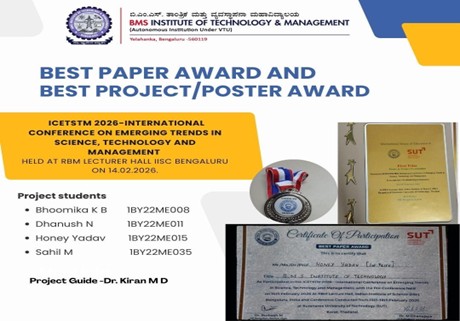
Ms. Bhoomika K B, Mr. Dhanush N, Mr. Honey Yadav, Mr. Sahil M under the guidance of Dr. Kiran M D have secured 1st prize – Best paper award and best project award by ICETSTM 2026 held at RBM Lecturer Hall, IISc, Bengaluru on 14-02-2026
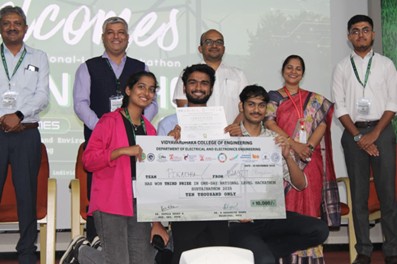
Mr. Ujwal U, Srilakshmi, Pranit Kumar (3rd sem CSE), and M.V.N.K Sai Tanmayee (3rd sem ECE), secured 3rd place and won a ₹10,000 prize at the Sustainathon Hackathon for their project "Piezoelectric Energy Harvesting Prototype" held at Vidyavardhaka Engineering College, Mysuru, on 25.11.2025.
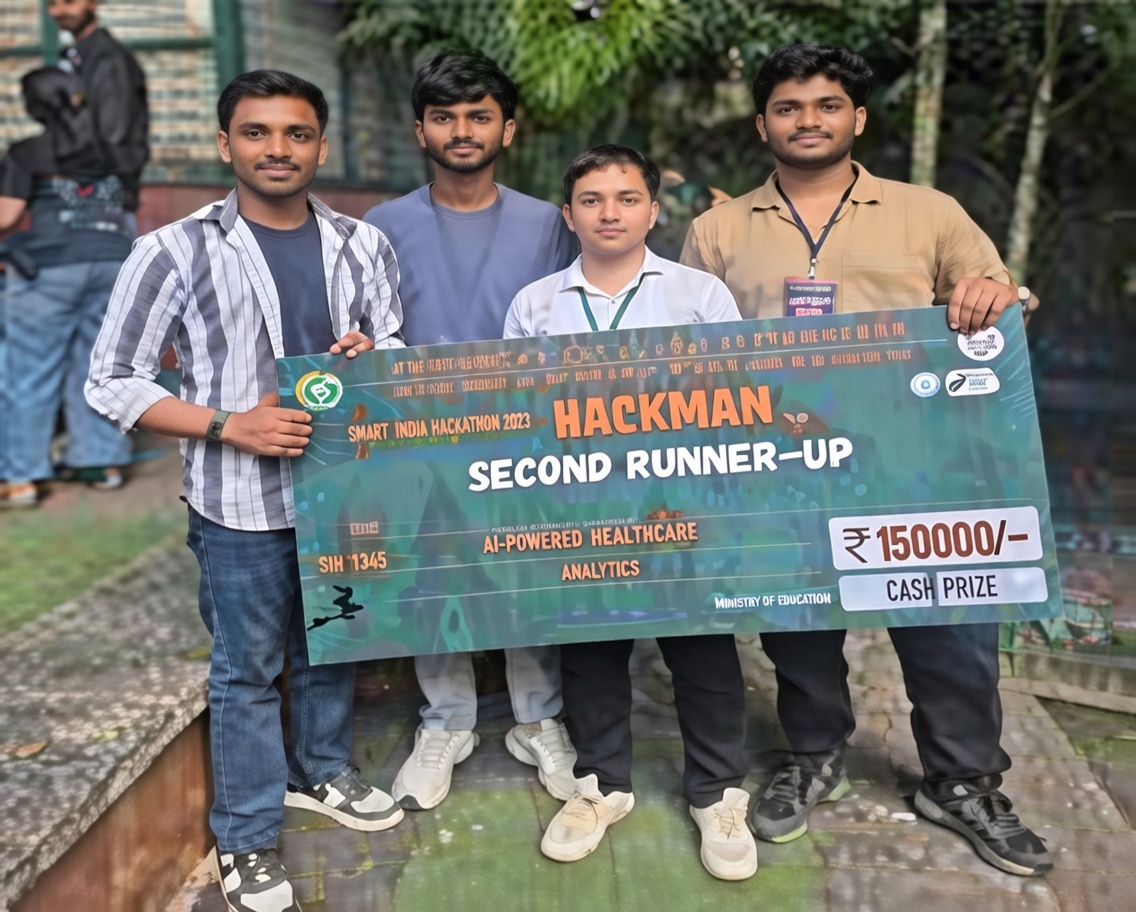
Ankit Singh (1BY23IS028) of Department of ISE won the 2nd Runner-Up position at HackMan V8, a 24-hour hackathon hosted by Dayananda Sagar College of Engineering on 31.10.2025.
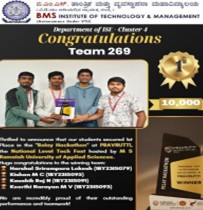
Team 269 comprises of Mr. Harshul, Mr. Kishan, Mr. Kaushik Raj, Mr. Keerthi Narayanan of 5th semester ISE Students has secured 1st place in the Relay Hackathon at PRAVRUTTI the National level Tech Fest hosted by M S Ramaiah University of Applied science on 16.10.2025 and won a cash prize of Rs.10,000/-
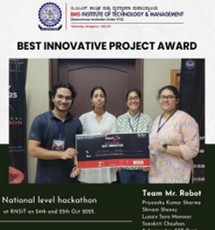
The 3rd Sem CSE-10 CLUSTER-4 students have won the Best innovative project award in 24-hour National level hackathon conducted at RNSIT, Bengaluru during 24.10.2025 and 25.10.2025 and won the cash prize of Rs.5,000/-
Mr. Sai Karthik Ketha (1BY24CS248), 3rd Semester CSE (Section-N), and Mr. Milan Sampath (1BY24CS174), 3rd Semester CSE (Section-F), secured 3rd Place in the Build on Aptos track at the ETHGlobal Delhi Side Event held from 27th–29th September 2025. Their project was awarded Best Consumer DApp along with a cash prize of $900, and they will now represent BMSIT&M at ETHGlobal.
Ms. Khushi Prasad (1BY23IS094), ISE-5B, Ms. Nidhi K N (1BY23IS136) ISE-5C and Ms. Saandra Lakhsshinia (1TE24CS247), 3rd Semester CSE (K Section), secured 2nd Place in the VTU InterCollegiate Bengaluru Division Women's Tournament held from 25th–26th September 2025
Ms. Khushi Prasad (1BY23IS094), 5th Semester ISE (B Section), was part of the BMSIT&M Girls' Table Tennis Team that emerged as Champions in the VTU North Division Inter-Collegiate Tournament held from 15th–16th September 2025 at Sai Vidya Institute of Technology.
Mr Ayush, 5th semester ISE, represented BMSIT&M Men's Badminton Team that won the Bengaluru North Division and qualified for the State Level Tournament to be held at PESCE, Mandya from 11th–13th September 2025.
.jpg)
BMSIT&M NCC Students successfully completed Pan-India ‘C’ Certificate examination on 14th and 15th February 2026 at Christ University.
.jpg)
BMSIT&M students participated in the Nari Shakti Kala Vaibhava 2025 dance competition held 21.11.2025 at Ravindra Kalakshetra, Bengaluru, and achieved outstanding results. Five participants from the institute secured the top three positions: Nivedha Venugopal (1st), Impu Rao H M (2nd), and Sonika K (3rd) from CSE. The Tandav Dance Club was congratulated for this remarkable achievement.
.jpg)
Mr. Aditya S, a first-semester student of CSE-12, volunteered at the Acer Predator League, a prominent e-sports tournament held in Bengaluru on 11.10.2025. As a volunteer, his responsibilities included assisting the event organizers with on-site logistics, managing participant registrations, guiding attendees, and ensuring the smooth execution of the matches.
.jpg)
Ms. Sanvi, Ms. Rashmi and Mr. Krish Jain of 3rd Semester CSE-12, attended the Perspective 2025 panel discussion organized by OS Code BMSIT&M on 15.10.2025, where industry experts shared insights on future technological trends. The session helped to understand upcoming opportunities and challenges in emerging technologies.
.jpg)
Ms. Deetya D Kedilaya of 3rd Semester CSE-12, participated in the PALS Tinkathon, an event with activity and hands-on project-based workshop conducted by Presidency University Bengaluru on 27.10.2025.
.jpg)
Ms. Lolaa student of 3rd semester CSE-11 cluster 4, has participated in KSKSI -13th International KATA seminar held in Bengaluru on 26.10.2025
.jpg)
Mr. Pratham B B of 3rd sem CSE-11 has participated in cyber 3.0 hackathon conducted by Rotract Club of Atria Institute of Technology during 24.10.2025 and 25.10.2025.
.jpg)
Student members (Team SPATIKA) Mr. Tarun Patil, Sri. Srujan Hari T, Mr. Nitish k S and Ms. Harshitha KV have won the 2nd runner up prize at Inter college Project Exhibition at ATME College of Engineering hosted by CEDA, IEEE Bangalore section and Mysore subsection on 25.10.2025 for the Project titled: "Smart Automated Feeding and Environmental Monitoring System for Sericulture " under the guidance of Dr A. Shobha Rani.
.jpg)
A team comprising Tejaswini S Uranakar, Sahana A, and Sanjay S Nayak from the ISE Department secured a Top 10 finish at NeoNexus 36.0, a prestigious 36-hour national-level hackathon organized by the IEEE Student Branch, BITM, at Ballari Institute of Technology and Management on 6–7 September 2025.
.jpg)
BMSIT&M students excel at Neo Nexus 36.0 Hackathon: Mr. Srijan U (ECE Department), representing Team Garuda, secured 1st place among the Top 10 Best Performing Teams at the 36-hour national-level Neo Nexus 36.0 hackathon held at BITM, Ballari on 6–7 September 2025. Additionally, Team SPATIKA—Mr. Tarun Patil, Sri Srujan Hari T, Mr. Nitish K S, and Ms. Harshitha KV—won the 2nd runner-up prize for their project “Predictive Integrated System for Detecting Outdoor AQI, HTC and Acid Rain.”
.jpg)
National Level 36 hours gamethon was conducted by REVA University GAMEFORGE on April 2025.
.jpg)
Hitesh Y CSE 3rd Sem D section won prize at Basketball tournament held at North Zone
.jpg)
Marmik Jain was Runner-Up at the PALS–CADD Centre Hackathon cum Workshop, secured the Runner-Up position in the PALS–CADD Centre Hackathon cum Worksho25-26(1)
Student Activities
.jpg)
An event called Code sprint 2.0 was conducted by NMIT on 2nd may 2024, we had second and third place winners from CSE and ISE.
.jpg)
Our 4th sem CSE students won third prize in Avishkar Prefinal year projects- Srishti Innovation Challenge 2024 for the project titled: “The wonderians using Augmented Reality” organized on May 24th to 26th at Atria Institute of Technology.
.jpg)
Our ISE students have secured 2nd place in the Engenius 2024 Hackathon held at Amrita Vishwa Vidyapeetham, Coimbatore.
.jpg)
.jpg)
3rd sem students, Team Graveyard Glams participated in Kalarava Fashion show and Won first prize
.jpg)
We are happy to share department of Computer Science Engineering cluster 4 students have won cash prize of 5K for Best Innovation project from Impact'X Hackathon, RNS Institute of Technology and Management.
.jpg)
VTU Inter Collegiate Bangalore Division - Women 2025. The Team from the College Won 2nd place.
.jpg)
Proud to announce that the BMSIT Football Team has secured 1st Place at KREEDOTSAV ‘25!. The team fought hard against NITTE, with J. Raghav (3 CSE - K) acting as a solid wall in defense to seal the win.
.jpg)
Harshil sharma, Srisha Prajwal, Prakhar Singh of 3rd semester cse-L section Have secured 1st place in winter of project hackathon conducted by IEEE society... congratulations to the team
.jpg)
Student of 3rd Sem D section, usn 1BY23CS249 Thota Laasya Reddy won third prize in AIGLE AIR team HackDayPondicherry Theme: Convertion of CO2 to O2 using algae.
.jpg)
Our cadet Shivani from 5th Sem, CSE(cluster-3)participated in the Ek Bharat Shreshtha Bharat (EBSB) camp held at Indore, Madhya Pradesh, and made us proud by securing 1st place in the Quiz competition.
.jpg)
Tejaswini S Uranakar (1BY23IS234), Sahana A (1BY23IS186), and Sanjay S Nayak (1BY23IS189) secured a Top 10 finish at NeoNexus 36.0, a 36-hour national-level hackathon organized by the IEEE Student Branch, BITM, held at Ballari Institute of Technology and Management.
Student Activities
.jpg)
The team team has won the Third Prize on "The WonderLens: MarkerBased AR Expedition of the 7 Wonders" is an innovative Augmented Reality (AR) project that was showcased in SRISHTI 2024, State Level Project Exhibition and Competition organized by SrishtiTech at Atria Institute of Technology, Hebbala, Bengaluru.
.jpg)
Swaroop Group, 5th-semester CSE students has been honored as one of the best innovative projects for the Dr. S. K. Shivakumar State Award by the Karnataka State Technology Association (KSTA), under the Government of Karnataka. Project titled "Facial Recognition Security System for Visually Impaired People,”. The prize includes a citation along with a cash award of 10,000/-. The award was presented to the Swaroop Group on National Science Day at the KSTA office on 29.2.2024. under the guidance of Dr. Arunakumari B. N., Department of CSE.
Student Activities
.jpg)
Mr. Chetan Patel PN, 8th Sem Student, Dept. of CSE shared all the “Tips and Tricks” used during the placement session on 24th April 2023 at 7.00PM for the 6th Sem CSE students.
Student Activities
.jpg)
The 6th Sem CSE student Rishab A Rokhade, Cadet Senior Under officer (CSUO) have been awarded The Dy.Director General Commendation Card by Air Commodore Bhupender Singh Kanwar, VSM, DDG-Karnataka & Goa Directorate. And also, CSUO Rishab recently awarded the Director General’s Appreciation Medallion by DG NCC, Lieutenant General Gurbirpal Singh, AVSM, VSM for rendering services of high order and participating in Nation Building on 09.03.2022.
.jpg)
Jatin G Nair was Winner in Table Tennis Inter Collegiate Bangalore North Zone Tournament held at shri Vidya Institute of Technology from 24-11-2021 to 25-11-2021
.jpg)
Thematic concert performed by Mr. Vishnu Shasthri , 7th Sem student of CSE for the series called - "Vaggeya Sourabha'" organized by the Karnataka College of Percussion, Bengaluru. This series pays a tribute to Vaggeyakaras(Composers) in the field of Carnatic Classical Music. Given an opportunity to present the compositions of Sri Muttaih Bhagavatar on 27.2.2022, Event link https://youtu.be/a9nHU687a9I .
Student Activities
.jpg)
Shashi Singh and Anant Shukla have Secured THIRD position in Regional Finals- TCS TECH BYTES
.jpg)
Adarsh Vatsa receiving appreciation from Principal for winning in TCS TechBytes event
.jpg)
Chethanpatel P N, Obtained Marubeni India Meritorious Scholarship of Rs.50000/-
Achievements
Faculty Achievements
.jpg)
Department of CSE organized FDP on Emerging Trends in Cyber Security and Mobile Forensics with Practical Approach organised in association with E&ICT, IIT Guwahati on 19th January 2026, coordinated by Dr. Usha B A.
.jpg)
Dr. Usha B A and team emerged as Top Performers team in the first ever conducted Faculty Hackathon in multidisciplinary domain at BMSIT&M on 22nd November 2025.
.jpg)
Department of CSE organized an AICTE–VAANI Sponsored 2-Day Workshop on “GREEN MOBILITY AND SMART INFRASTRUCTURE FOR FUTURE CITIES” on 10th & 11th October, 2025, coordinated by Dr. Bhuvaneshwari Melinamath.
.jpg)
An official signing of a MoU with ASHTAKSHA LABS Pvt Ltd which has the objective to provide World-class Cyber Security/ AI&ML Services, Research, Training and Consultancy there by protecting the cyber space on 20th June 2025.
.jpg)
Dr Usha B A was recognized and invited to be a part of 8th batch CPC passing out parade on 20th December 2025.
Faculty Achievements
.jpg)
Dr.Usha B A, Professor from CSE initiated an official signing of MoU with Police Training School, Govt of Karnataka on 6th February 2025
.jpg)
Department of CSE organized an expert talk on the topic on “Mastering Latex: To write Professional Reports & Papers for 5th sem and M.Tech students on 17th and 20th of December 2024.
.jpg)
Dr. Gerard Deepak, has extended his support for delivering a talk as a resource person for the FDP titled “Mastering LaTeX for Academic Research and Technical Documentation” in a One Day FDP program on 14.09.2024 at R.L. Jalappa Institute of Technology, Doddaballapura, Karnataka, India.
.jpg)
Prof. Neetha P U, Assistant Professor, Department of Computer Science and Engineering has extended her support for delivering a talk titled “Mastering LaTeX for Academic Research and Technical Documentation” on 14th September 2024 at R.L. Jalappa Institute of Technology, Doddaballapura, Karnataka, India.
.jpg)
Dr. HemaMalini B H, Associate Professor, Dept of CSE attended MongoDB Academic Summit 2024, arranged at Sheraton Grand, Prestige Shantiniketan, Whitefield, Bangalore 0n 10-9-2024 in association with ICT Academy.
.jpg)
Dr. Usha B A, Professor, Dept of CSE has served as Resource Person for the 36th Batch Cyber Crime Investigation Course Organised by Police Training School, Thanisandra during 9th Dec 2024.
.jpg)
Dr. Gerard Deepak, Associate Professor, Department of Computer Science and Engineering was felicitated with the Best Researcher Award for 2023-2024 by BMS Institute of Technology and Management in the Engineers Day event on 15th and 20th September 2024.
.jpg)
Dr. Bhuvaneshwari Secured a Grant of ₹7,85,000 for Refresher Course Development.
.jpg)
Prof. Shankar R, Asst. Prof, CSE visited Zimbabwe to act as RPA Consultant and Trainer for the client Ecocash from 20.02.2024 to 6.03.2024.
.jpg)
Department of CSE has conducted a 6 Day workshop on “WEB VR” for 3rd and 5th Sem students of CSE in collaboration with Element Technologies Inc. from 22.01.2024 to 27.01.2024 conducted Mr. Srinivas and Ms. Pragathi, Senior Software Engineers co-ordinated by Dr. Srivani. P and Prof. Bharathi R.
.jpg)
Department of CSE in collaboration with AICTE has conducted a 2-day workshop on “Creators of Metaverse with Meta Spark Studio” via virtual mode for the CSE students Phase 1 from 08.1.2024 to 09.01.2024 and Phase 2 from 29.01.2024 to 30.01.2024 coordinated by Dr. Srivani P.
.jpg)
Dr. Gerard Deepak, Associate Professor, Department of Computer Science and Engineering featured in the World’s Top 2% Scientist by Stanford University and Elsevier list based on c-score for the year 2023 featured in the 2024 list.
Faculty Achievements
.jpg)
Dr. Sunanda Dixit, MoUs signed with Gamut Analytics Pvt.Ltd and BMSIT&M on 19.04.2023.
.jpg)
Dr. Arun Kumar B.R. Professor, CSE has extended his support as a resource person for one day workshop titled “OBE and NBA” on 20.12.2022 at Dept. of MCA, NMIT, Bengaluru.
.jpg)
Dr. HemaMalini B H, Associate Professor, Dept. of CSE was a session chair at “Third International Conference on Smart Technologies in Computing, Electrical and Electronics (ICSTCEE-2022)” organized by R&D Cell in association with School of Computing and Information Technology, REVA University, on 17.12.2022.
.jpg)
Dr. Arun Kumar B.R. Professor, CSE has extended his support as a resource person for 5 Day National workshop titled “Practical Cybersecurity, Forensics and Blockchain Technology” from 6.12.2022 to 10.12.2022 in association with NCSSS, IEEE, ISTE and CSI for the students of undergraduate and Ph.D Research Scholars. He delivered the session titled “Block chain Technology and its significant Use Cases” on 9.12.2022.
.jpg)
The Department of CSE, has conducted a workshop on “Practical Cybersecurity, Forensics and Blockchain Technology” from 6.12.2022 to 10.12. 2022 in association with NCSSS, IEEE, ISTE and CSI for the students of undergraduate and Ph.D Research Scholars. The workshop was convened by Dr. Arun Kumar B.R. Professor, CSE and Dr. Anjan K, Professor, Cybersecurity along with other faculty coordinators of CSE. The National workshop of 5 days has attracted nearly 90 participants and offered a practical approach for exploring Cybersecurity.
.jpg)
Dr. Usha B A, Professor was Session Chair for the International Conference on Multidisciplinary Research (ICMR 2022) organized by Sharanabasava University, Kalaburgi on 24.11.2022.
.jpg)
Dr. Bhuvaneshwari C.M, has been honored by Goa Chief Minister Shri Pramod Sawanth On Sunday 13.11.2022.
.jpg)
Dr. Anjan Krishnamurthy, Awarded “Research Excellence Award” By InSc on 7th Nov 2022.
.jpg)
Dr. Usha B A, Associate Professor and Deputy Coordinator Incubation Centre of BMSIT&M has coordinated to visit DERBI Incubation Centre at Hosur Road along with Innovation/Incubation students and staff members on 19th Oct 2022.
.jpg)
Dr. Thippeswamy G, Professor & HOD Dept. of CSE insights on various courses & his thoughts in choosing various stream in engineering in ZEE Kannada News Channel on 9.8.2022.
.jpg)
Dr. Arunkumar B.R delivered a session on “Ancient Indian inventions with a special reference to works of Acharya Pingala including Golden Ration” on 27.7.2022 as a part of Jnanavardhana series 2022 which is a unique programme of BMSIT&M.
.jpg)
Dr. Arun Kumar, has been awarded as “Best Researcher” based on the Publications achievements by VD Good Professional Association on 8.7.2022.
.jpg)
Dr. Arun Kumar B.R., delivered a talk on “Blockchain Technology and its Applications” in the national conference on “Recent Innovations in Multidisciplinary Research 2022” held at Sharanabasava University, Kalaburagi during 1.7.2022 to 3.7.2022.
.jpg)
Dr. Usha B A has served as an External Evaluation Panel Member for Judging the 8th National Level Technical Project Exhibition and Competition-SRISHTI - 2022, held at SAINTGITS College of Engineering (Autonomous) on 25.4.2022 and 26.04.2022 at Kottayam, Kerala.
.jpg)
Dr. Usha B A, Associate Professor, Dept. of CSE as a coordinator had conducted a Two days Skill Development Program on “Smart IoT System Design for Industrial Applications” on 8.4.2022 and 9.4.2022 for Final Year students in association with Indian TechKeys.
Faculty Achievements
.jpg)
Dr. Usha B A, Associate Professor, Dept of CSE has delivered the talk on Artificial Intelligence in Cyber Security in the Seminar Organized by Department of CSE, Francis Xavier Engineering College (An Autonomous Institution), Vannarpet, Tirunelveli, Tamil Nadu 627003 on 6.5.2022.
.jpg)
Dr. HemaMalini B.H. Associate Professor, Dept of CSE received the “Teaching Excellence Award” in International Research and Academic Excellence Awards Function (IRAEA - 2021) held on28.08.2021 to 29.09.2021 at Malaysia through Online Mode.
.jpg)
Dr. Bhuvaneshwari C M, Virtual online Fund 35000 /- Rs from Indian Academy Science.
Board of Studies (BoS):
Newletters
Industry Connect
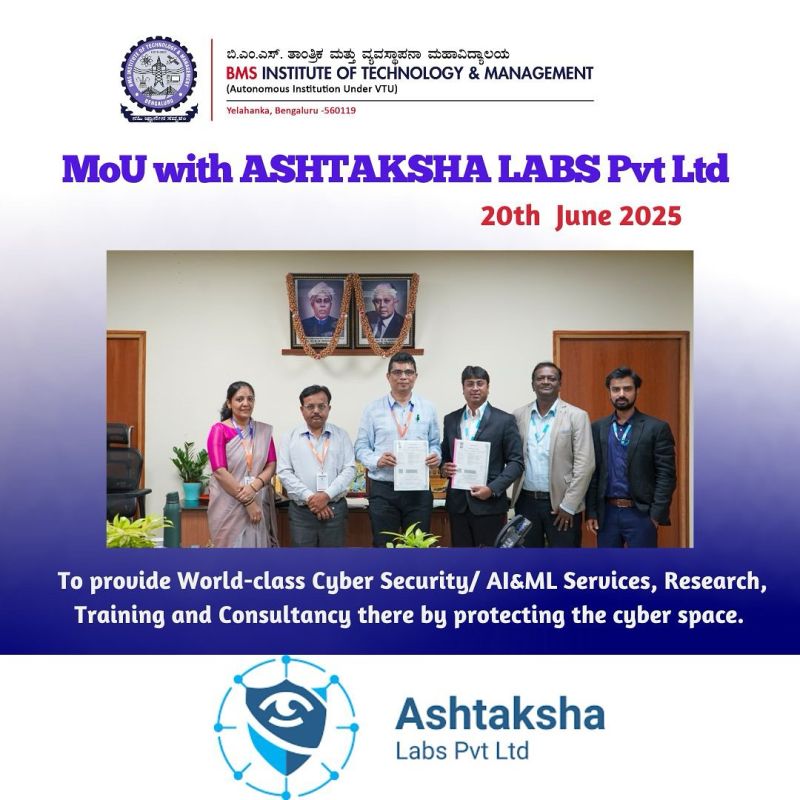


.jpg)
.jpg)
.jpg)
.jpg)
.jpg)
.jpg)
.jpg)
.jpg)
.jpg)
.jpg)