Departments of Artificial Intelligence & Machine Learning

- Course Duration:
- Doctorates:
- Intake:
- Ph.D Pursuing:
- No. of Faculty:
- Technical Staff:
COURSE OVERVIEW
The Department of Artificial Intelligence and Machine Learning was formally inaugurated on 02 August 2019, marking a significant milestone in the history of our institution. This momentous occasion laid the foundation for offering an undergraduate program in Artificial Intelligence and Machine Learning one of the most in demand and future ready domains.
The department began its journey in 2019 with an initial sanctioned intake of 60 students, which has grown substantially to 360 students from the academic year 2024–25. We offer a wide range of elective courses, enabling students to explore diverse areas of interest and tailor their learning paths.
Our curriculum is designed to impart strong technical expertise, foster problem-solving abilities, and encourage innovation by keeping pace with emerging technologies. The department actively promotes collaborative and interdisciplinary research through well-established research groups and state-of-the-art facilities. Faculty members are currently guiding Ph.D. scholars from both industry and academia, reflecting our strong research culture.
It is inspiring to see our students enthusiastically engaging in addressing real-world technological challenges with dedication, perseverance, and a spirit of innovation. By integrating practical skills and domain knowledge into the learning process, the department strives to nurture dynamic, socially responsible, and sensitive professionals ready to contribute meaningfully to society.
2nd International Conference on Computing for Sustainability and Intelligent Future (Comp-SIF 2026)
VISION
To emerge as a leading department in AI and ML by preparing skilled, responsible, and eco-friendly professionals who use technology to improve society.
MISSION
- To equip students with in-depth knowledge in Artificial Intelligence and Machine Learning, built upon a robust foundation in Computer Science and Engineering through industry focused curriculum with practical learning.
- To encourage research and innovation through industry partnerships and sustainable technology practices.
- To inspire students toward ethical leadership and entrepreneurship through innovative and collaborative student-led activities.
- Graduates will thrive as IT professionals, applying AI and ML to build creative and lasting solutions.
- Graduates will pursue further studies, research, and entrepreneurship, keeping up with technological advancements in various fields.
- Graduates will demonstrate ethics, integrity, leadership, teamwork, and a dedication to continuous learning in their careers.
- PO1: Engineering Knowledge: Apply knowledge of mathematics, natural science, computing, engineering fundamentals and an engineering specialization as specified in WK1 to WK4 respectively to develop to the solution of complex engineering problems.
- PO2: Problem Analysis: Identify, formulate, review research literature and analyze complex engineering problems reaching substantiated conclusions with consideration for sustainable development. (WK1 to WK4)
- PO3: Design/Development of Solutions: Design creative solutions for complex engineering problems and design/develop systems/components/processes to meet identified needs with consideration for the public health and safety, whole-life cost, net zero carbon, culture, society and environment as required. (WK5)
- PO4: Conduct Investigations of Complex Problems: Conduct investigations of complex engineering problems using research-based knowledge including design of experiments, modelling, analysis & interpretation of data to provide valid conclusions. (WK8).
- PO5: Engineering Tool Usage: Create, select and apply appropriate techniques, resources and modern engineering & IT tools, including prediction and modelling recognizing their limitations to solve complex engineering problems. (WK2 and WK6)
- PO6: The Engineer and the World: Analyze and evaluate societal and environmental aspects while solving complex engineering problems for its impact on sustainability with reference to economy, health, safety, legal framework, culture and environment. (WK1, WK5, and WK7)
- PO7: Ethics: Apply ethical principles and commit to professional ethics, human values, diversity and inclusion; adhere to national & international laws. (WK9)
- PO8: Individual and Collaborative Team work: Function effectively as an individual, and as a member or leader in diverse/multi-disciplinary teams.
- PO9: Communication: Communicate effectively and inclusively within the engineering community and society at large, such as being able to comprehend and write effective reports and design documentation, make effective presentations considering cultural, language, and learning differences
- PO10: Project Management and Finance: Apply knowledge and understanding of engineering management principles and economic decision-making and apply these to one’s own work, as a member and leader in a team, and to manage projects and in multidisciplinary environments.
- PO11: Life-Long Learning: Recognize the need for, and have the preparation and ability for i) independent and life-long learning ii) adaptability to new and emerging technologies and iii) critical thinking in the broadest context of technological change. (WK8)
Knowledge and Attitude Profile (WK)
- WK1: A systematic, theory-based understanding of the natural sciences applicable to the discipline and awareness of relevant social sciences.
- WK2: Conceptually-based mathematics, numerical analysis, data analysis, statistics and formal aspects of computer and information science to support detailed analysis and modelling applicable to the discipline.
- WK3: A systematic, theory-based formulation of engineering fundamentals required in the engineering discipline.
- WK4: Engineering specialist knowledge that provides theoretical frameworks and bodies of knowledge for the accepted practice areas in the engineering discipline; much is at the forefront of the discipline.
- WK5: Knowledge, including efficient resource use, environmental impacts, whole-life cost, reuse of resources, net zero carbon, and similar concepts, that supports engineering design and operations in a practice area.
- WK6: Knowledge of engineering practice (technology) in the practice areas in the engineering discipline.
- WK7: Knowledge of the role of engineering in society and identified issues in engineering practice in the discipline, such as the professional responsibility of an engineer to public safety and sustainable development.
- WK8: Engagement with selected knowledge in the current research literature of the discipline, awareness of the power of critical thinking and creative approaches to evaluate emerging issues.
- WK9: Ethics, inclusive behavior and conduct. Knowledge of professional ethics, responsibilities, and norms of engineering practice. Awareness of the need for diversity by reason of ethnicity, gender, age, physical ability etc. with mutual understanding and respect, and of inclusive attitudes.
- Apply foundational knowledge of Computer Science along with AI and ML techniques to design effective, real-world solutions across diverse application domains.
- Develop AI-driven innovations with a commitment to ethics, social responsibility, and sustainability
Faculty List
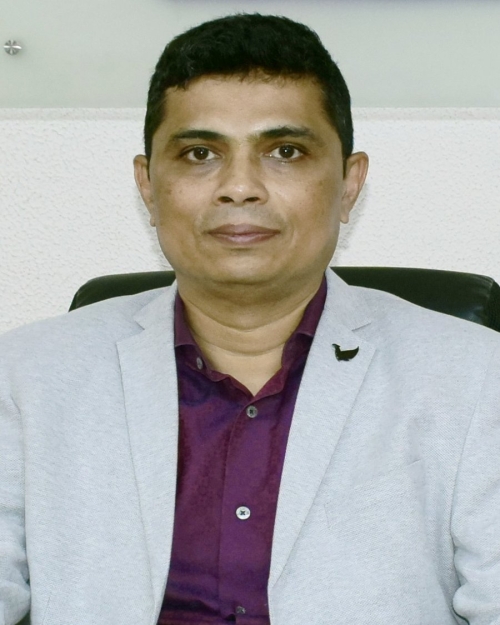
Dr. Sanjay H A
Principal
Artificial Intelligence & Machine Learning
- principal@bmsit.in
- 9342560303
- Employee ID : 15996


Ph.D (IISc)
"Vision Group on Science and Technology (VGST) honored him as Young Scientist Expert Committee Member for the National Board of Accreditation (NBA) and is a Senior Member of IEEE Nominated by Visvesvaraya Technological University (VTU) as Dean – Faculty of Engineering"
Parallel Computing, Grid Computing, Cloud Computing, Performance Modelling, Blockchain
- "Prediction of Crop Yield Using Regression Techniques E. Bhanusree, H.A. Sanjay and Aditya Shastry, International Journal of Soft Computing, Volume 12, Issue 2, 2017, Pages 96-102, ISSN 1816-9503"
- M. Monica, B. Yeshika, G. S. Abhishek, H. A. Sanjay and S. Dasiga, "IoT based control and automation of smart irrigation system: An automated irrigation system using sensors, GSM, Bluetooth and cloud technology," 2017 International Conference on Recent Innovations in Signal Processing and Embedded Systems (RISE), Bhopal, India, 2017, pp. 601-607, doi: 10.1109/RISE.2017.8378224
- S. Salvi et al., "Cloud based data analysis and monitoring of smart multi-level irrigation system using IoT," 2017 International Conference on I-SMAC (IoT in Social, Mobile, Analytics and Cloud) (I-SMAC), Palladam, India, 2017, pp. 752-757, doi: 10.1109/I-SMAC.2017.8058279
- Shastry, K.A., Sanjay, H.A. (2020). Machine Learning for Bioinformatics. In: Srinivasa, K., Siddesh, G., Manisekhar, S. (eds) Statistical Modelling and Machine Learning Principles for Bioinformatics Techniques, Tools, and Applications. Algorithms for Intelligent Systems. Springer, Singapore. https://doi.org/10.1007/978-981-15-2445-5_3
- "H.A. Sanjay, Sathish Vadhiyar, Performance modeling of parallel applications for grid scheduling, Journal of Parallel and Distributed Computing, Volume 68, Issue 8, 2008, Pages 1135-1145, ISSN 0743-7315, https://doi.org/10.1016/j.jpdc.2008.02.006"
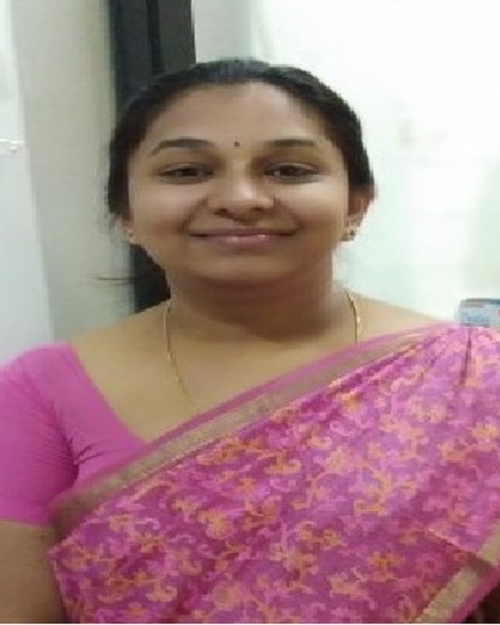
Dr. Anupama H S
Professor & HOD
Artificial Intelligence & Machine Learning
- anupamahs@bmsit.in
- 9741043410
- Employee ID : 2718
Phd
"• Dr Anupama H S, Professor, Department of AI & ML, invited as an esteemed jury for Stage-2 of ELEVATE 2025 (F.Y. 2025-26) under Idea2PoC Grant-in-Aid scheme for Start-ups’ as per Karnataka Start-up Policy 2022-2027 on Monday, 13th Oct'25 at KITS, Sheshadripuram, Bengaluru., • Chairperson at World Standards Day 2024 organized by Bureau of Indian Standards (BIS), Ministry of Consumer Affairs, Food & Public Distribution, Government of India, is the National Standards Body of India on 14.10.2024. "
Artificial Intelligence, Machine Learning, IoT
ISTE, IAENG
- Dr Anupama H S, Professor, Department of AI & ML, published a paper titled “Bayes IDS: A Bayesian-optimized learning-based intrusion detection system”, by The European Physical Journal Plus, indexed in Scopus. (Q2 Journal) https://doi.org/10.1140/epjp/s13360-025-07001-9. (Published on 16.11.2025)
- Anupama, H. S., Jain, R. V., Venkatesh, R., Cauvery, N. K., & Lingaraju, G. M. (2020). HMM Classifier Object Recognizing System in Brain–Computer Interface. In Evolution in Computational Intelligence: Frontiers in Intelligent Computing: Theory and Applications (FICTA 2020), Volume 1 (pp. 287-294). Singapore: Springer Singapore.
- Presented and Published paper on “Adversarial learning for De-Identification of Medical-Records” in IEEE 2024 International Conference on Knowledge Engineering and Communication Systems, ICKECS 2024.
- Presented and Published Paper on “Design and Development of AI-Based Low-Cost Effective Prototype for Early Warning and Monitoring of Urban Flash Floods in Smart Cities”, in International Conference on Water Resources, Ocean and Environmental Engineering indexed in Scopus in 2025.
- HS, A., Jain, R. V., Venkatesh, R., Cauvery, N. K., & GM, L. (2017). Implementing and analyzing different Machine Learning Algorithms using EEG based BCI. International Journal of Applied Engineering Research, 12(8), 1736-1741.
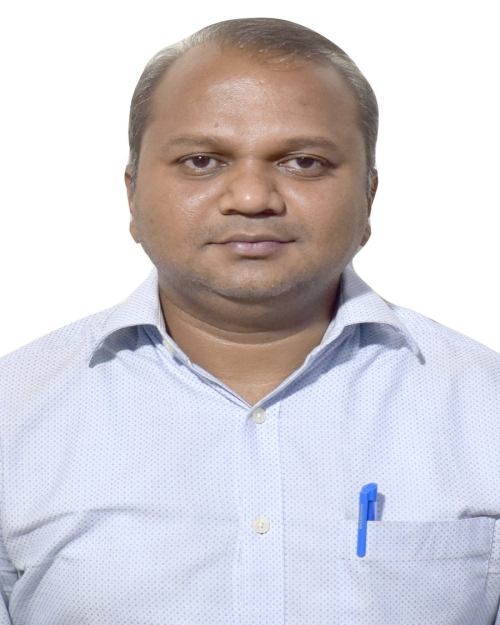
Dr. Pradeep K R
Associate Professor & Associate Head
Artificial Intelligence & Machine Learning
- pradeepkr@bmsit.in
- 9886171714
- Employee ID : 11832
B.E, M.Tech, Ph.D
Machine Learning, Artificial Intelligence , Data Analytics
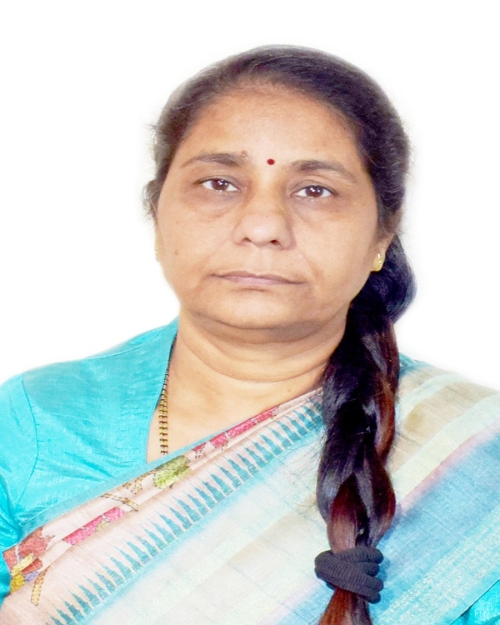
Dr. Bharathi Malakreddy A
Professor and Head RC
Artificial Intelligence & Machine Learning
- bharathi_m@bmsit.in
- 9448347885
- Employee ID : 6436
B.E(CSE),M.Tech(CSE) ,Ph.D(CSE)
1.India Electronic and Semiconductor Association (IESA), Govt of India – “Special Recognition Award” - Makeathon
2.Microsoft Mobility Research Forum Best Product Design Award at National Level Product Design.
3.IBM and Govt. of Karnataka, award winning project – Gram Panchayat Budget Management.
AI, WSN, IoT
LMISTE, LMCSI,
- "1. Gowda N.C,Bharathi M, A. et al. “MLTPED-BFC: Machine learning-based trust prediction for edge devices in theblockchain enabled fog computing environment” Engineering Applications of Artificial Intelligence, 2025(Q1, 109518 SJR 1.652 , H-Index 149) https://doi.org/10.1016/j.engappai.2024.109518 "
- "2. GowdaN.C,ManiS,BharathiA,“BSKM-FC:Blockchain-based secured key management in a fog computing environment”,Future Generation Computer Systems, 2023, Vol 142, pp. 276–291 (Q1, SJR 1.551, H-Index 180) https://doi.org/10.1016/j.future.2022.12.042 "
- "3.NC Gowda, SS Manvi, AB Malakreddy, R Buyya “TAKM-FC: two-way authentication with efficient key management in fog computing environments,Journal of Supercomputing, Vol 80, Iss 5, 6855-6890 (Q2, SJR 0.716 , H-Index 92) https://doi.org/10.1007/s11227-023-05712-3 "
- 4.NC Gowda, A Bharathi M “ BPCPR-FC: blockchain-based privacy preservation with confidentiality using proxy reencryption and ring signature in fog computing environments”, Int. Journal of Information Technology 15 (6), 3343-3357, ( Q2, SJR 0.717 H-Index 46 )https://doi.org/10.1007/s41870-023-01373-w
- "5. RajeshI. S, Bharati M. Reshmi, A. Bharathi M, ""Automatic Detection of Hard Exudate in Color Retinal Fundus Image and Diabetic Maculopathy Grading."" IEEE Access ,2025 (Q1 SJR 0.849 H-Index 290) https://ieeexplore.ieee.org/abstract/documen10820327t/ "

Dr. Hemamalini B H
Professor
Artificial Intelligence & Machine Learning
- bhhemaraj@bmsit.in
- 7204844628
- Employee ID : 3154
PhD
Founder Head, Dept of ISE; Head, Dept of CSE; Warden, Ladies Hostel; ICT Academy Chief Coordinator
Theory of Computation, Compiler Design, Educational Data Mining, Machine Learning
FIE, MISTE, MCEGR
- "Published a paper entitled “Analysis of Educational attainment of Students using Anova Test”, TANZ (ISSN NO: 1869-7720), VOL 20, ISSUE 01, 2025, 12-22. DOI: 10.61350/TJ54372 Paper Link: https://tanzj.net/volume-20-issue-01-published-in-january-2025/ http://tanzj.net/wp-content/uploads/2025/01/2.pdf"
- "Published a paper entitled “Assessment of Performance of Students Using Conditional Statistical Technique”, in International Journal of Innovation Technology and Exploring Engineering (IJITEE) with ISSN 2278–3075, Volume-9 Issue-5, March 2020, with impact factor 6.03 for 2019. Paper link: http://www.ijitee.org/wp-content/uploads/papers/v9i5/C8389019320.pdf https://www.ijitee.org/portfolio-item/C8389019320/"
- "Published a paper entitled ”Skin Cancer Detection from Lesion Images using Deep Learning “, Journal of Systems Engineering and Electronics, (ISSN NO: 1671-1793) Vol 35, Issue 2, Jan 2025, pp 1-5 DOI:20.14118.jsee.2025.V35I2.2121 DOI Link: https://zenodo.org/records/14793151 https://jseepublisher.com/volume-35-issue-2-2025/, Paper Link: https://jseepublisher.com/wp-content/uploads/1-JSEE2962.pdf "
- "Published a paper entitled “Student Pilot Pro: A chatbot integrated application for college students”, Journal of Systems Engineering and Electronics, (ISSN NO: 1671-1793) Vol 35, Issue 2, Jan 2025, pp 97-101. DOI:20.14118.jsee.2025.V35I2.2130, Volume 35, Issue 2, 2025, page 97-101. Link: https://jseepublisher.com/volume-35-issue-2-2025/ "
- Presented a paper entitled “Comprehensive Analysis of Students’ Performance by applying Machine Learning Techniques” at “3rd International Conference on Smart Computing and Informatics (SCI)” HELD DURING 21 – 22 December, 2018 Organized by School of Computer Applications and School of Computer Engineering, Kalinga Institute of Industrial Technology, Deemed to be University, Bhubaneswar, Odisha in Collaboration with SPRINGER.
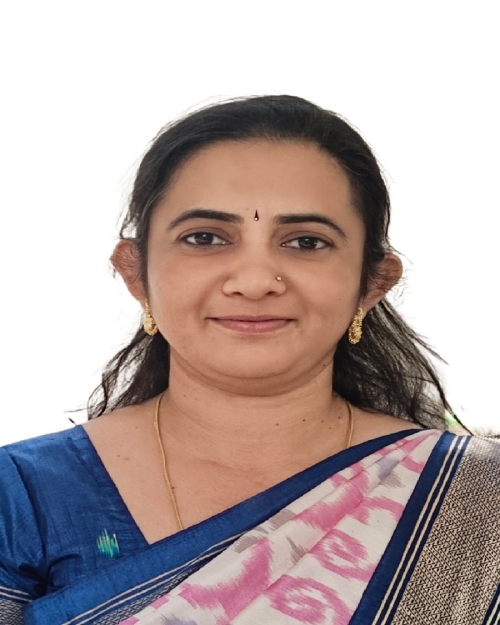
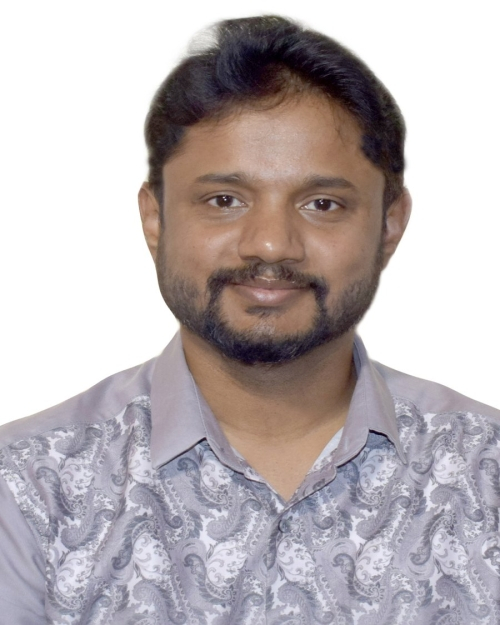
Dr. Manoj H M
Associate Professor
Artificial Intelligence & Machine Learning
- manojhm@bmsit.in
- 8884362808
- Employee ID : 10207
B.E, M.Tech, Ph.D
Best paper Award in ERCICA 2024 organized by BGSCET
Software Engineering, Artificial Intelligence, Machine Learning, Internet of Things
- "AI-driven drone technology and computer vision for early detection of crop disease in large agricultural areas" link: https://www.nature.com/articles/s41598-025-32384-1
- """Comparative Assessment of Machine Learning Models for Predicting Glucose Intolerance Risk"" link: https://link.springer.com/article/10.1007/s42979-024-03259-5"
- "Recognition of Sign Language Using E-CNN" details: L. M. Patnaik et al. (eds.), Advances in Communication and Applications, Lecture Notes in Electrical Engineering 1398, https://doi.org/10.1007/978-981-96-4679-1_30
- """A Novel Optimization towards Higher Reliability in Predictive Modelling towards Code Reusability"" details: International Journal of Electrical and Computer Engineering (IJECE) Vol. 7, No. 5, October 2017, pp. 2855~2862 ISSN: 2088-8708, DOI: 10.11591/ijece.v7i5.pp2855-2862"
- "Constructing Relationship Between Software Metrics and Code Reusability in Object Oriented Design" Link: https://thesai.org/Publications/ViewPaper?Volume=7&Issue=2&Code=IJACSA&SerialNo=58
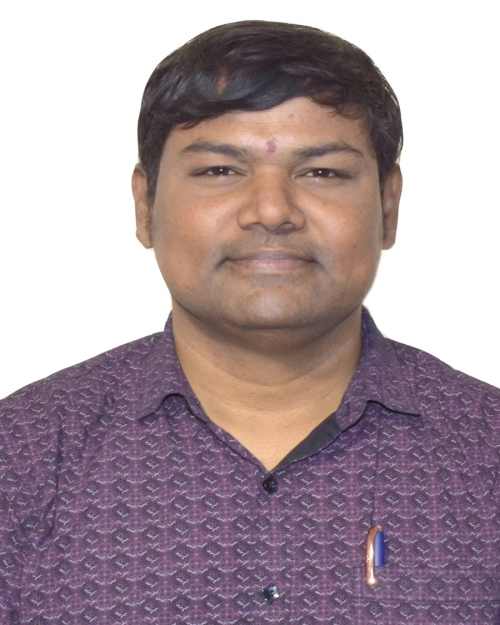
Dr. Niranjanamurthy M
Associate Professor
Artificial Intelligence & Machine Learning
- niruhsd@bmsit.in
- 9886265115
- Employee ID : 1149
M.Tech., Ph.D.
Data Science, Software Testing, Web services
IEEE, IAENG
- Niranjanamurthy, M., et.al.. Analysis of Blockchain technology: pros, cons and SWOT. Cluster Comput 22 (Suppl 6), 14743–14757 (2019). https://doi.org/10.1007/s10586-018-2387-5
- Niranjanamurthy, M. et al. Machine learning based intrusion detection framework for detecting security attacks in internet of things. Sci Rep 14, 30275 (2024). https://doi.org/10.1038/s41598-024-81535-3
- Niranjanamurthy, M. et al. Machine Learning Based Assessment of Elite Football Players Based on Anthropometric and Motor Fitness Parameters with Regard to their Playing Positions. SN COMPUT. SCI. 5, 974 (2024). https://doi.org/10.1007/s42979-024-03261-x
- Niranjanamurthy, M. An Effective Hybrid Model for Fake News Detection in Social Media Using Deep Learning Approach. SN COMPUT. SCI. 5, 346 (2024). https://doi.org/10.1007/s42979-024-02698-4
- Mudligiriyappa, N.; et. al. A. Detection of Alzheimer’s Disease Based on Cloud-Based Deep Learning Paradigm. Diagnostics 2023, 13, 2687. https://doi.org/10.3390/diagnostics13162687
Dr. Karthik Vasu
Associate Professor
Artificial Intelligence & Machine Learning
- v.karthik@bmsit.in
- 9901376762
- Employee ID : 18474
BE., M.Tech., PhD
Certified iOS Developer, Patent Granted = 1, Funding = 8.75 Lakh from AICTE and RIT Seed Funding,
Machine Learning, Federated Learning, Quantum Computing
"ISTE, IEEE Member, IEEE- CIS Member, ACM Member "
- "MUSIC INFORMATION RETRIEVAL USING SIMILAR ITY BASED R ELEVANCE RANKING TECHNIQUES"
- "Parametrized Optimization Based on an Investigation of Musical Similarities Using SPARK and Hadoop"
- "A novel image cryptosystemfor biomedical images and secured storage by randomized chaotic encryptio"
- "AutonomousGarbage Accumulation Robot Using Internet of Things"
- "An EnhancedHybridDeep Learning Modelto Enhance Network Intrusion Detection Capabilities for Cyber"
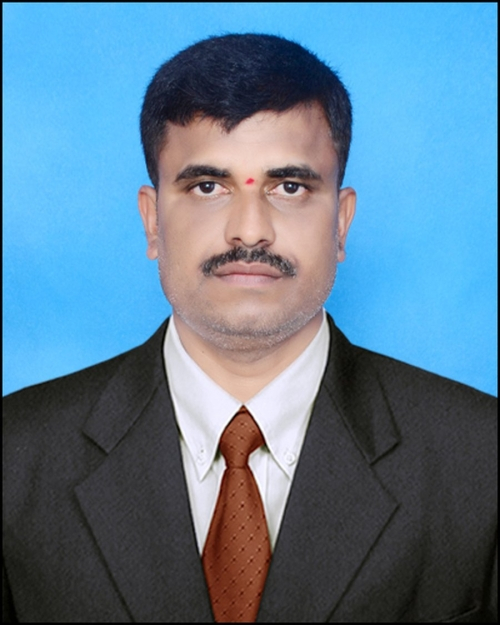
Dr. Kantharaju V
Associate Professor
Artificial Intelligence & Machine Learning
- kanth95@bmsit.in
- 9611366672
- Employee ID : 13866
M.Tech, Ph.D
- "1. Best Faculty Award : 2017-2018
- 2. Best Academic Performance
- 3. Completed 12 NPTEL Courses"
Wireless Sensor Network, Cloud Computing, Machine Learning
IAENG, Internet Society
- Machine learning based intrusion detection framework for detecting security attacks in internet of things
- Access management based on deep reinforcement learning for effective cloud storage security
- Efficient Task Offloading Processing in Edge Computing Using Grey Wolf Optimization and Graylag Goose Optimization Algorithms
- Lung Disease Prediction using Multi-Level Atrous Spatial Pyramid Pooling Based Convolutional Neural Network
- Elliptic Curve Cryptography and Password Based Key Derivation Function with Advanced Encryption Standard Method for Cloud Data Security
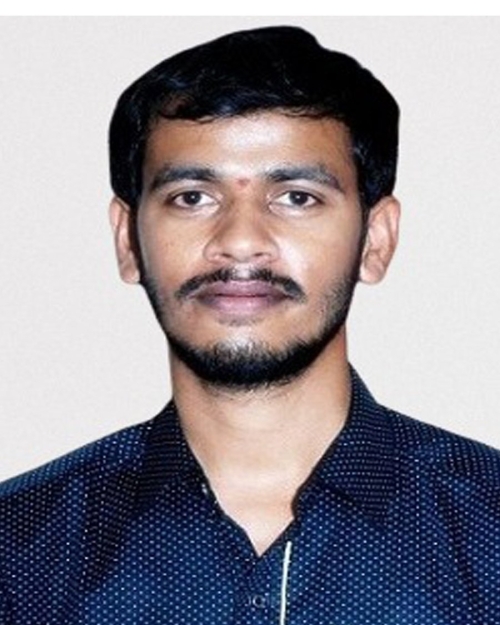
Dr. Rajesh I S
Associate Professor
Artificial Intelligence & Machine Learning
- rajeshaiml@bmsit.in
- 7676776343
- Employee ID : 5027
B.E, M.Tech, PhD
"Received “Best Young Researcher Award” in ""Global Education and Corporate Leadership Awards Summit (GECL-2018), Received "" Young Achiever Award”, by Institute of Scholars (InSe-2019) "
Medical Image Processing and Analysis
"IEEE, ID- 92613877, InSc, ID- INSC2019697 "
- "Rajesh, I. S., Bharati M. Reshmi, A. Bharathi Malakreddy, and Shavantrevva Bilakeri. ""Automatic Detection of Hard Exudate in Color Retinal Fundus Image and Diabetic Maculopathy Grading."" IEEE Access (2025). (Q1) https://ieeexplore.ieee.org/abstract/document/10820327 "
- "Amar Abhishek, Rajesh I. S, and Shavantrevva Bilakeri. ""Advanced glaucoma detection through retinal fundus image segmentation and stacking classifier."" Engineering Research Express (2025). (Q2) https://iopscience.iop.org/article/10.1088/2631-8695/adb011/meta"
- "Rajesh, I. S, Bharathi M A, H. G. Mohan, U. N. Ranjitha, Manjunath Sargur Krishnamurthy, and C. Maithri. ""FLQL-VANET: a Hybrid of Fuzzy Logic and Q-learning Schemes for QoS Aware Routing in VANET."" International Journal of Intelligent Engineering & Systems 17, no. 6 (2024). (Q2) https://research.ebsco.com/c/rtaeua/search/details/zbqbzwvybz?db=aps "
- "Bharati M Reshmi, Rajesh I.S, Bharathi Malakreddy A, “A Novel Method for Automatic Identification of Fovea Location and Its Center in Color Retinal Fundus Images"", International Journal of Medical Engineering and Informatics, Vol. 13, No. 2, pp. 103-110, Year-2021. (Q3) (https://www.inderscience.com/info/ingeneral/forthcoming.php?jcode=ijmei) "
- Rajesh I.S., Bharathi Malakreddy Arikerie, and Bharati M. Reshmi. "A review on automatic identification of fovea in retinal fundus images." International Journal of Medical Engineering & Informatics- 12, no-2, pp. 169-179, Year-18th April- 2020. (Q3) (https://www.inderscienceonline.com/doi/abs/10.1504/IJMEI.2020.106900)

Dr. Vani Krishnaswamy
Associate Professor
Artificial Intelligence & Machine Learning
- vanikrishnaswamy@bmsit.in
- 8095690806
- Employee ID : 18736
Ph.D.
Best Researcher award 2019-REVA University
Wireless sensor Networks,IOT, Machine Learning
Lifetime CSI
- "Fuzzy and PSO Based Clustering Scheme in Underwater Acoustic Sensor Networks Using Energy and Distance Parameters Krishnaswamy V.;Manvi S. Article Wireless Personal Communications, Volume 108, Year 2019, Pages 1529-1546"
- "Trusted node selection in clusters for underwater wireless acoustic sensor networks using fuzzy logic Krishnaswamy V.;Manvi S.S. Article Physical Communication, Volume 47, Year 2021"
- "Palm tree structure based data aggregation and routing in underwater wireless acoustic sensor networks: Agent oriented approach Krishnaswamy V.;Manvi S.S. Article Journal of King Saud University Computer and Information Sciences, Volume 34, Year 2022, Pages 1275-1284"
- "Clustering and data aggregation scheme in underwater wireless acoustic sensor network Krishnaswamy V.;Manvi S.K.S. Article Telkomnika Telecommunication Computing Electronics and Control, Volume 17, Year 2019, Pages 1604-1614 "
- "Navigating Financial Markets: Exploring Advanced Neural Networks for Stock Price Prediction Hitaish K.G.;Krishnaswamy V.;Vishnu M.;Mahima B. Conference Paper Proceedings of the 2024 International Conference on Emerging Techniques in Computational Intelligence Icetci 2024, Year 2024, Pages 471-476"
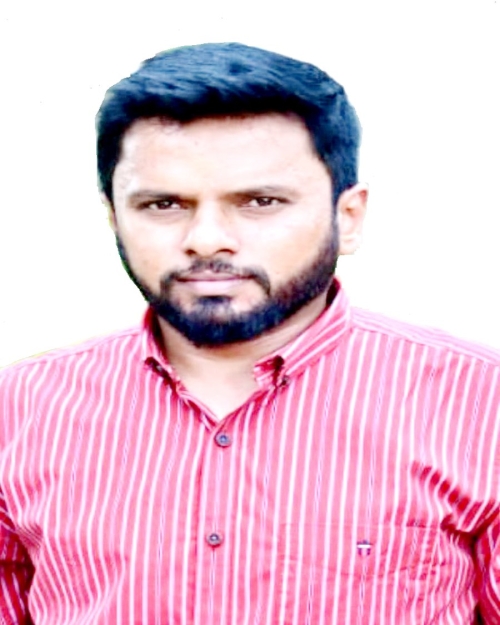
Prof. Yatheesh N G
Assistant Professor
Artificial Intelligence & Machine Learning

Dr. Archana Bhat
Assistant Professor
Artificial Intelligence & Machine Learning
- archanabhat@bmsit.in
- 9902885719
- Employee ID : 13220
B.E., MTech, Ph.D.
Best Paper Award - 2025 Control Instrumentation System Conference (CISCON) - IEEE
WSN, IoT, AI, ML
IAENG,
- G. V., A. Bhat and S. Thanmayee, "New Bit Pattern Based IPv6 Address Compression Techniques for 6LoWPAN Header Compression," in IEEE Access, vol. 10, pp. 80055-80070, 2022, doi: 10.1109/ACCESS.2022.3193235.
- A Bhat, V Geetha, "Hop count, ETX and energy selection-based objective function for image data transmission over 6LoWPAN in Internet of Things", International Journal of Wireless and Mobile Computing 26 (4), 327-341
- A. Bhat, A. G. Padasalgi, A. B and A. Prabhakar, "AI-Driven Brain Tumor Segmentation: Innovations, Constraints and the Path Toward Clinical Adoption," 2025 International Conference on Computing for Sustainability and Intelligent Future (COMP-SIF), Bangalore, India, 2025, pp. 1-6, doi: 10.1109/COMP-SIF65618.2025.10969924.
- P. K. K. R, A. Bhat, V. K. Gowda, Y. Chathurved and S. S. Raju, "Real-Time Plant Disease Detection in Field Conditions Using Deep Learning," 2025 Control Instrumentation System Conference (CISCON), Manipal, India , 2025, pp. 1-6, doi: 10.1109/CISCON66933.2025.11337824.
- S. Meghna, S. S. V. M, A. Bhat, R. K. Kharvi and S. Satrajeeth, "Simulation-Based Smart Wheelchair Navigation Using YOLO and R-CNN with Customized A* Algorithm," 2025 Control Instrumentation System Conference (CISCON), Manipal, India , 2025, pp. 1-6, doi: 10.1109/CISCON66933.2025.11337683.
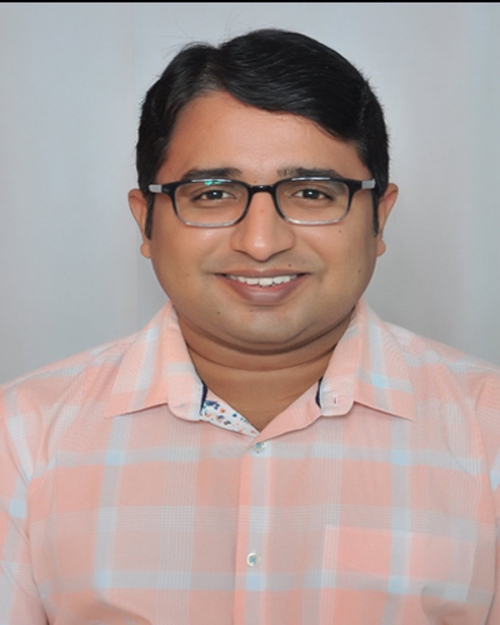
Prof. Sanjay M Belgaonkar
Assistant Professor
Artificial Intelligence & Machine Learning
- sanjaymb@bmsit.in
- 9632212235
- Employee ID : 15671
B.E, M.Tech, PGD in AIML (IIIT Bangalore), M.S (LJMU, United Kingdom), (Ph.D)
Best Professional Volunteer Award 2022 - IEEE Signal Processing Society Bangalore Chapter; Best Paper Awards - International Conferences - ICIEA 2022, ERCICAM 2024; IEEE ComSoc Bangalore Protsahan Award 2023; Appreciation Certificates - IEEE SPS Bangalore Chapter 2024, Hack2Skill Pvt. Ltd. 2024
Machine Learning for Signal Processing & Communication Systems, Advanced Deep Learning, Computer Vision
"Senior Member IEEE, Senior Member IEEE SPS, IEEE CIS, IEEE RAS Professional Member ACM, Professional Member AAAI, Member IAENG"
- Prabhavathi, C.N., Belgaonkar, S.M. (2025). Analysis of Deep Learning Techniques for Ultrasound Nerve Segmentation. In: Shetty, N.R., Patnaik, L., Nagaraj, H.C., Venugopal, K.R., Nalini, N. (eds) Advances in Communication and Applications. ERCICAM 2024. Lecture Notes in Electrical Engineering, vol 1300. Springer, Singapore. https://doi.org/10.1007/978-981-96-0165-3_9
- I. Ramesh, P. G, S. M. Belgaonkar, G. A. de Castro, A. Mutharasan and S. R. Ahammed, "Neural Network-Based Signal Processing in VLSI Circuits," 2025 13th International Conference on Smart Grid (icSmartGrid), Glasgow, United Kingdom, 2025, pp. 01-07, doi:10.1109/icSmartGrid66138.2025.11071834.
- S. Satish, S. M. Belgaonkar, A. M and N. S. Thekkethala, "Secure Automated Smart Home," 2024 11th International Conference on Electrical Engineering, Computer Science and Informatics (EECSI), Yogyakarta, Indonesia, 2024, pp. 615-620, doi: 10.1109/EECSI63442.2024.10776090.
- Swaroopa A, Medam Brendha, Abhishek Simha P, Vipula Singh, Sanjay Belgaonkar, “Analysis of Channel Estimation Techniques for MIMO Wireless Channel Models”, Accepted for presentation in 10th International Conference on Electrical Engineering, Computer Science and Informatics (EECSI 2023), Palembang, Indonesia held on September 20-21, 2023.
- Sanjay M Belgaonkar, Vipula Singh, Image compression and reconstruction in compressive sensing paradigm, Global Transitions Proceedings, Volume 3, Issue 1, 2022, Pages 220-224, ISSN 2666-285X, https://doi.org/10.1016/j.gltp.2022.03.026. (https://www.sciencedirect.com/science/article/pii/S2666285X22000322)

Prof. Shobhit Tembhre
Assistant Professor
Artificial Intelligence & Machine Learning
- shobhit@bmsit.in
- 8349466167
- Employee ID : 15789
M. Tech
Machine learning and information security
IAENG
"H. M. Kelagadi, M. S. Sumathi, S. Tembhre and M. Niranjanamurthy, ""Optimizing Power and Data Routing in Wireless Sensor Networks: A Focus on Enhancing Network Lifetime,"" 2024 International Conference on Recent Advances in Science and Engineering Technology (ICRASET), B G Nagara,Mandya, India, 2024, pp. 1-7, doi: 10.1109/ICRASET63057.2024.10895620. "

Dr. Chidananda K
Assistant Professor
Artificial Intelligence & Machine Learning
- chidananda.k@bmsit.in
- 8310359166
- Employee ID : 16051
M.Tech, Ph.D
nil
AI, DL, ML, and Image Processing
IAENG, Internet Society, SDIWC
- Human Pose Estimation Using Deep Neural Networks: A Comprehensive Approach, Data Mining and Information Security (ICDMIS 2024), pp 147–160, 2025
- AI-Driven Smart Ambulance and Dynamic Traffic Control System for Optimized Emergency Response, CISCON 2025, IEEE
- AI-Driven Fraud Prevention in Agricultural Subsidies: Advances in Deepfake Detection, AI-Generated Voice Forensics, and Blockchain-Enabled Security, CISCON 2025, IEEE
- Nil
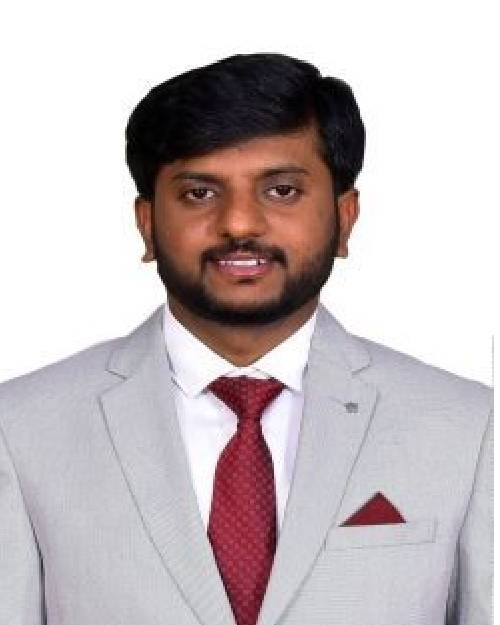
Prof. Abhishek K L
Assistant Professor
Artificial Intelligence & Machine Learning
- abhishek@bmsit.in
- 8553055076
- Employee ID : 17653
B.E, M.Tech, PGDCLCF, (Ph.D)
Completed Post Graduate Diploma in Cyber Law and Cyber Forensics from National Law of India University (NLSIU)
Artificial Intelligence & Machine leraning, Deep Learning, IoT, DevOps, FullStack
LMISTE, IEI (Associate Member), IAENG, Internet Society
- IoT-Based Waste Segregation with Location Tracking and Air Quality Monitoring for Smart Cities
- Developing an Intelligent Resume Screening Tool With AI-Driven Analysis and Recommendation Feature
- "Enhancing Retrieval-Augmented Generation via Dual-Granularity Document Indexing "
- Enhancing Feature Selection with PSO-RK-Gaussian Algorithm for Cancer Prediction
- Enactment of Sales Forecasting Applications using Artificial Intelligence
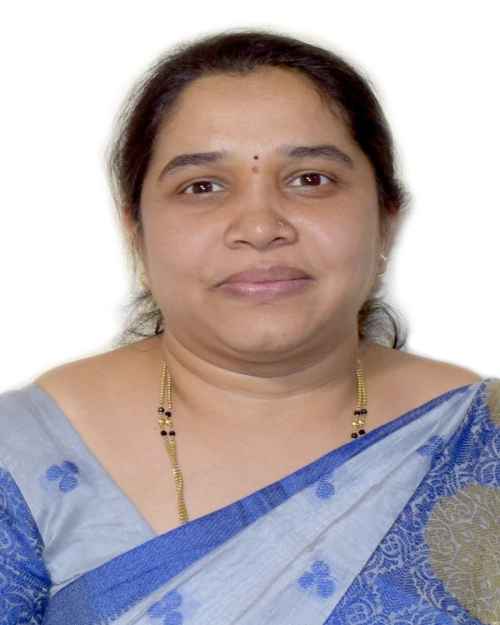
Prof. Amitha S K
Assistant Professor
Artificial Intelligence & Machine Learning
- amitha@bmsit.in
- 9481300951
- Employee ID : 16022
M.tech,(P.hd)
cloud computimg,High Performance computing, AI & ML.
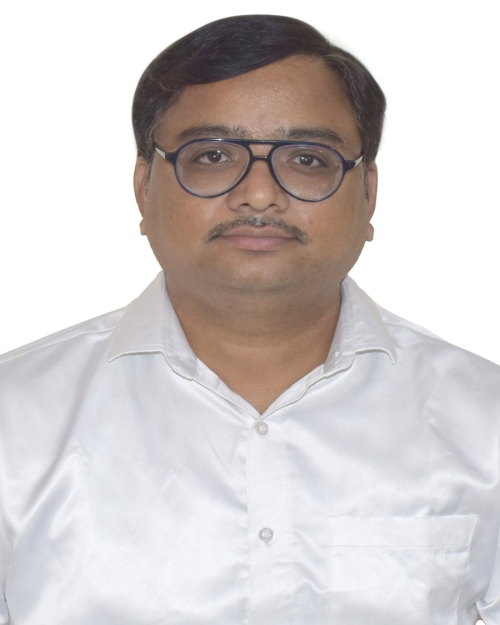
Prof. Balaraju G
Assistant Professor
Artificial Intelligence & Machine Learning
- balaraju.g@bmsit.in
- 8075077403
- Employee ID : 16060
B.E., M Tech, Ph.D pursuing
Artificial intelligence, Machine learning, Deep Learning, Reinforcement learning
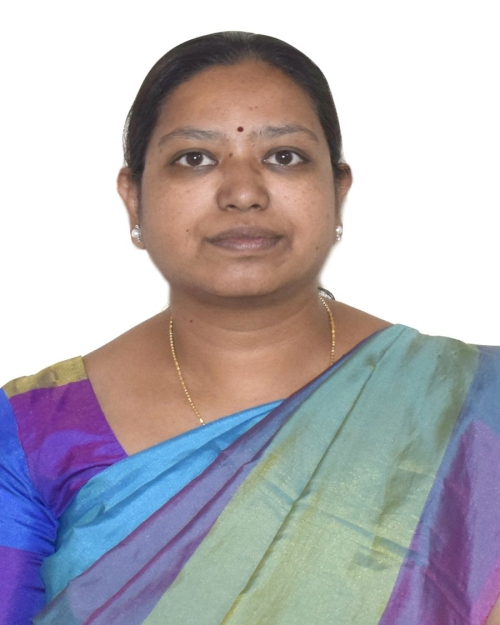
Prof. Kavitha D
Assistant Professor
Artificial Intelligence & Machine Learning
- kavitha.d@bmsit.in
- 9535420164
- Employee ID : 16087
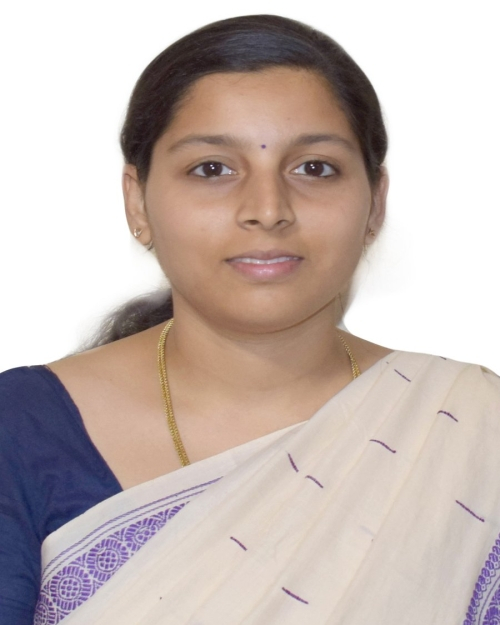
Prof. Megha S
Assistant Professor
Artificial Intelligence & Machine Learning
- s.megha@bmsit.in
- 9535236760
- Employee ID : 16563
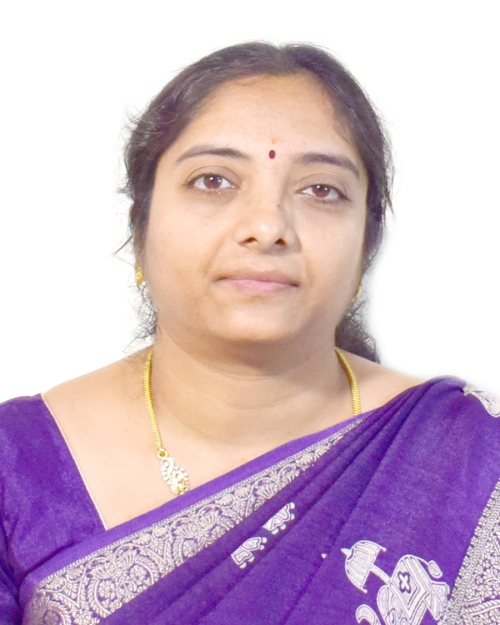
Prof. Mayuri K P
Assistant Professor
Artificial Intelligence & Machine Learning
- mayuri@bmsit.in
- 8951489146
- Employee ID : 16064
B.E, M.Tech, (Ph.D)
Machine Learning, Deep Reinforcement Learning, Image Processing, Theory of Computation
Internet Society, IAENG, ISAC
- Artificial intelligence enabled plant emotion xpresser in the development hydroponics system, Volume 45, Part 6, 2021, Pages 5034-5040, materials today proceedings, Elsevier, https://doi.org/10.1016/j.matpr.2021.01.512
- “Polyhouse Agriculture with AI: Strategies for Climate Control, Energy Efficiency and Yield Improvement” Published in the Journal “SN Computer Science” with Vol. no 5 , Issue no 8, Page No 1119 Impact Factor 2.194 and year of publication Dec 2024, DOI: https://doi.org/10.1007/s42979-024-03432-w.
- “Zone-Aware Greenhouse Control and Multitask Crop Yield Prediction Using ConvLSTM and EMMYP-Net” Published in the Journal “Engineering, Technology & Applied Science Research” with Vol. no 16, Issue no 1, Page No 31874-31879 Impact Factor 1.960 and year of publication Feb 2026 DOI: https://doi.org/10.48084/etasr.15707.
- "Leveraging Graph Theory for Transformative Applications in Computing and Technology Graph Theory for Computer Science, 503-523, John Wiley & Sons, Inc. Nov 2025, https://doi.org/10.1002/9781394302628.ch28"
- Advancements in Intelligent Hydroponics Systems: A Comprehensive Review. I Data Mining and Information Security. ICDMIS 2024. Lecture Notes in Networks and Systems, vol 1385. Springer, Singapore. https://doi.org/10.1007/978-981-96-6046-9_18

Prof. Shruthi.S
Assistant Professor
Artificial Intelligence & Machine Learning
- shruthis@bmsit.in
- 9731553398
- Employee ID : 16307

Prof. Umesh T
Assistant Professor
Artificial Intelligence & Machine Learning
- umesht@bmsit.in
- 9738036988
- Employee ID : 18327
M Tech
Programming Languages: Python, C, C++ and java. Database Management Systems (DBMS): MySQL, MongoDB. Frameworks: full stack development Django. core skills: object-oriented programming. Machine learning and deep learning, Ethical AI
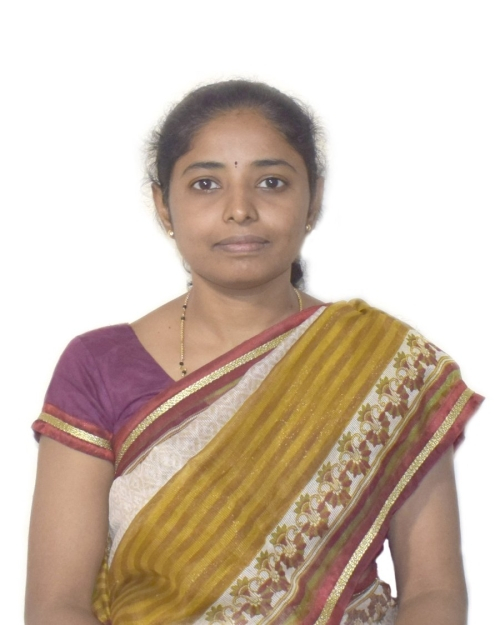
Dr. Sowmya V L
Assistant Professor
Artificial Intelligence & Machine Learning
- soumyavl@bmsit.in
- 9663335831
- Employee ID : 14676

Manasa K
Assistant Professor
Artificial Intelligence & Machine Learning
- manasak@bmsit.in
- 8310003676
- Employee ID : 18345
BE,Mtech (Ph.D)
C programming,Computer networks,Internet Of things,Cyber Security
IAENG
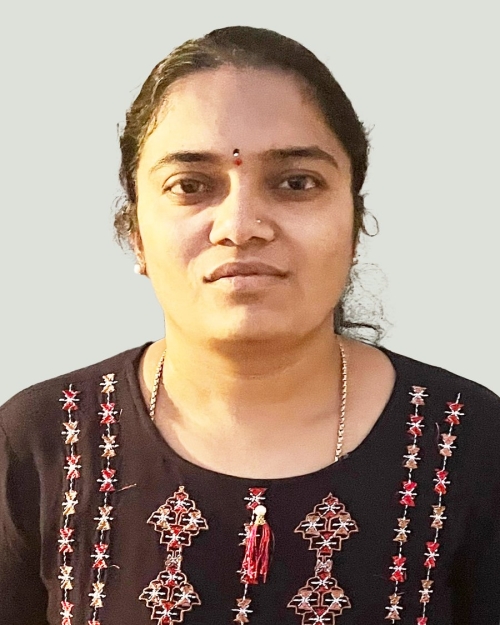
Pragathi M
Assistant Professor
Artificial Intelligence & Machine Learning
- pragathim@bmsit.in
- 9844943151
- Employee ID : 18346
M.tech (Ph.D)
C programming, Web programming
IAENG
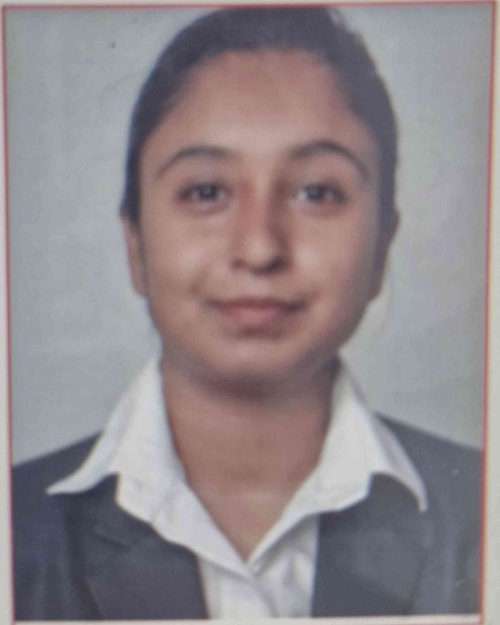
Prof. Bhavika Rajora
Assistant Professor
Artificial Intelligence & Machine Learning
- bhavika@bmsit.in
- 9116884142
- Employee ID : 18351

Salma Itagi
Assistant Professor
Artificial Intelligence & Machine Learning
- salma.itagi@bmsit.in
- 7259844681
- Employee ID : 18357
B.E.,M.Tech,(Ph.D)
NA
Machine Learning,Artificial Intelligence,Image Processing
NA
- "Evaluation and Potential Future Advancements in Enhancing Image Resolution with ESRGAN K Pradeep Kumar, S Itagi, N Vinutha, TL Manjushree… - International Conference on Web 6.0 and Industry 6.0, 2025"
- "FaceShroud Advanced Real-Time Mask Detection using Deep Learning SR Likhith, S Itagi, BA Nithya, P Bhuvaneshwari… - 2024 Second International Conference on Networks …, 2024"
- "Sentimental Analysis-Based Recommended System for Products Using Machine Learning BGM Bai, SR Likhith, S Itagi - Advances in Computing and Information: Proceedings …, 2023"
- Intelligent Transport System using Cloud Computing & PSY Key Generation for V2V Communication S Itagi, C Nagarathna, SS Ashwini, NN Srinidhi - 2022 Fourth International Conference on Cognitive …, 2022
- NA
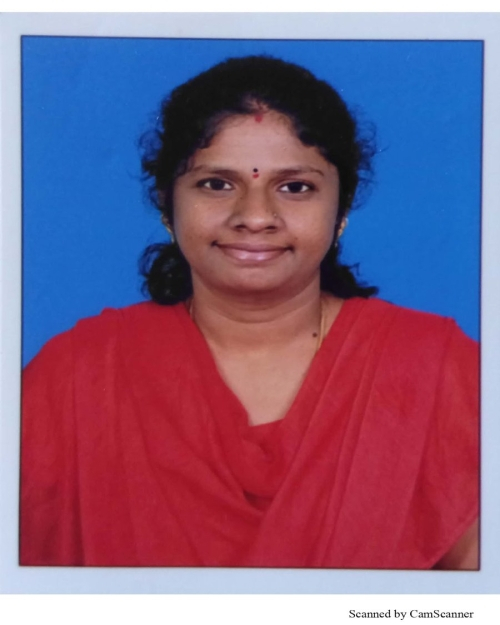
Prof. Ashwini S S
Assistant Professor
Artificial Intelligence & Machine Learning
- ashwini.ss@bmsit.in
- 9741614614
- Employee ID : 18358
B.E, M.Tech
Programming in C, Web Technology, Computer Networks
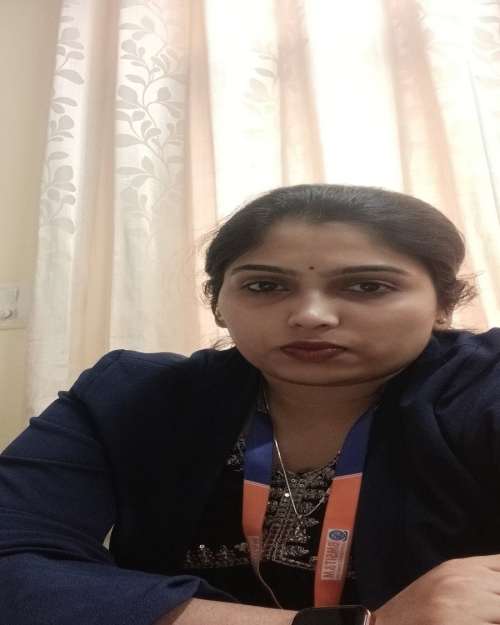
Prof. Lakshmi M R
Assistant Professor
Artificial Intelligence & Machine Learning
- lakshmimr@bmsit.in
- 8150915616
- Employee ID : 18361
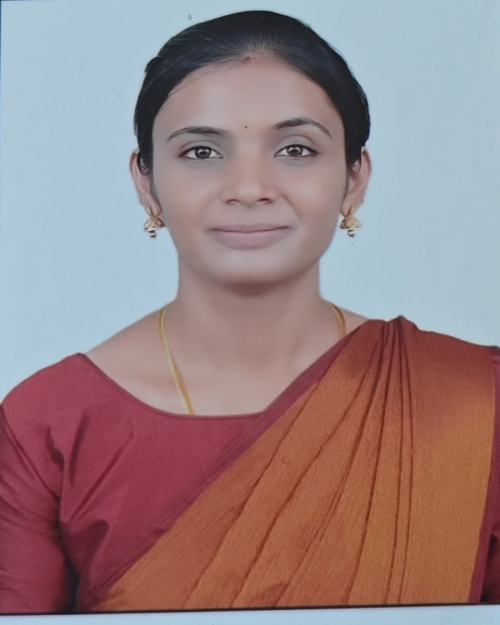
Prof. Hamsaveni M
Assistant Professor
Artificial Intelligence & Machine Learning
- hamsaveni@bmsit.in
- 9790622200
- Employee ID : 18362
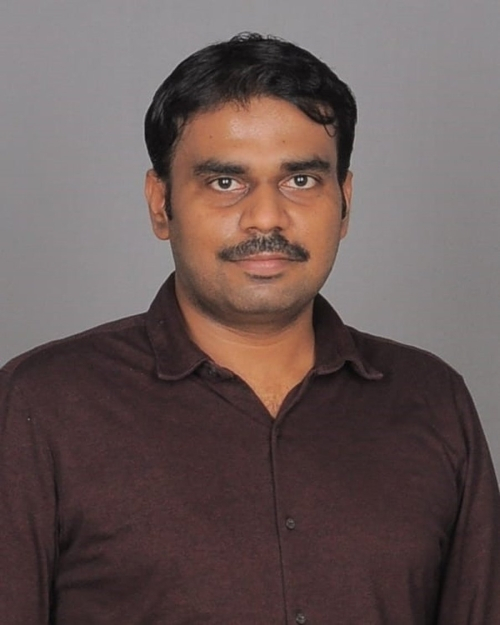
Dr. Sampath Kumar Y R
Assistant Professor
Artificial Intelligence & Machine Learning
- samkumar@bmsit.in
- 9481419316
- Employee ID : 18472
B.E, M.Tech, PhD
Cloud Computing, Image Processing, Machine Learning
IAENG, ACM
- An Efficient Localization-based Secure Resource Allocation using E-FSO with SS-DDNN-based CM-LSGEO techniques
- An Energy Aware Data Scheduling Approach in Cloud using GK-ANFIS
- A Fuzzy based Scheduling approach for Efficient Sensing in IoT-Cloud
- Classification of Human Ear Shape with Innovative RF and SVM Machine Learning Algorithms and Related Issues
- Artificial Intelligence Powered Cyberattacks
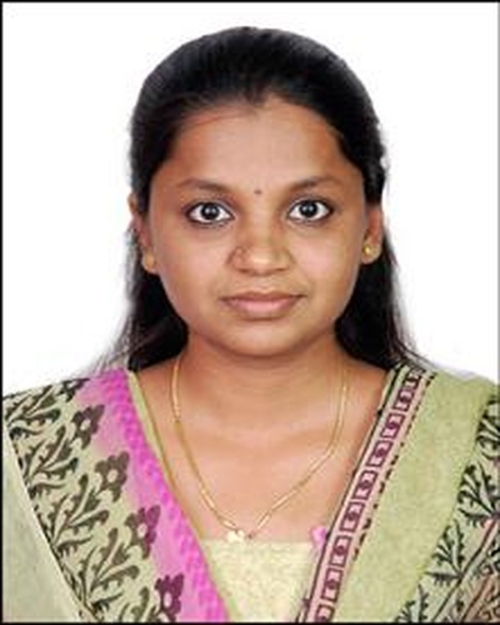
Indumathi S
Assistant Professor
Artificial Intelligence & Machine Learning
- indumathi@bmsit.in
- 9900632427
- Employee ID : 18471
M.Tech , (Ph.D)
Cloud Computing
- "Deep Learning Based Fault Tolerance Adaptive to Task semantics in Fog Computing Network." International Journal of Intelligent Engineering & Systems 17, no. 6.
- "Survey on proactive fault tolerance in Fog computing." In Computer Science Engineering, pp. 138-143. CRC Press,
- "Robotic Process Automation (RPA): A software bot for healthcare sector." In 2023 international conference on intelligent and innovative technologies in computing, electrical and electronics (IITCEE), pp. 685-689.
Pavan Mulgund
Assistant Professor
Artificial Intelligence & Machine Learning
- pavan@bmsit.in
- 8310804936
- Employee ID : 18470
M.Tech, (Ph.D)
Cloud Computing
- "Presented Paper titled ""Survey on Security and Trust Guarantee in Fog Computing Environment"" in International Conference on Computational Intelligence and Data Communication (ICCIDC 2025), at Bali, Indonesia. "
- "A Paper titled ""Deep Learning Based Anomaly Detection for Fog-Assisted IoVs Network"" was published in International Journal of Scientific Research in Science and Technology (IJSRST), Volume 11, Issue 22, pp.200-206"
- "A Paper titled ""Predicting Heart Diseases Using Deep Learning Algorithm in Fog Computing Environment"" was published in International Journal of Scientific Research in Science and Technology (IJSRST), Volume 11, Issue 22, pp.193-199"
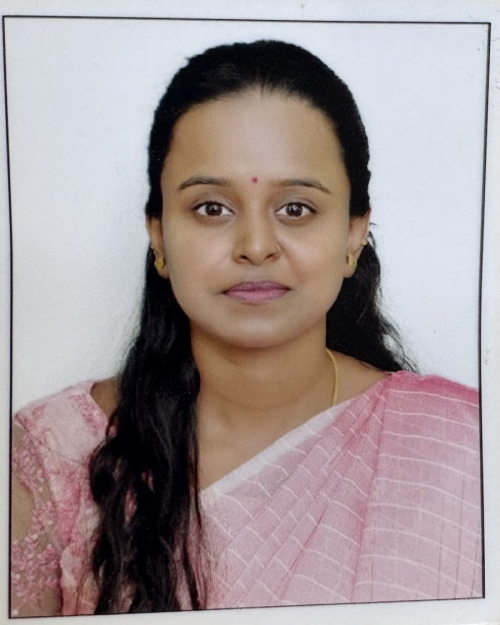
Prof. Pavithra G
Assistant Professor
Artificial Intelligence & Machine Learning
- pavithrag@bmsit.in
- 8217349220
- Employee ID : 18473

Prof. Shilpa Prabhu Patil
Assistant Professor
Artificial Intelligence & Machine Learning
- shilpa.patil@bmsit.in
- 7829685085
- Employee ID : 18737
M.Tech(CSE), (Ph.D)
Recipient of Visionary Educator Award -2025 - From UiPath, Professional Development Award- 2024 by UiPath
Robotic Process Automation
Life time member of CSI , Bangalore
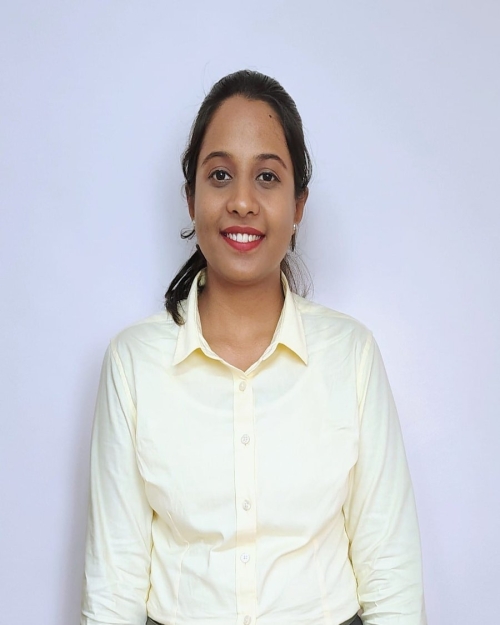
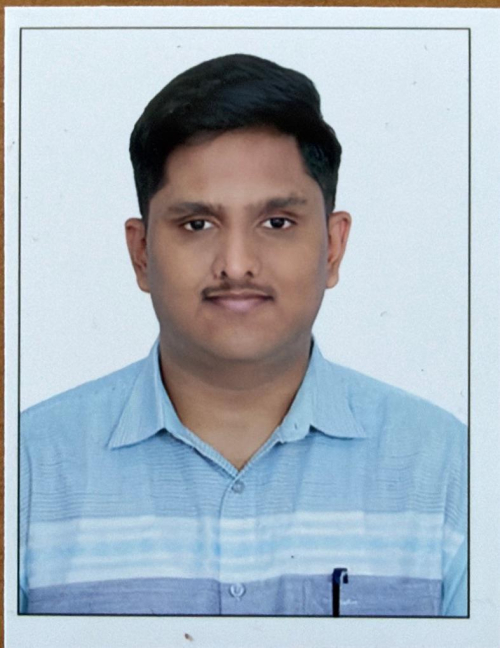
Prof. Syed Owais Umair
Teaching Intern
Artificial Intelligence & Machine Learning
- umair@bmsit.in
- 9741890968
- Employee ID : 20735
B.E(CSE), M.Tech(Data Sciences)(pursuing)
Data Science, Data Analytics, Game Theory, Operating System
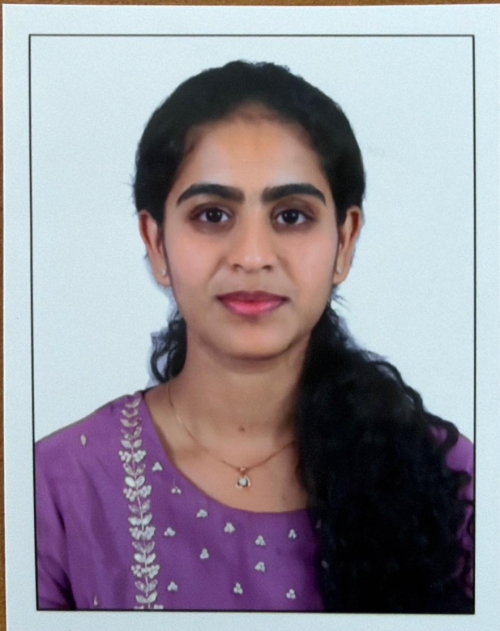
Prof. Srujana S
Teaching Intern
Artificial Intelligence & Machine Learning
- srujana.s@bmsit.in
- 8197703631
- Employee ID : 20736
Research
Driving Innovation Through Research and Real-World Impact.
R&D involves in identifying new research areas, developing projects leading to publications in National/International Journals and conferences. Established R&D Cell at the Institution level to promote Research & Innovation among the faculty & students.
Achievements
Research, Publication, And Innovation
| Sl. No | Particular | 2021-2022 | 2022-2023 | 2023-2024 | 2024-2025 | Count/Amount |
|---|---|---|---|---|---|---|
| 1 | International Journal | 05 | 05 | 11 | 19 | 40 |
| 2 | International Conference | 09 | 11 | 19 | 22 | 61 |
| 3 | Book Chapters | 01 | 00 | 04 | 04 | 09 |
| 4 | Ph.D. Student Details | 14 | 08 | 09 | 16 | 47 |
| 5 | Ph. D Degree Awarded | 01 | 02 | 07 | 04 | 14 |
| 6 | Patents Published | 00 | 01 | 03 | 03 | 07 |
| 7 | Patents Granted | 01 | 01 | 02 | 01 | 05 |
| 8 | Sponsored Research Project | 01 | - | - | - | 20 Lakh |
| 9 | Consultancy Work | 04 | 03 | 01 | 03 | 4.44 lakh |
Board of Studies (BoS):
Industry Connect
Connect with us
Linkedin : 
Gallery